

Eating healthily feels impossible, doesn’t it?
One minute eggs are a superfood, the next they’ll ‘kill you.’ Social media screams at you to cut carbs, try keto, avoid gluten, eat more protein, eat less protein — and don’t even think about eating after 7 pm.
No wonder it’s tempting to give up entirely and reach for a can of Pringles.
Here’s the truth no one’s telling you: Eating healthily isn’t actually that complicated.
The fundamentals of a healthy diet have been clear for decades — and getting them right could cut your risk of early death by over 50%.
This week, I want to plead with you not to give up. There’s so much more I want to do with my life, and I want to be fit and healthy enough to do them. I suspect you feel the same way. Maximising our chance of achieving those goals means making the choices today that help us live long and healthy lives.
Despite all the noise, the big picture is surprisingly simple. If I asked you to write down five features of a healthy diet, you’d probably get most of them right.
So don’t sweat the small stuff. Stop agonising over which alternative milk to buy or whether kale is better than spinach. Let’s get the big-ticket items sorted first — that’s where the magic happens.
So, what actually works? Let’s start with the biggest game-changer — and it’s not what the wellness influencers are talking about.
Let’s Start With the Big One: Ultra-Processed Food
Want to know the single biggest thing you can do for your health? Cut back on ultra-processed food.
You’ve probably heard the term before — but what actually counts as ultra-processed?
Here’s the simplest test:
👉 If the ingredients list reads like a chemistry experiment, it’s ultra-processed.
👉 If you wouldn’t find those ingredients in a home kitchen, it’s ultra-processed.
👉 If the packaging screams "new and improved," it’s probably ultra-processed.
Take a look at these ingredient panels:
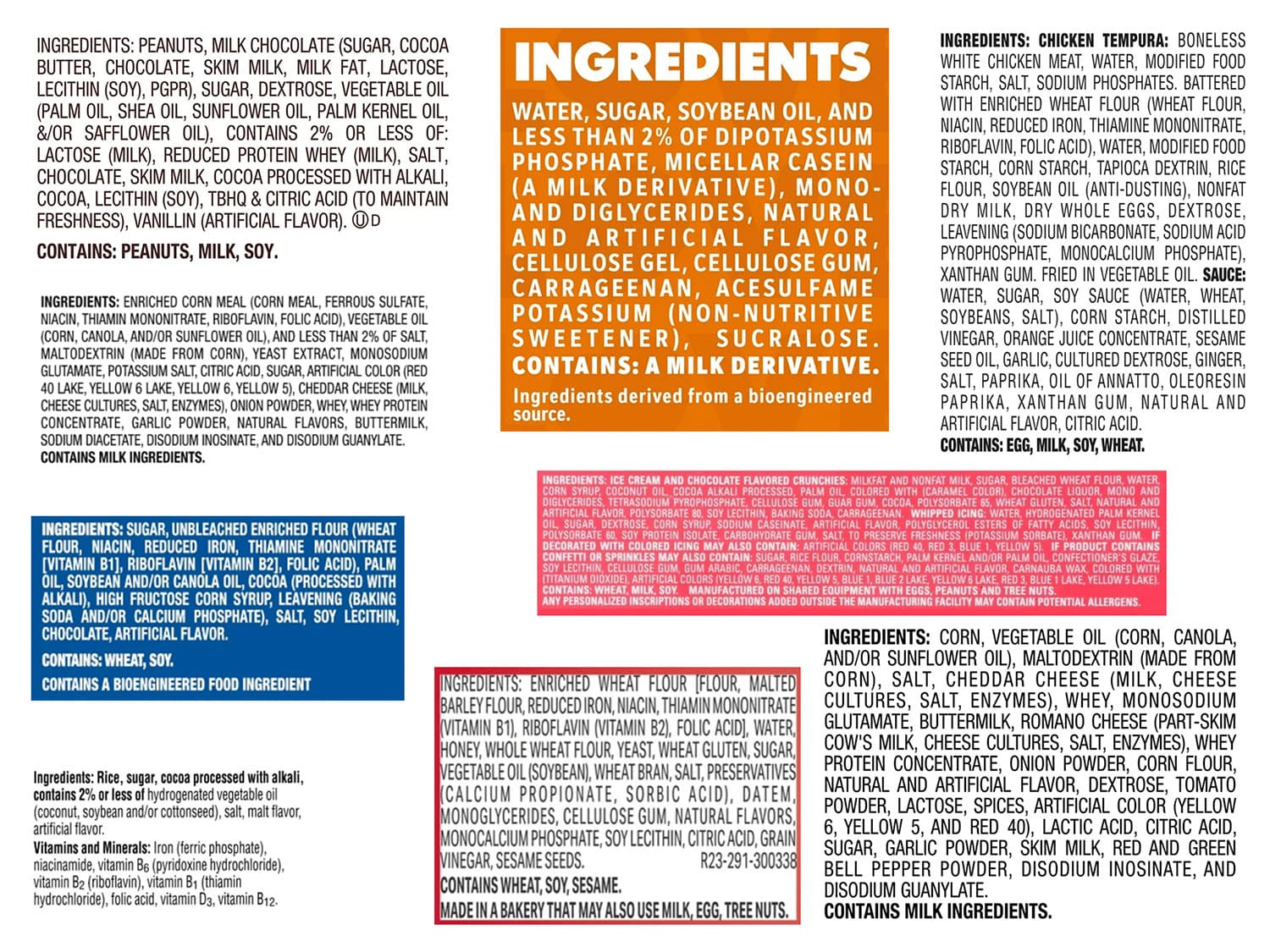
Would you know what food these belong to? Exactly. These aren’t ingredients — they’re industrial substances.
A nutritionist once described ultra-processed foods to me as “mass-produced edible substances.” That feels more accurate than calling them food.
Am I being dramatic?
I don’t think so.
A growing body of research shows that eating a diet high in ultra-processed food isn’t just unhealthy — it’s deadly.
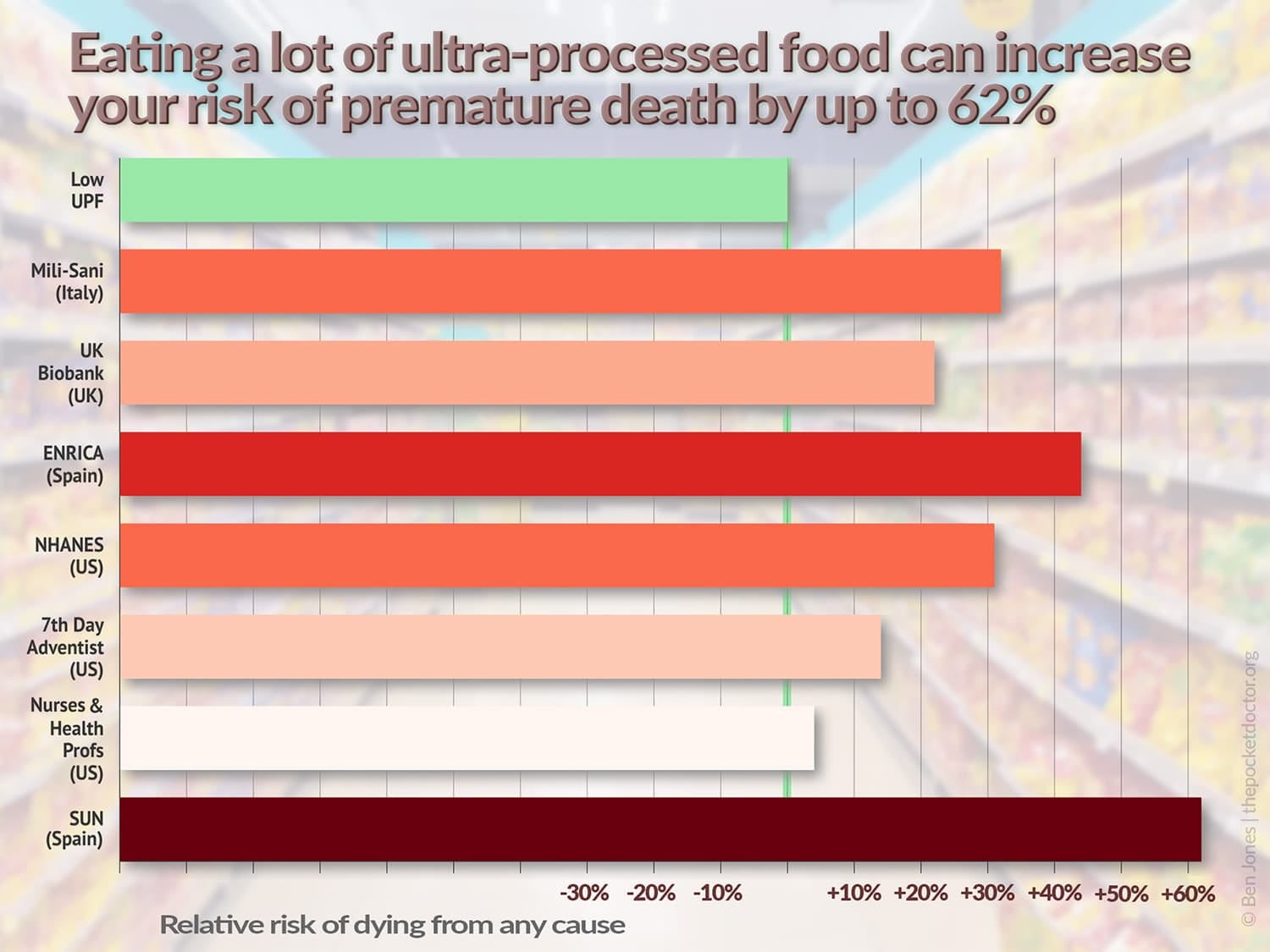
Eating the most ultra-processed food was linked to up to a 62% higher risk of dying.
We’re all going to die eventually — but this isn’t about that.
This is about dying too soon — from causes you could have avoided.
I don’t want that to be you (or me!).
Take-home message:
If you’re eating more than the occasional ultra-processed food, please consider cutting back.
No need to be perfect — just make some swaps.
Trade the packet of crisps for a handful of nuts.
Swap the sugary cereal for whole oats with berries.
Processed food is designed to be addictive — but you don’t have to play along.
👉 You’ve got this.
But cutting out the bad stuff is only half the story — what you add matters just as much.
Whole Foods: The Good, the Bad, and the Delicious
Eating whole foods — the kind that don’t need an ingredients panel — is one of the smartest things you can do for your health.
But not all whole foods are created equal. Some whole foods protect your health; others, while delicious, are best treated as occasional treats rather than everyday staples.
A huge study combining results from dozens of trials showed just how much the foods you choose can affect your lifespan.
👉 Take a look at this:
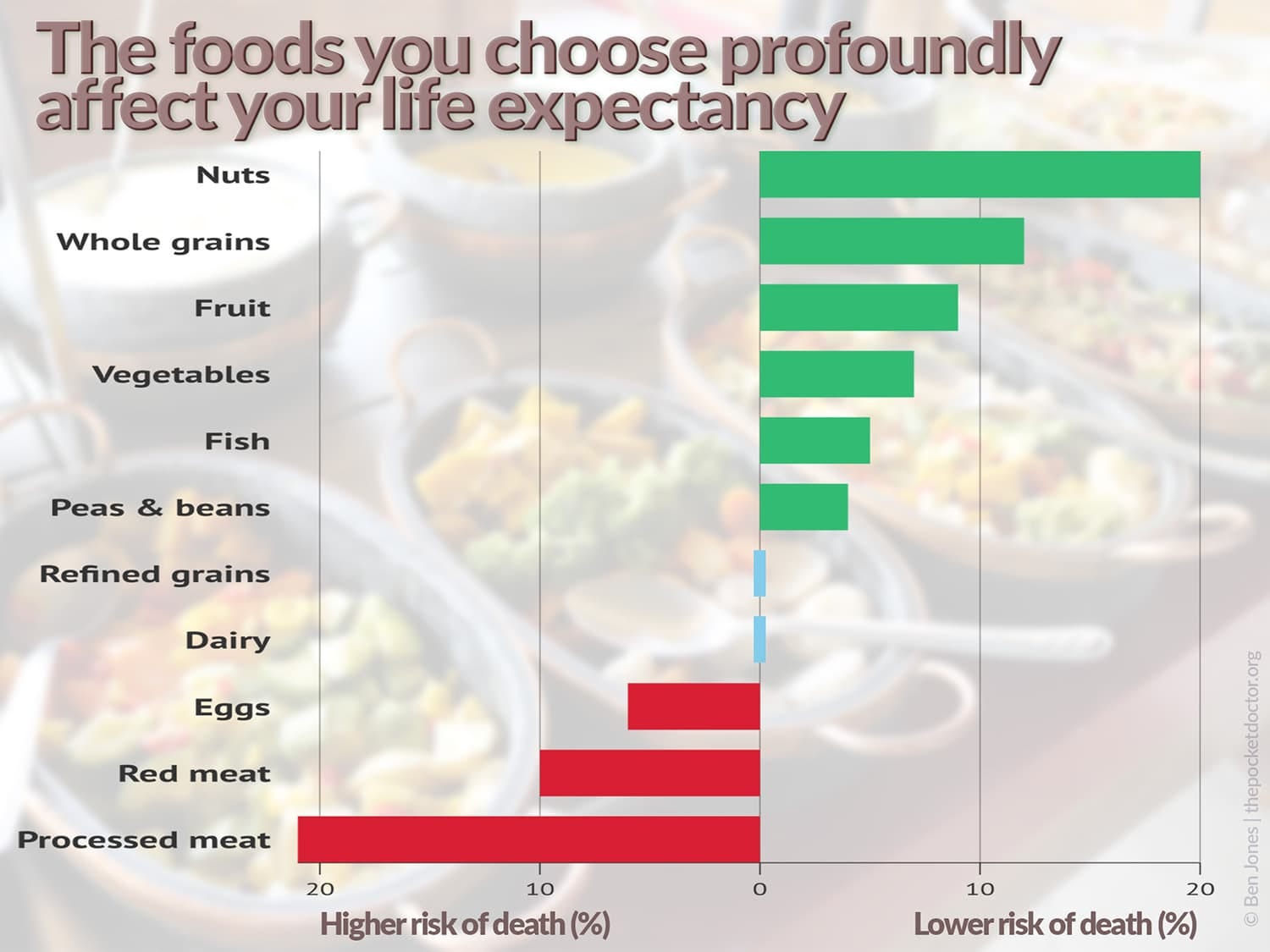
No surprises that fruit and vegetables are good for you. But did you expect nuts and whole grains to have such a strong effect?
Eating just 15g of nuts a day (that’s about a small handful) was linked to a 20% lower risk of dying during the study periods.
Whole grains, legumes, and fish also showed strong protective effects.
The researchers estimated that consistently making the healthiest choices — loading up on nuts, whole grains, fruit, vegetables, fish, and legumes — could reduce your risk of dying early by a staggering 56%. You can see that in the green bar of the graph below.
Now let’s talk about the other side of the coin…
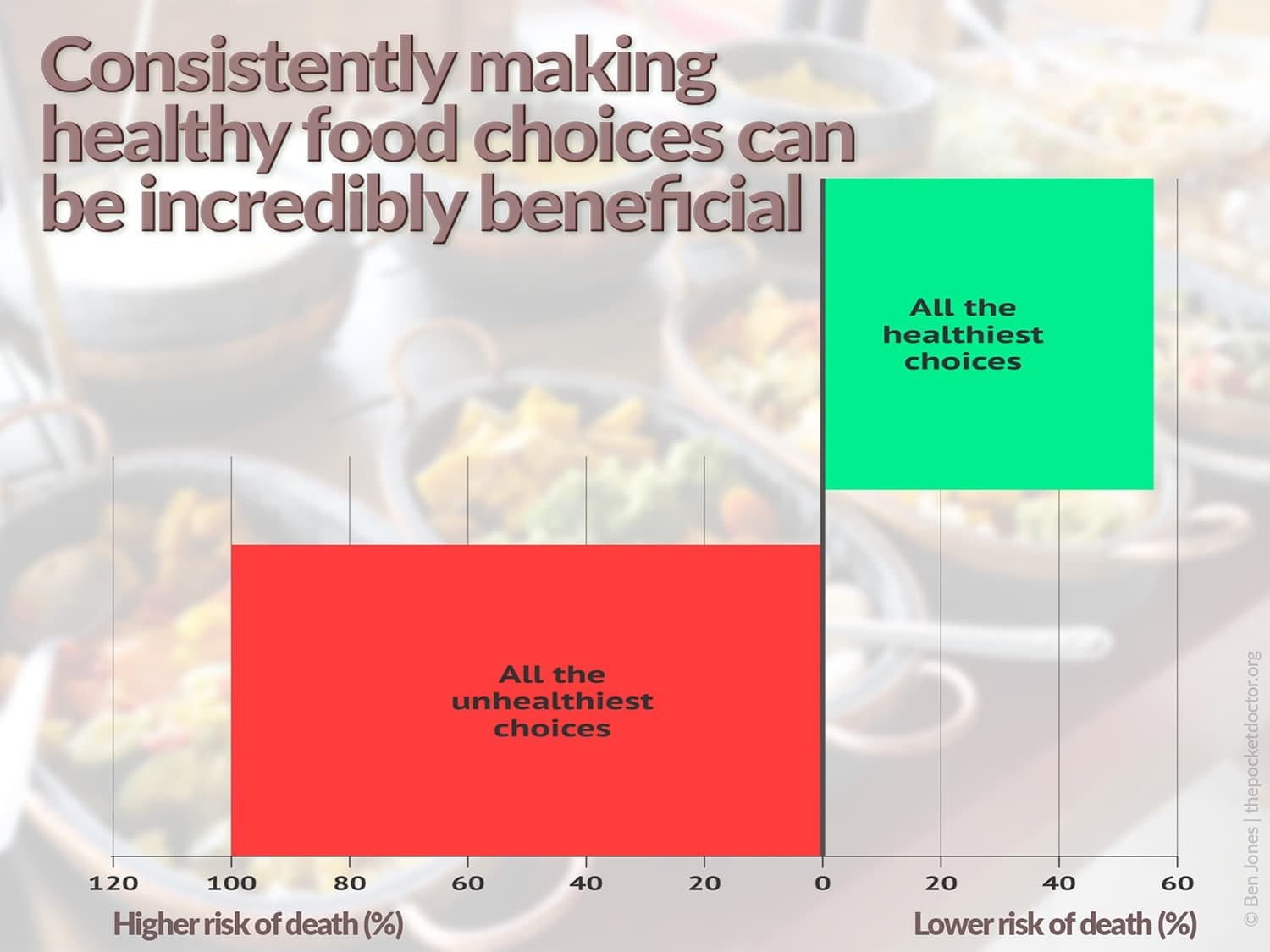
The red bars tell a different story.
Eating lots of processed meat (think bacon, salami, sausages) was linked to a 21% higher risk of death.
High red meat and egg consumption were also associated with poorer health outcomes.
In fact, the researchers estimated that consistently eating more red and processed meat and eggs could double your risk of dying prematurely.
Now, before the pro-meat lobby comes for me — this doesn’t mean you can’t enjoy a steak or some bacon. It’s about the balance.
👉 Treat red and processed meat like dessert — enjoy it, but not every day.
The choices you make every day — more whole grains, more nuts, fewer processed meats — could be the difference between seeing your grandkids graduate or not.
Take-home message:
The foods you choose every day matter more than you think.
Eating more nuts, whole grains, fruit, vegetables, fish, and legumes could cut your risk of dying early by 56%.
On the flip side, regularly eating red and processed meat and eggs could double your risk of premature death.
You don’t need to overhaul your diet overnight — small, consistent changes are enough to tip the balance in your favour.
👉 We’ll get into the details over the coming weeks and months. For today, just know this: what you eat makes an enormous difference to your health and lifespan.
You’ve got this — and I’ll be here to guide you every step of the way.
👉 This isn’t about a small improvement — this is life-changing stuff.
HEALTH TWEAK OF THE WEEK
Healthy eating feels complicated — but it’s not.
If you’ve ever felt overwhelmed by conflicting health advice, you’re not alone. One day eggs are good, the next they’ll ‘kill you.’ Social media is a mess of contradictions — no wonder it’s tempting to give up.
But behind the noise, the fundamentals of a healthy diet are clear — and the impact is enormous:
Consistently eating healthily could halve your chance of dying prematurely.
Consistently making unhealthy food choices could double your risk of early death.
These are huge differences — and the good news is, they’re entirely within your control.
Here’s Your Tweak for the Week:
👉 Eat more of:
✅ Nuts
✅ Whole grains
✅ Fruit
✅ Vegetables
✅ Fish
✅ Peas and beans
👉 Eat less of:
❌ Ultra-processed foods (if the ingredients panel looks like a chemistry set, put it back)
❌ Processed meats (bacon, sausages, salami)
❌ Red meat
❌ Eggs
It’s not about being perfect — just tipping the balance in your favour could add years to your life.
One simple swap this week could shift the odds in your favour.
Trade chips for a handful of nuts.
Swap white bread for whole grain.
Have fish instead of meat at least once this week.
👉 So — what’s one swap you’ll make this week? Reply and let me know. I read every message — and I’d love to hear from you.
🎧 Prefer to listen?
Want to dive deeper? This week’s episode of the One Health Tweak a Week Podcast covers healthy eating in plain English — no science degree required.

(Psst — these insights are free for now, but soon they’ll be available only to paid subscribers. Upgrade today to stay ahead of the curve.)
👉 What’s next?
💬 How healthy do you think your current diet is? Hit reply and let me know — I read every message and love hearing from you.
📢 Know someone who’s struggling with healthy eating? Forward this to them — because friends don’t let friends eat ultra-processed junk.
❓ Confused about something health-related? Let me know! Your questions help shape future issues — and if you’re wondering, others probably are too.
🔒 Want to keep getting these insights? Consider upgrading to a paid subscription for deeper guidance and early access to new findings.
See you next Saturday!
—Ben
There is one type of diet that consistently receives high marks from researchers, and that is the Mediterranean diet and its spin-offs; the "Green Mediterranean Diet," the MIND Diet, and the DASH diet.
What is your take on eating egg whites? I have scrambled egg whites several days a week and whole grain hot cereal with fruit and nuts the other days.