

Before breakfast today, I spent ages clearing condensation from the inside of the windows. It’s that time of year - days are getting shorter, the farmhouse radiators are stone cold, and I’m weighing up how much I can use the oil heating.
Thanks to the military adventures of three wonderful world leaders, heating oil costs are double what they were earlier this year, and when your oil tank holds 3000 litres, that’s a very expensive fill-up. Keeping the whole house warm all day long is a luxury few of us can easily afford.
Some of you have already had snow. Others are still in shirtsleeves and might think winter is weeks away. Wherever you are in the Northern Hemisphere, the temperature is heading in one direction. (And yes, we are just a little envious of those of you in the Southern Hemisphere in your shorts and T-shirts!)
We tend to think of dangerously cold weather as something that involves ice, snow, and sub-zero temperatures - the sort of cold where you can see your breath indoors.
But some of the sharpest increases in cold-related deaths happen early in winter, in places where the temperature rarely drops below freezing. And the deaths aren’t mainly from hypothermia; they’re overwhelmingly from heart attacks and strokes.
And this isn’t just a problem for older people or for those living in colder regions. So how cold is too cold, and what can we do to protect ourselves as winter sets in?
Why the first cold snaps can be especially dangerous
You’d expect the worst of winter to come when it’s coldest. But when researchers analysed mortality across 51 US metropolitan areas over 35 years, cold snaps were associated with a 20% increase in deaths. (That’s 120 deaths where 100 might otherwise be expected, not a one-in-five chance of dying for anyone going outdoors.)
And the excess deaths didn’t cluster on the coldest day itself; they accumulated over the following three weeks.
The regional pattern really surprised me. The biggest risk wasn’t in the coldest regions; it was in the Southeast, where cold snaps were associated with a 42% increase in deaths, compared with 14% in the Midwest. This despite vastly different definitions of what counted as extreme cold: below 14.6°C (58°F) in Miami, below −20.1°C (−4°F) in Minneapolis. What qualifies as a cold snap in Miami isn’t even cool for Minneapolis.
But the timing is perhaps the more important finding for us right now. In December, the southeastern coastal region saw a 72% increase in mortality following cold snaps. By later in the winter, the effect was considerably smaller almost everywhere.
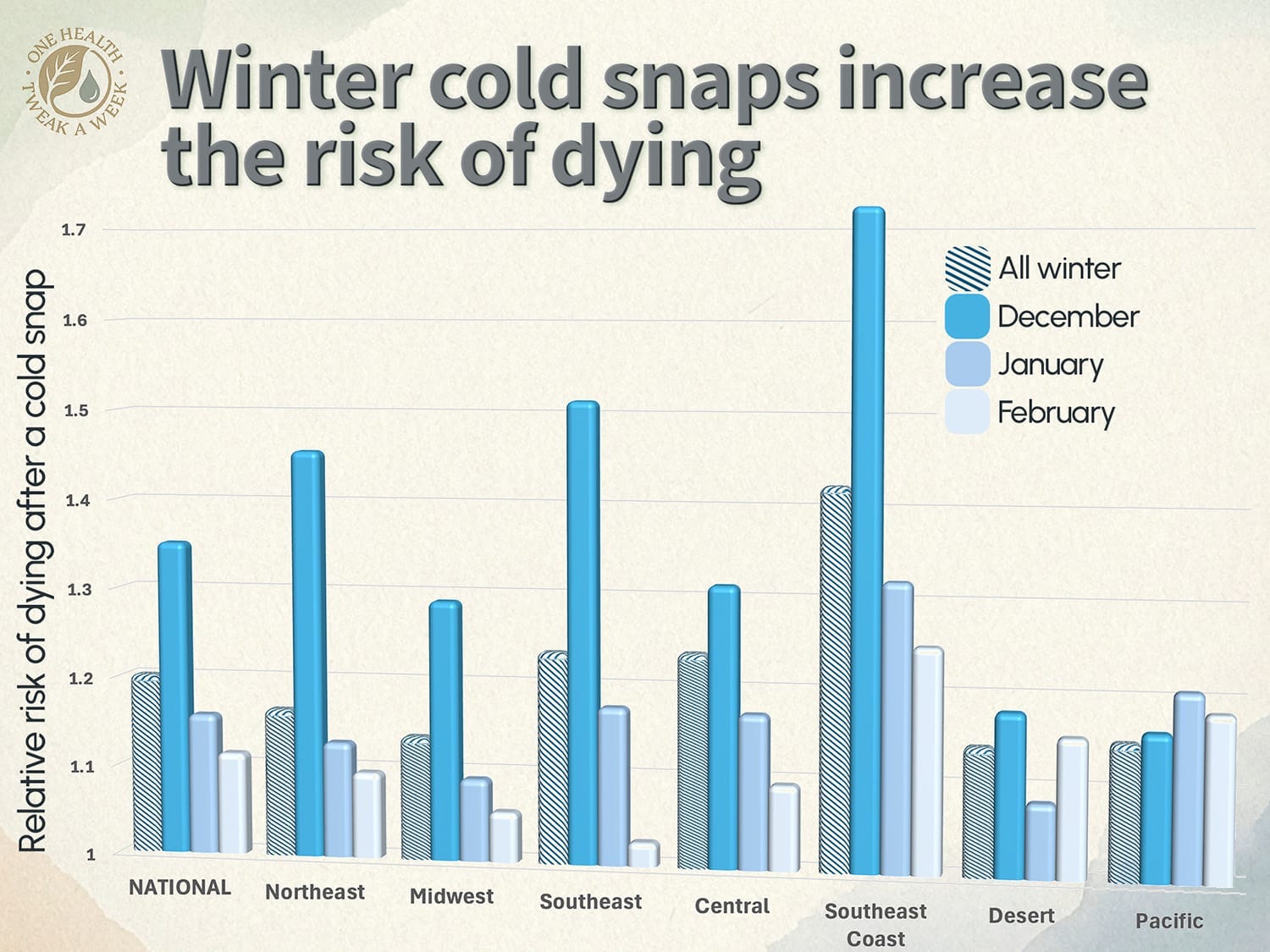
So, early-winter cold snaps are disproportionately dangerous, especially in regions not built for the cold.
That’s why I’m writing this now.
This isn’t confined to the US. In an analysis of 15 European cities, each 1°C fall in temperature was associated with a 1.35% increase in all-cause mortality: 1.7% for cardiovascular deaths, 3.3% for respiratory deaths and 1.3% for strokes. As with the US data, the associations were stronger in warmer southern cities and in older adults.
Acclimatisation may partly explain this. Our bodies adapt to cold exposure over time, and northerners are generally more accustomed to winter weather. But housing insulation, heating, clothing, behaviour and finances may differ between regions too.
What’s clear is that “cold” is relative. A sharp dip to 14°C in Florida and a plunge to −20°C in Minnesota can both be associated with excess deaths, because the risk depends partly on what your body and your environment are prepared for.
Cold weather isn’t just an older person’s problem
We often hear warnings about the dangers of cold weather for older people, particularly those with heart or lung disease. But what about the rest of us?
The UK Health Security Agency recently estimated that five cold episodes during winter 2025–26 were associated with around 2,200 excess deaths in England.
As you’d expect, the risk was greatest among older adults, but look at the graph below. As the temperature fell, the risk of dying increased in all age groups.
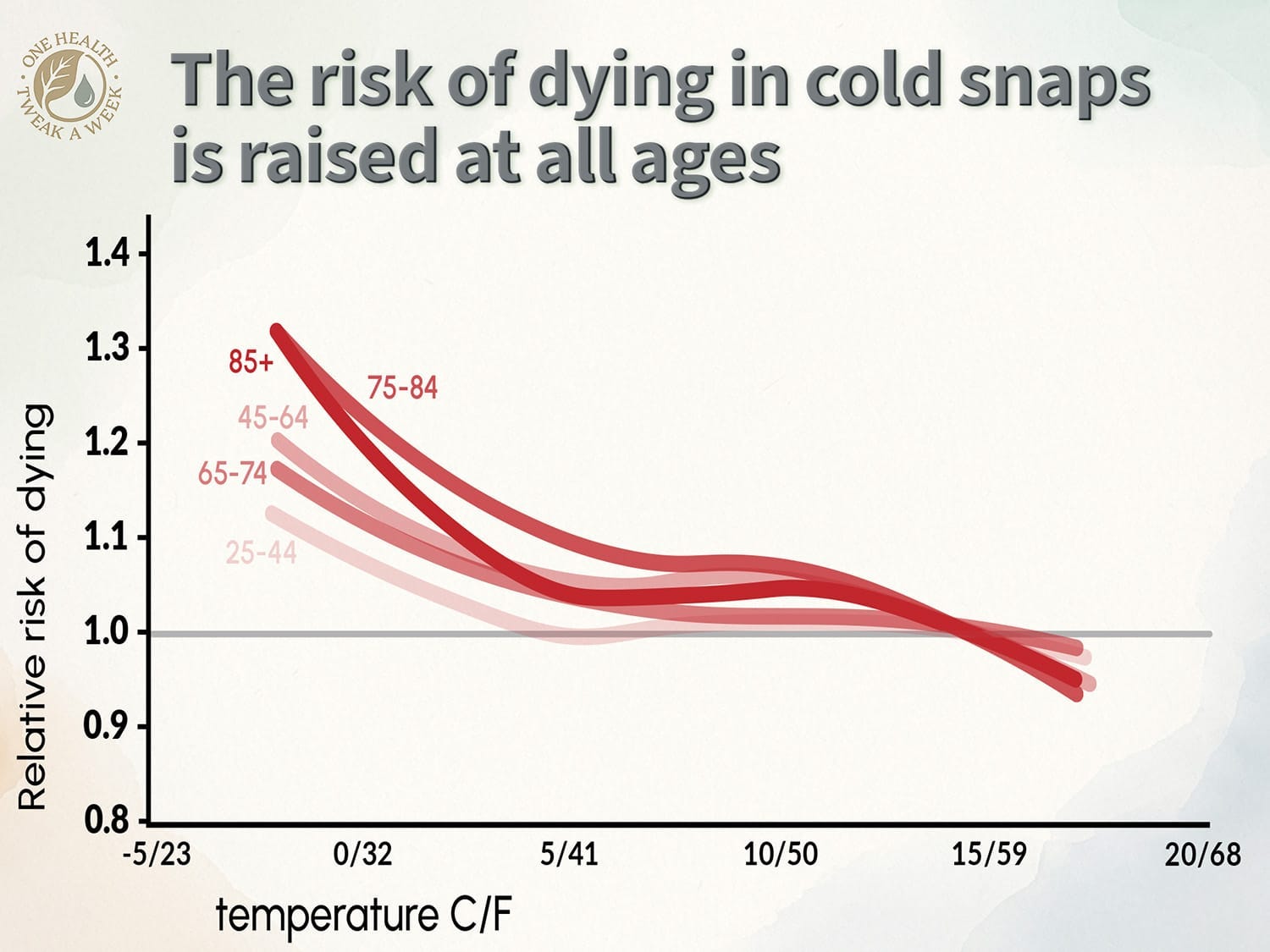
The absolute risks are lower at younger ages, of course. But whether you’re 35 or 75, cold weather puts additional demands on your cardiovascular system. It’s worth taking seriously long before you qualify for a senior discount.
Does extreme cold account for most cold-related deaths?
It’s logical to think that the handful of bitterly cold days each winter account for most cold-related deaths. But when Chinese researchers analysed more than 1.8 million deaths across 272 cities, they found that moderately cold conditions accounted for substantially more cold-attributable deaths than extreme cold.
The associations were strongest in warmer regions, in women, in adults aged 75 and over, and in those with less education, likely a marker of socioeconomic disadvantage.
Because moderately cold days vastly outnumber extreme ones, a small increase in risk repeated across many chilly days produces a larger total burden than a bigger increase during a handful of severe ones.
Individual extreme-cold days may still be more dangerous per day, but the cumulative toll of ordinary cold is greater.
What’s actually killing people during cold weather?
If you had to guess the leading cause of cold-related deaths, you’d probably think of hypothermia or respiratory infections. The real answer is cardiovascular disease, by a wide margin.
Using 29 years of global data, researchers estimated that cold weather accounts for around 1.34 million excess deaths each year. More than a third are attributable to ischaemic heart disease and roughly a quarter to stroke. Other important contributors include chronic obstructive lung disease, respiratory infections, chronic kidney disease and diabetes.
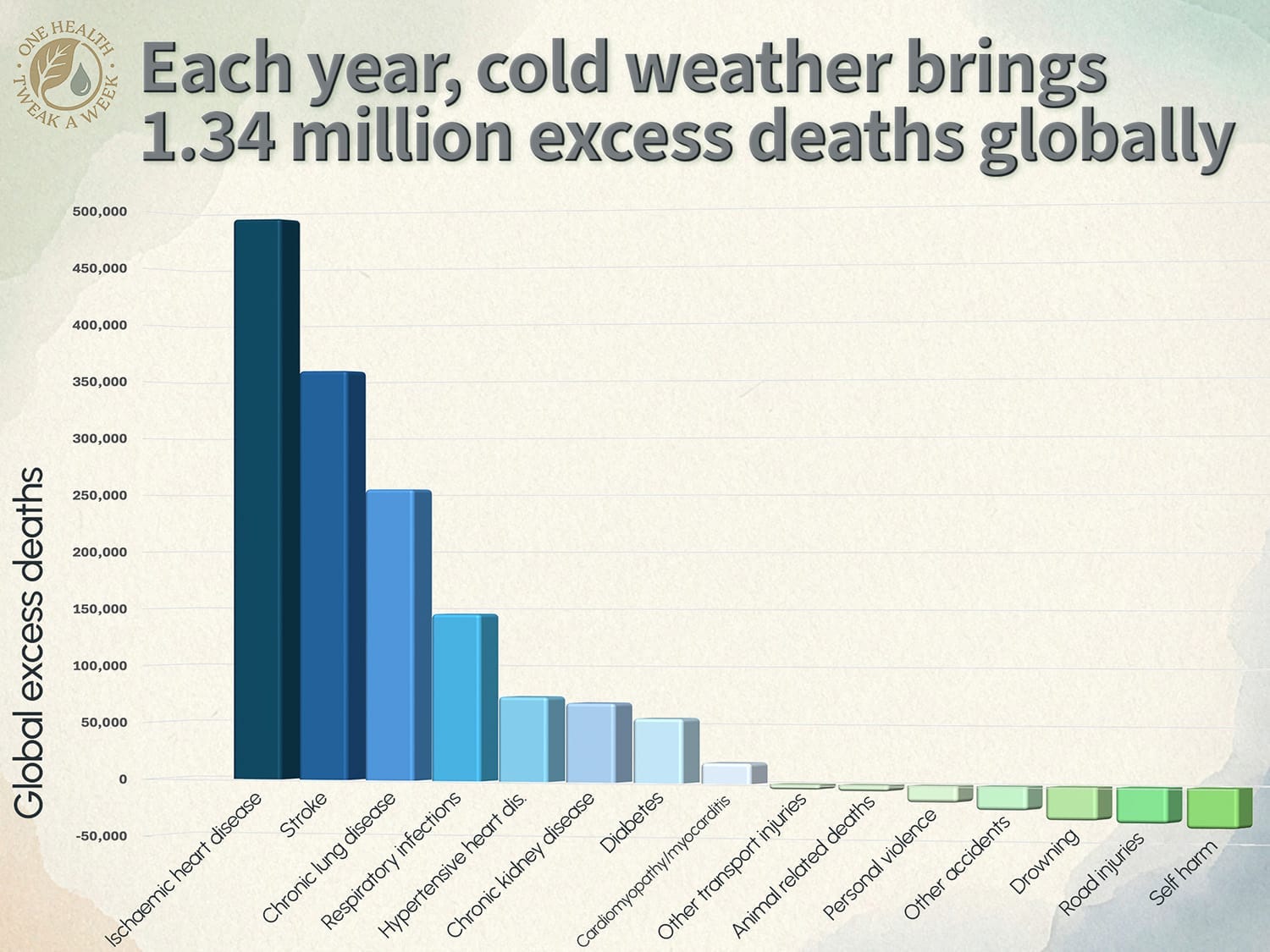
Not every cause of death rises during cold weather. Because we spend more time indoors during cold weather, some causes of death actually decline, including road injuries, drowning, interpersonal violence and, perhaps surprisingly, self-harm.
So why does cold exact such a cardiovascular toll?
When you’re cold, blood vessels in your skin constrict to conserve heat. That’s useful for warmth, but it increases the resistance against which your heart must pump, raising blood pressure and cardiac workload.
Cold also makes blood more viscous and more prone to clotting, both of which may raise the risk of heart attacks and strokes.
Meanwhile, cold air can impair the lungs’ mucosal defences, making respiratory infections more likely and aggravating existing airway disease. People with diabetes may have impaired temperature regulation, and cold weather can affect blood sugar control.
Where does cold-related strain show up in everyday life?
Two ordinary situations make bring these mechanisms home: your living room on a cold morning and the driveway that needs clearing after a snowfall.
Japanese researchers studied 779 community-dwelling older adults (average age 71) and found that colder indoor temperatures were associated with higher blood pressure. A room 12°C colder corresponded, on average, to systolic blood pressure 10mmHg higher: a clinically significant difference, and one that was more pronounced in older people.
For general context, a persistent 10mmHg higher systolic blood pressure is associated with a 15-25% higher risk of cardiovascular disease.
Can warming the room help? In a separate trial, 359 older adults (average age 72) were randomly assigned to either set their living room heating to come on an hour before getting up (then stay in that room for two hours after waking) or receive no heating instructions. The intervention group’s rooms ended up about 2°C warmer than the controls’, but even that modest difference was associated with morning systolic blood pressure 4.5mmHg lower on average.
The trial didn’t measure heart attacks or strokes, but it does suggest that warming a chilly room before breakfast can ease some of the cardiovascular strain associated with cold, particularly in older adults.
Now step outside. Canadian researchers examined the link between snowfall and heart attacks over more than three decades. On the day after a 20cm (8-inch) snowfall, the risk of dying from a heart attack was roughly a third higher for men, with no comparable increase in women. It’s likely this increased risk is down to the heavy, sustained exertion of snow shovelling in the cold, layered on top of the cardiovascular strain the weather already imposes.
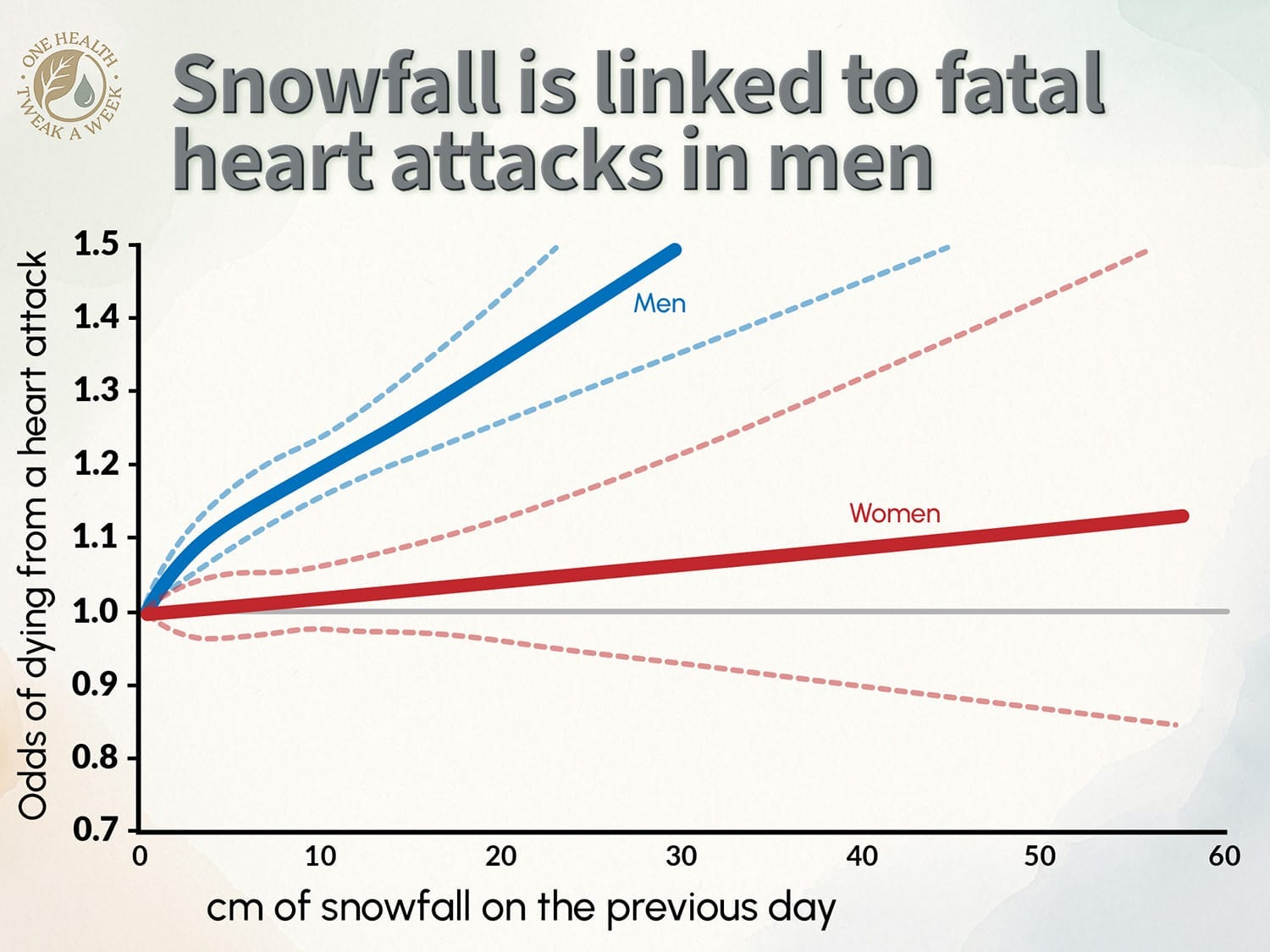
I’d be interested to hear in the comments how to interpret this difference between the sexes. Does it mean that chivalry isn’t dead, and so the men go out and clear the snow? Or does it simply show that women get on with things with less drama?
Joking aside, combining cold exposure with sudden hard physical work is a situation worth treating with respect, particularly if you’re older or have cardiovascular risk factors.
If someone came to mind while you were reading this, please forward it to them. These tweaks may be small, but practised consistently they can genuinely change long-term health. A useful nudge at the right moment can make all the difference.
What this means for your health
The cold you’re most likely to underestimate is the cold that feels ordinary - a sharp temperature drop in a mild climate, a chilly room at breakfast, or the first heavy outdoor job as winter sets in.
Cardiovascular strain accounts for the largest share of cold-associated deaths. Respiratory disease matters too, particularly for those with existing lung conditions. But hypothermia, the danger most of us instinctively picture when we think about cold weather, is a surprisingly small part of the picture.
You don’t need to wait for a freeze to take precautions. Find out how cold your rooms get, dress for the temperature rather than the calendar, and think carefully before pushing through physically demanding outdoor work in the cold.
As always, your responses are anonymous, but they really help me tailor future content to what’s most helpful to you. Please take a moment to click a button.
HEALTH TWEAK OF THE WEEK
Cold weather puts additional strain on your heart, lungs and blood vessels well before temperatures reach freezing. Cold snaps can be particularly dangerous early in winter, and cardiovascular complications account for the largest share of cold-associated deaths.
Here’s your checklist for the weeks ahead.
1. Check how warm your rooms really are. Use a room thermometer rather than trusting the thermostat. Aim for at least 18°C (64°F) in rooms you use regularly, and around 20–21°C (68–70°F) for older adults or anyone with a chronic health condition.
If mornings are cold, bring the heating on before you get up: warming the room may help keep your morning blood pressure in check.
If heating the whole house isn’t affordable, prioritise the room where you spend most of your time.
2. Layer up, and pace yourself outdoors. Multiple layers trap air and insulate far better than a single heavy garment. I avoided thermal underwear for years, dismissing it as firmly ‘old man’ territory. When I finally swallowed my pride and bought some, it was a revelation. They’re now a fixture from November onwards.
If you need to clear snow or tackle other heavy jobs outside, break the work into shorter stints. Go back inside, warm up, then finish the job. Get help if it’s too much.
3. Check on someone who may be struggling to keep warm. An older neighbour, a relative living alone, a friend you haven’t heard from in a while. Offer to help with heating costs or point them towards emergency heating programmes. Better yet, invite them round for a coffee or a hot meal.
Keeping warm isn’t equally affordable for everyone, so let’s look out for each other.
Cold weather can affect our health in ways that aren’t immediately obvious, and at temperatures we might not consider particularly cold. That’s definitely worth remembering as winter approaches.
I’ll still be watching the heating-oil gauge rather anxiously this winter, but I’ll also be paying more attention to the temperature inside the house. And when the first cold snap arrives, I’ll think twice before tackling the heavier outdoor jobs in one go.
I know heating bills are painful this winter, and for some households there’s simply no money to spare. But if you can afford to keep your home adequately warm, even if it means a bigger bill, I’d encourage you to do so.
The extra expense may be unwelcome, but your health, and that of the people you care about, is worth protecting. Saving money on heating isn’t much of a bargain if it puts your health at risk.
A little more awareness, a few sensible precautions, and perhaps an extra layer or two. We can’t control the weather, but we can be better prepared for what it brings.
🎧 Prefer to listen somewhere warm?
🎙️ This week’s One Health Tweak a Week podcast explores the often-underestimated health risks of winter cold. We look at why the first cold snaps can be particularly dangerous, how cold weather affects our bodies even when temperatures are well above freezing, and what we can do to protect ourselves and others as winter sets in.
You’ll hear:
Why the first cold snaps of winter can be especially dangerous, with deaths increasing by as much as 72% in parts of the southeastern US.
Why warmer regions can experience greater increases in cold-related deaths than places accustomed to freezing winters.
Why cold weather affects younger adults too, with increased mortality risk apparent even in people in their twenties and thirties.
Why ordinary, moderately cold days account for more deaths than extreme cold.
How cold affects your heart, lungs and circulation, and why even the temperature inside your home can influence your blood pressure.
Why clearing snow and other heavy outdoor jobs can be surprisingly hazardous, and some simple precautions worth taking.
👉 Good company for your next walk, commute, or while enjoying a hot drink somewhere cosy. Perhaps leave the snow shovelling until you’ve finished listening!

🧭 Before you go
💬 Did any of the findings surprise you? Perhaps the risks associated with relatively mild temperatures, or the evidence that cold weather affects younger adults too?
📤 Know someone who thinks cold weather is only a health concern for older people, or when temperatures fall below freezing? They might find this week’s article an interesting read.
👥 Paid corner - How do you manage keeping your home comfortably warm during winter, particularly with heating costs being what they are? Have you found any practical ways to stay warm that you’d recommend to others? Come and share your experiences in our private chat.

Until next Saturday - stay warm, take it easy with those heavy outdoor jobs, and spare a thought for anyone who might be struggling with the cold this winter.
– Ben
Ben, the Canadian figures link snowfall to deaths and infer the shovelling, so the sex difference may reflect who picks up the shovel more than any difference in the heart. Sudden hard effort in the cold lands on blood vessels that are already constricted, which is why the combination deserves more respect than either part alone. The pre breakfast heating result belongs beside it, since a two degree change in the room moving morning blood pressure is a cheap intervention with a plausible mechanism. Your clarification that twenty percent means 120 deaths where 100 were expected is the line most readers will need.
Dr Tom Kane
I’m curious if having baseline hypotension and bradycardia still puts you at the same risk. My two cents about men vs women with shoveling is that women tend to go slower and take smaller amounts of snow.