


Most of us find it pretty easy to go out for a walk, enjoyable even. I prioritise and look forward to my pre-lunch walks. It’s never a struggle to get my steps in.
I have a different relationship with strength exercise.
If I’m honest, it’s a bit of a chore. I do it because I’m convinced of its value in keeping me strong and independent for my later years, but I need a distraction to do it; typically, that’ll be a podcast.
My guest today, Patricia Siegel, makes up for my sometimes wavering enthusiasm for strength exercise in spades. Sports scientist, former semi-professional runner and triathlete, and columnist for STRONG Fitness Magazine, Patricia writes the popular Menopause Training Blueprint newsletter.
While I can explain the convincing scientific evidence that explains why strength exercise is so important in midlife and beyond, Patricia can explain how to put your intentions into practice far better than I ever could.
So, we’ve teamed up today to look at why strength exercise is so important in midlife and beyond, and how to get started at home without a gym membership or fancy equipment.
Midlife muscle loss
Each year, from around age 50 onwards, we lose roughly 0.8% of muscle mass and 2 to 3% of muscle strength.
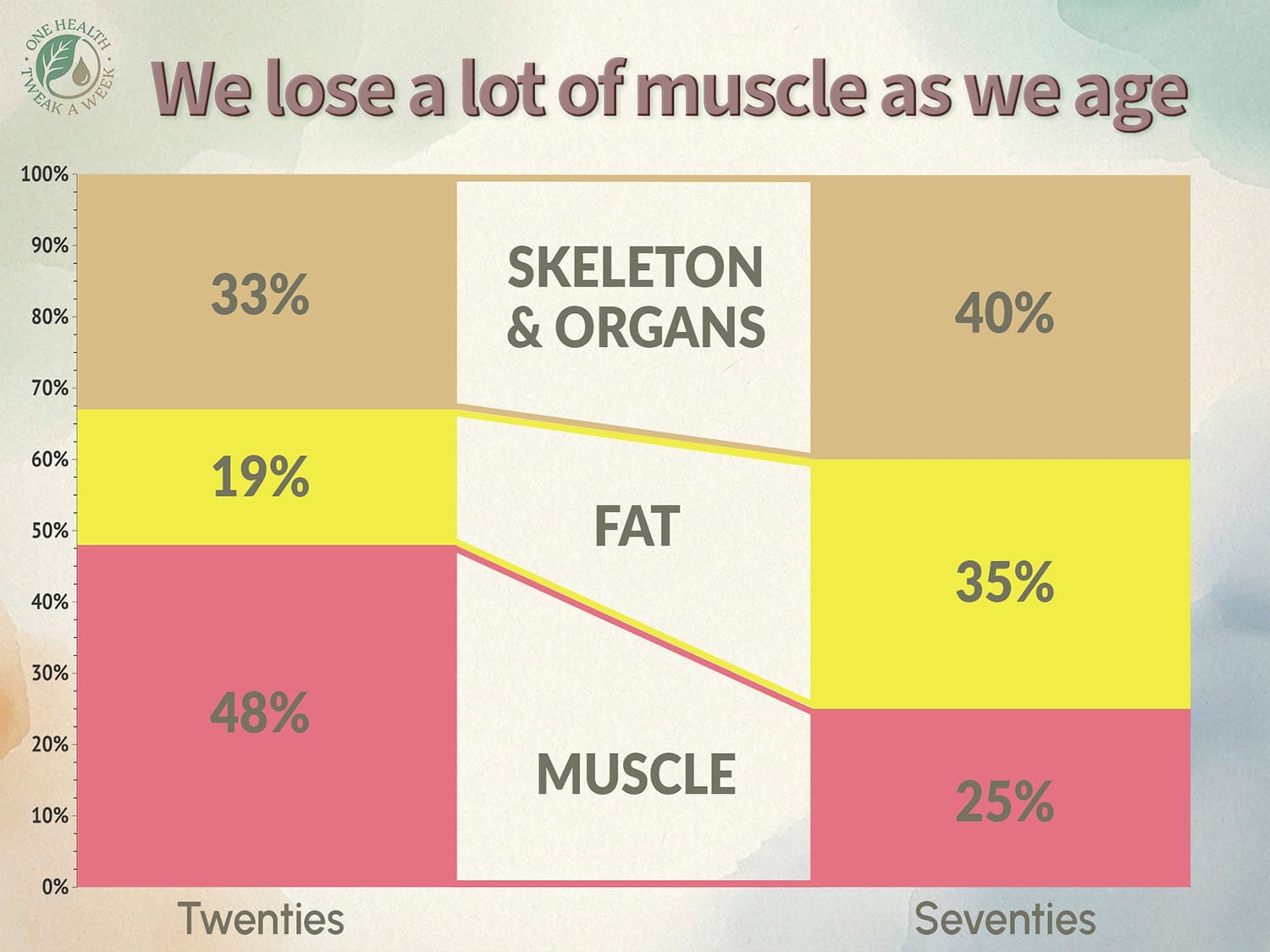
That may not sound like a lot, but over time it adds up. Muscle makes up nearly half our body weight in our twenties, but just a quarter in our seventies, and most of that loss happens from our fifties onwards.
Year-to-year, women lose muscle at a slower rate than men, but muscle loss accelerates somewhat through menopause.
Why muscle loss matters
Losing muscle and strength isn’t a cosmetic issue. Strength is what allows you to get up out of a chair easily, to catch yourself when you trip, to carry your luggage, open jars and lift a child without thinking. In the decades to come, it’s what allows you to stay independent and live life on your own terms.
But staying strong isn’t just about being more capable; it’s also about living longer.
Scottish researchers looked at more than half a million UK Biobank study participants aged 40-69. They found a clear relationship between hand grip strength, a marker of overall body strength, and the risk of dying prematurely from any cause. Each 5 kg reduction in a person’s grip strength was associated with up to a 20% higher risk of premature death from any cause. For context, the average grip strength was about 31 kg.
Muscle maintenance
The good news is that there’s much we can do to retain muscle, but we have to be intentional about it.
Walking, gardening, swimming and other common exercises are great for our cardiovascular system, but they’re no substitute for targeted resistance exercise when the goal is preserving muscle and strength.
Despite the period of accelerated muscle loss, studies around menopause have shown no difference in the ability of peri- and postmenopausal women to improve strength and balance with a structured exercise program.
We also need to ensure we’re getting enough protein. The current craze for high-protein foods is targeted at younger adults who mostly get enough anyway. As we move into our sixties and beyond (and perhaps earlier with premature menopause), our muscles become less effective at utilising dietary protein, which means we need more, pushing per-meal targets to around 30-40 g of protein per meal, rather than the 20-25 g that’s plenty for younger adults.
This isn’t the place for a full examination of protein quantity and quality, but it’s something I write about in One Health Tweak a Week if you’re interested in reading more.
Strength exercises do more than maintain muscle
It’s no surprise that regular strength exercises help us maintain muscle, but what may surprise you is that people who do resistance exercises, on average, live longer.
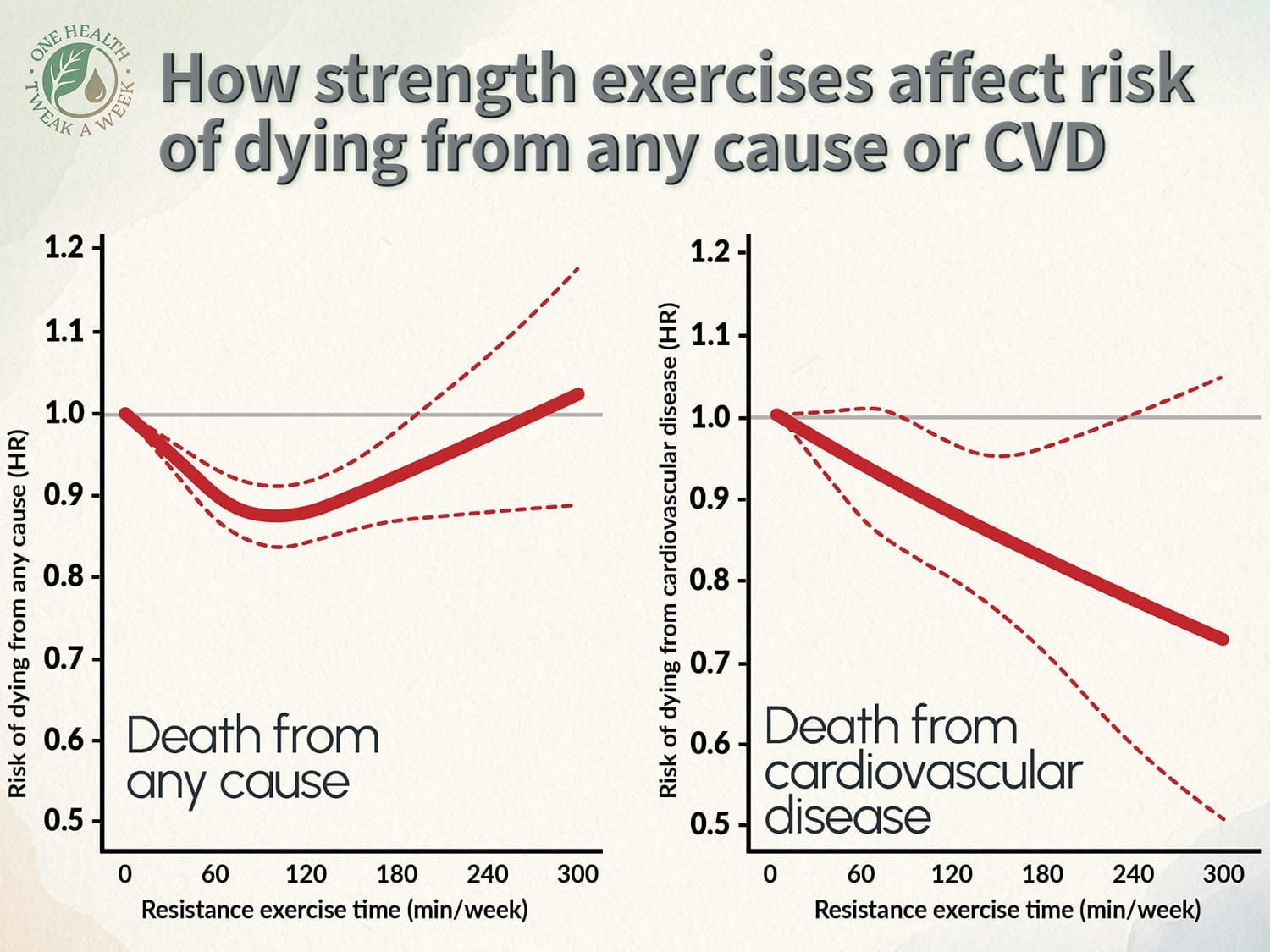
A large US study published earlier this year followed more than 147,000 adults for up to 30 years. Compared with people who did no strength exercises, those doing 90–120 minutes a week had a 13% lower risk of premature death from any cause and a 19% lower risk of dying from cardiovascular disease. You can see the results in the graph below.
The longevity exercise most of us neglect
While that big US study suggests we should be aiming for 90-120 minutes of resistance exercise each week, few of us reach recommended resistance exercise targets.
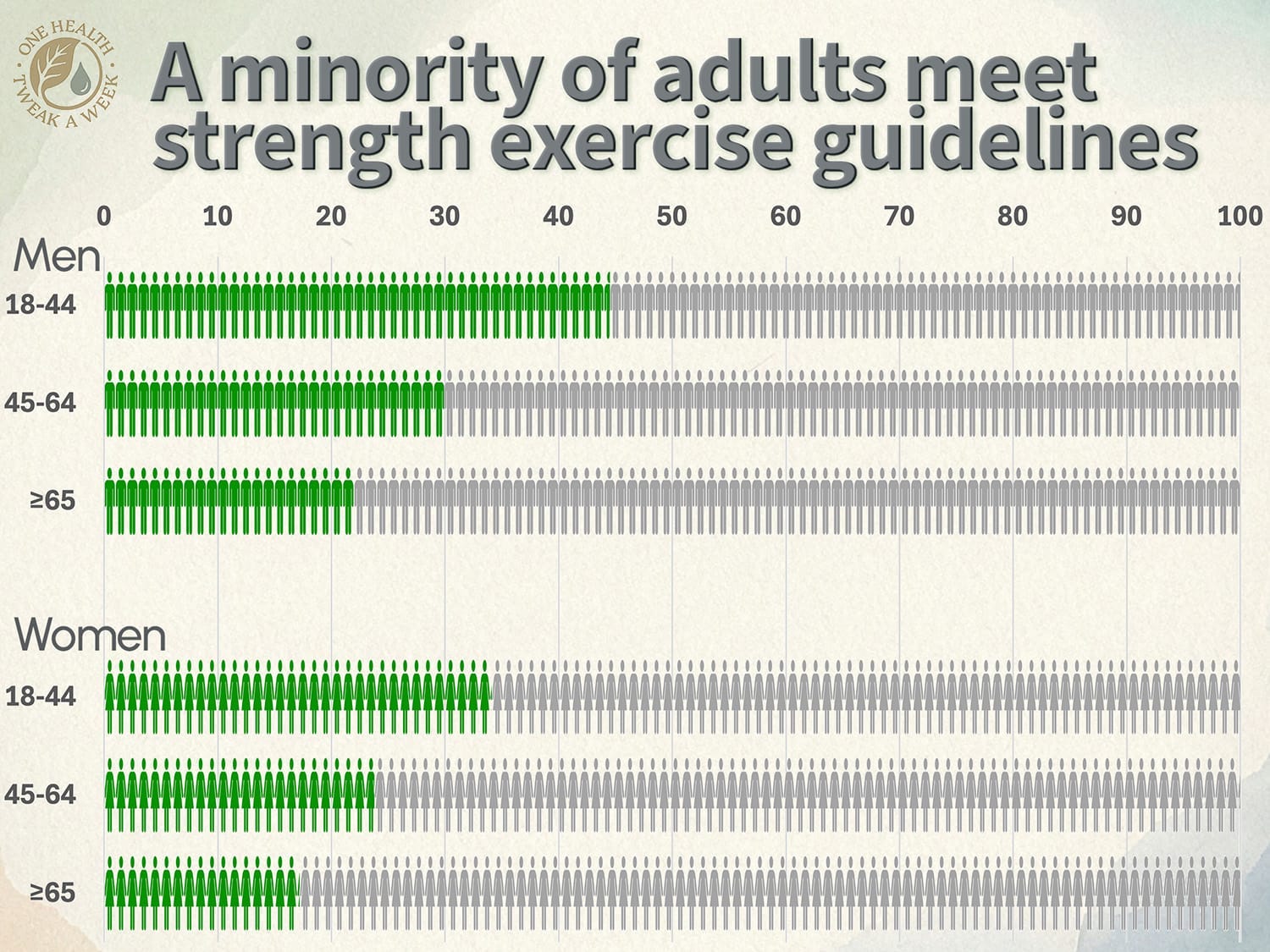
The 2020 US National Health Interview Survey found that just 30% of midlife men and 24% of women reported doing strength exercises at least twice a week, a rate that fell further once they were into their 60s.
Of course, we all feel time-pressured these days, but one of the major reasons people cite for not doing resistance exercise is that they’re not sure what to do. They assume it means joining a gym and trying to figure out how to use strange equipment in an environment where they may feel judged, not to mention learning a whole new language involving sets and reps.
In reality, you can get all the strength exercise you need at home, with minimal or improvised equipment - you just need someone to show you how. And luckily, we have Patricia Siegel, a sports scientist, former semi-professional runner, and triathlete, who can do just that.
Thank you, Ben. Below, you will see a simple exercise routine with the Top 5 moves which you can do in thirty minutes. It is a hinge, a squat, a push, a pull and a carry, which I will explain below.
You won’t need a gym membership for these, and you can easily do it in the comfort of your home.
Equipment Needed
1 or 2 dumbbells or kettlebells ( a loaded backpack if you don’t have these)
A kitchen table or chair
Flat shoes or socks/barefoot
How hard should you work?
There are many different training protocols out there, but the most straightforward is the hypertrophy training protocol, also known as the muscle-building protocol.
On a scale from 1-10, with 10 being the hardest effort, aim for an effort level of about 7. It should be challenging but not maxed out. Aim for 8-12 repetitions with 2 repetitions left in the tank with good form. Take about 1 minute to 90 seconds rest and repeat for 3 sets total.
If, over time, you feel that you have 3-4 reps left in the tank, increase your weight. This is part of what we call “progressive overload”. Muscles grow when you add challenge and novelty. Without novelty, they have no reason to.
The exercises
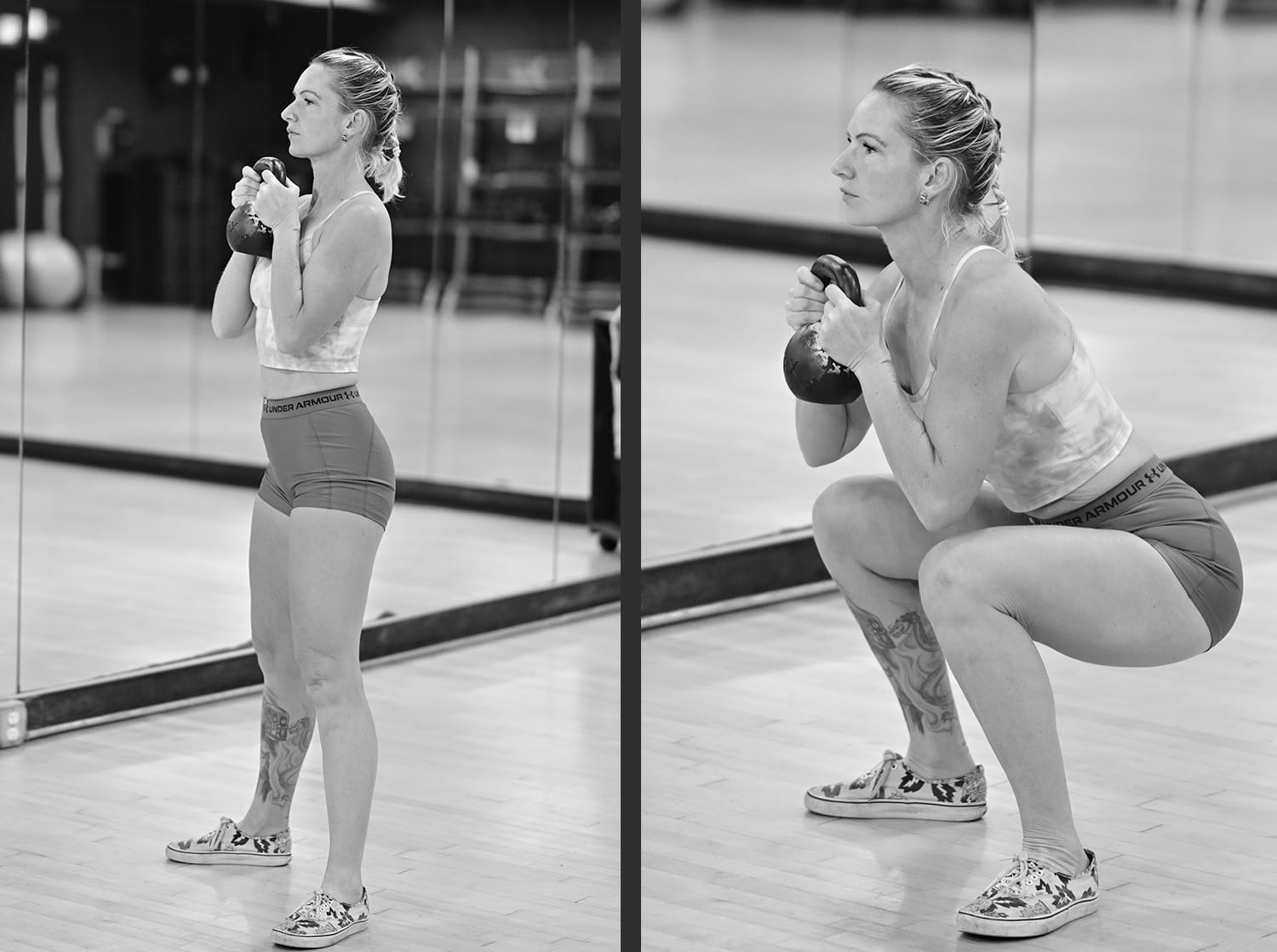
1. Goblet squat
Goblet squats are a wonderful entry-level to full barbell squats but without vertical loading of the spine. They train the glutes and thighs and are part of functional movements such as getting out of a chair and walking up the stairs.
How to:
Hold a kettlebell, dumbbell or backpack close to your chest, wide stance and feet pointed slightly outwards. Now sit back between your thighs (knees initiate the movement, which is different from a hinge). Keep your elbows pointed at your knees and keep your knees tracking over your toes. Press through your whole foot and shift weight towards your heels to as you stand tall again.
The hinge
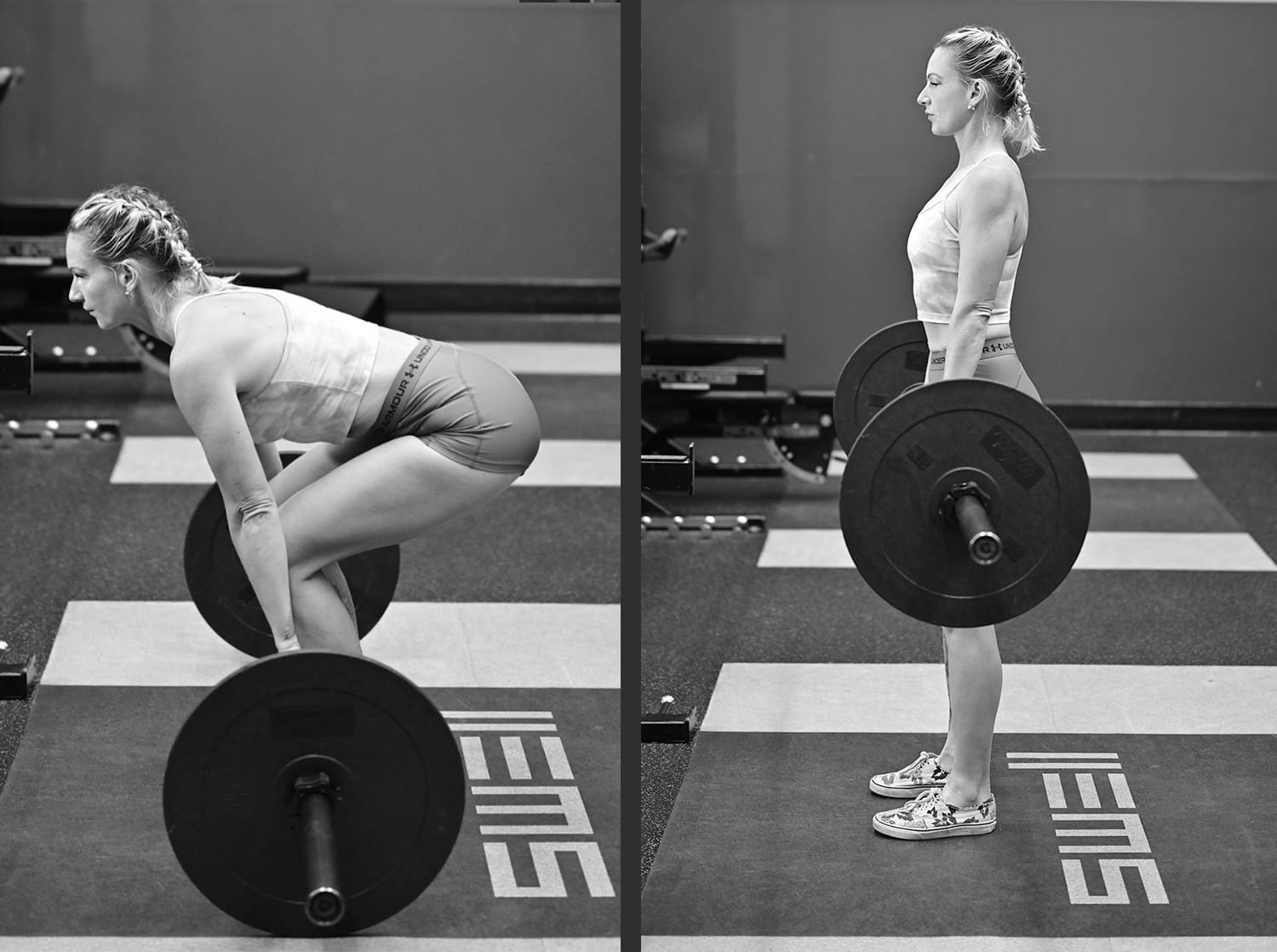
As a personal trainer, I see the hinge as one of the most butchered exercises in the gym or at home. Hinges often become squats, and vice versa. As a rule of thumb, the knees initiate a squat, whereas the hips initiate a hinge. Two cues I like to give to paint a picture.
Imagine a kid coming up to you and karate-chopping you in the stomach. This will make you fold forward, and your hips push back. That is a hinge.
Imagine carrying groceries in your hands while trying to close the car door with your butt. That is a hinge as well.
A hinge can be done during a kettlebell swing as well as a deadlift.
How to:
Stand with feet hip-width apart, toes pointing forward. Hold one or two dumbbells (or the barbell) in your hands. Engage in the hinge mentioned prior while the weight slides down your legs as closely as you can, almost scraping your legs. Stop at about the middle of your shin and press through your heels to stand back up. Keep your back straight and avoid rounding your upper back.
Push-up
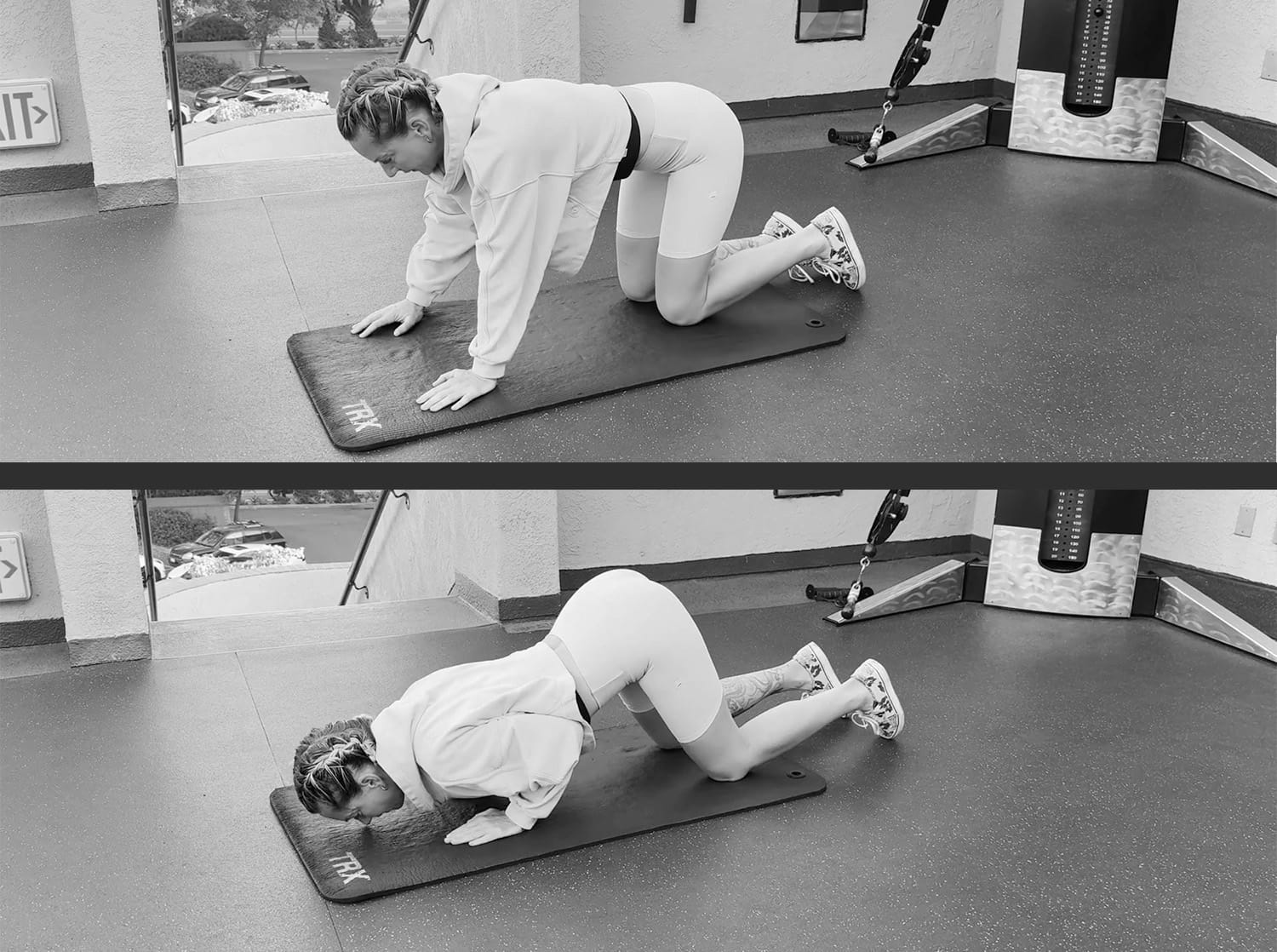
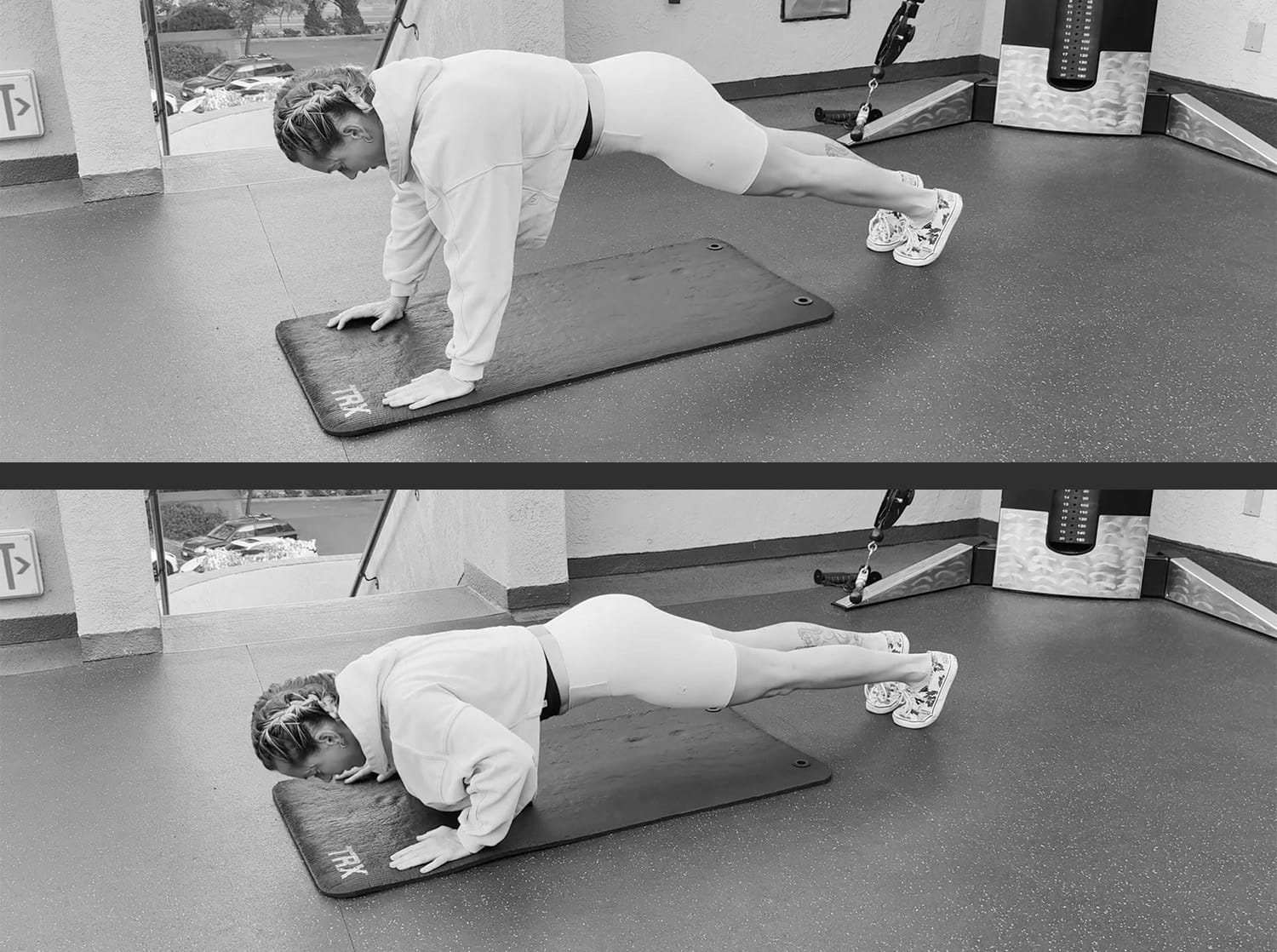
The push-up trains your chest and triceps and prepares for movements such as getting yourself up from the floor after a fall or pushing open heavy doors.
You don’t have to be able to do a full classic push-up. You can use your knees to start.
How to:
Start either on your knees or from a high plank position. For the knee version, start with your knees on the floor; for the classic version, start in a high plank position. Bend your elbow and descend. Press through your whole hand to push yourself back up.
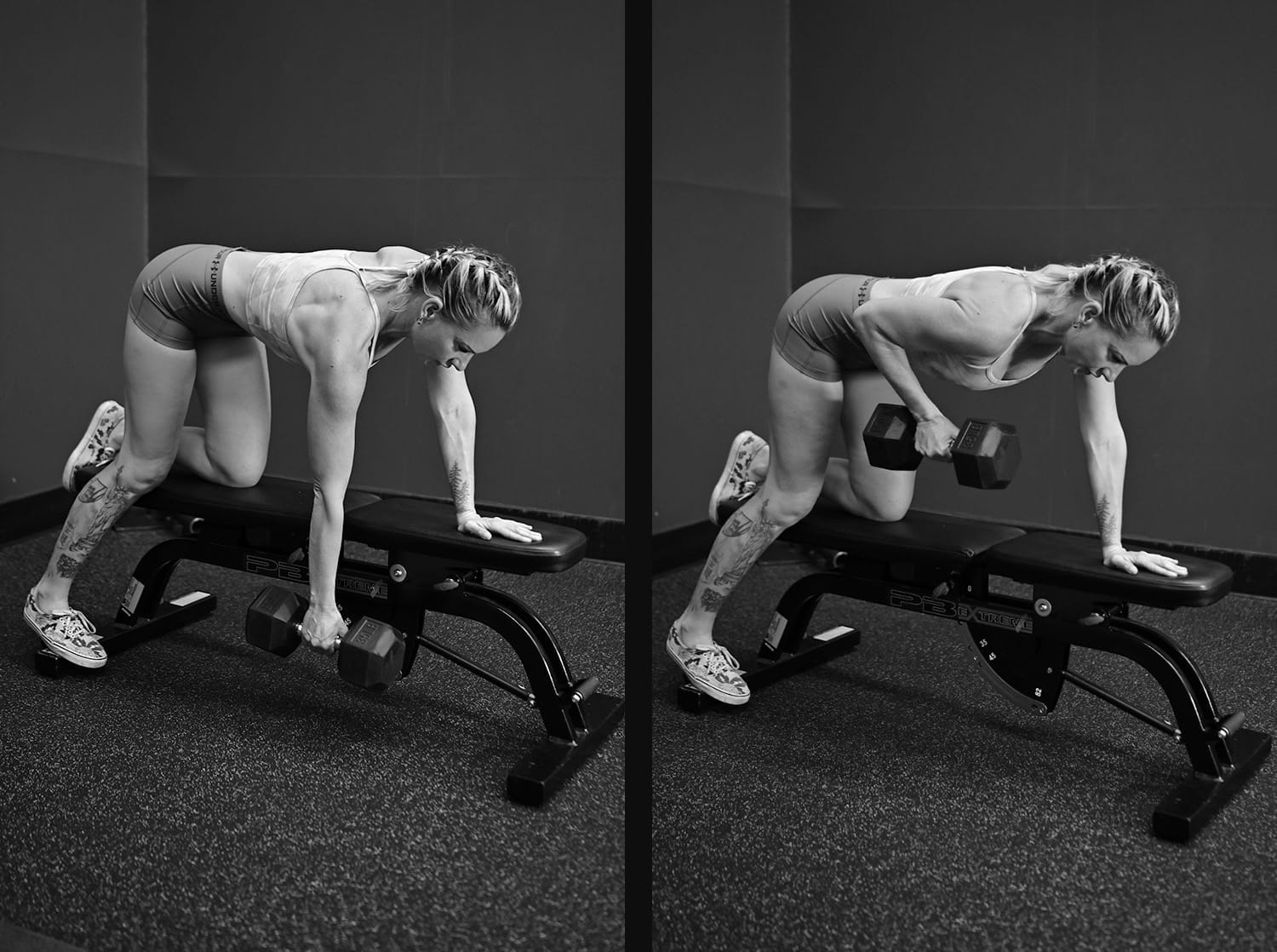
Dumbbell row
The dumbbell row is a great exercise for your back and core.
How to:
If you have a bench, place the knee and arm of the non-working hand on the bench and grab a dumbbell with the other hand. If you do not have a bench, you can do it standing next to a table with the non-working hand resting on the table side for balance.
Pull the dumbbell upwards with your elbows close to your sides. Keep your back straight and return to the starting position.
Suitcase or farmer carry
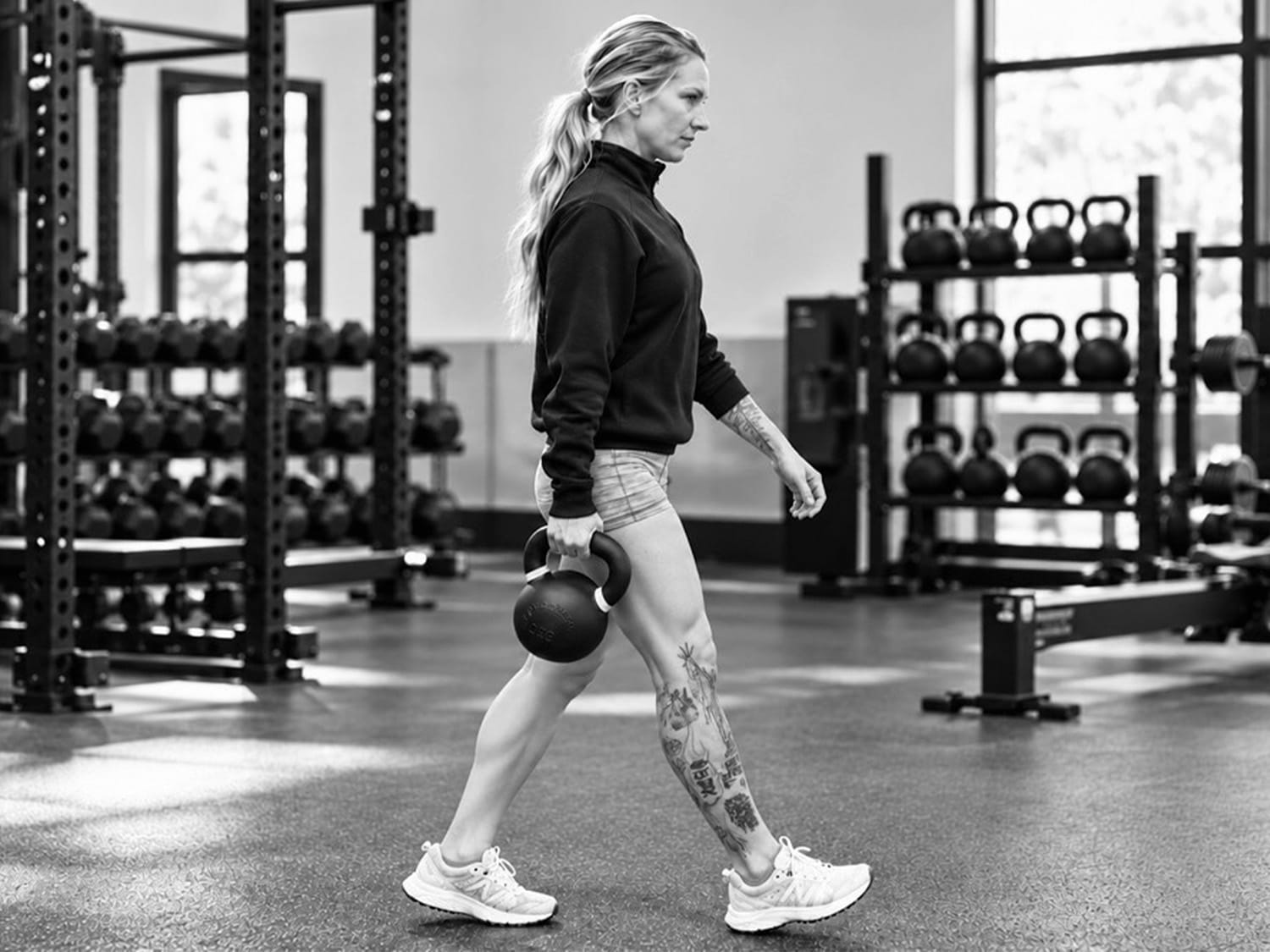
The carry targets grip strength and core control. You can either do the Farmer Carry (one dumbbell in each hand) or the Suitcase Carry (only using one dumbbell in one hand)
Pick up the weight, stand tall and simply walk for either time or distance. Start with 20-30 seconds, rest, and repeat for 3 sets total.
Try to do these workouts twice a week and add cardio in between. A beginner week could look like this:
Monday: Strength
Tuesday: Easy cardio
Wednesday: OFF
Thursday: Strength
Friday: Easy cardio
Saturday: OFF
Sunday: Optional interval training
What this means for your health
If you’ve always thought that resistance exercise was about looking more ‘buff’, I hope you now see that, as we get older, these exercises are about staying strong.
Patricia’s exercises illustrate this so well.
The goblet squat helps you get up from a chair with a toddler in your arms
The hinge prepares you to lift a heavy bag of groceries from the floor to the kitchen counter
The push-up makes it easier to get up from the floor, or push open a heavy door, while the dumbbell row helps you pull open that same door
The farmer’s carry makes it easier to get bags of groceries from the car to the kitchen without having to put them down in the hallway.
Resistance exercise gives you the everyday strength to stay independent and live life on your terms far into the future. And, as a very big added bonus, they may help you live longer, too.
As always, your responses are anonymous, but they really help me tailor future content to what’s most helpful to you. Please take a moment to click a button.
HEALTH TWEAK OF THE WEEK
If you’ve never been quite sure how to start strength exercise, you now have a blueprint from a professional coach, and several very good reasons to make this the week you begin. Choose two non-consecutive days this week and pencil in some time.
If you’re starting from scratch, pick one or two of Patricia’s exercises and make the first session a run-through with light resistance. Once you’re comfortable with the exercises, you can add weight and build a regular routine, adding more exercises over the coming weeks until you can do Patricia’s full routine.
Start with a version you can do today, and then build on that. For example, if push-ups feel challenging, start with push-ups against the kitchen counter, progressing to knee push-ups and then classic push-ups as you get stronger.
If you’re already doing some strength exercises, does your routine cover squats, hinges, push, pull and carry? If one of those is missing, consider including those next time.
When you’re ready to go further, Patricia’s Menopause Training Blueprint newsletter has lots more exercises and other great information, so go take a look.
🎧 Prefer to listen while seeing how long you can hold a plank?
🎙️ This week’s One Health Tweak a Week podcast explores why strength exercises deserve a protected slot in your weekly routine.
We look at the evidence comparing omnivores, vegetarians, pescatarians and vegans, including some findings that challenge conventional wisdom.
You’ll hear:
How muscle halves as a share of body weight from our 20s to our 70s
Why our independence in later life relies on keeping our muscles strong
How people who regularly do resistance exercise tend to live longer
Why typical daily activities like walking and gardening aren’t a substitute for targeted strength exercises
How resistance exercise is associated with a lower risk of premature death
A simple resistance exercise routine to strengthen your key muscle groups.
👉 Perfect listening for your next session of squats, hinges and push-ups.

🧭 Before you go
💬 What advice would you give to someone just setting out with strength exercises? What helped you make them a regular feature of your weekly routine?
📤 Know someone who thinks their daily walks are all they need to stay strong far into the future? Forward this to them - friends don’t let friends quietly fade away.
Until next Saturday – grab those dumbbells, or a backpack full of books, and show your muscles how much you need them to stick around.
– Ben
I doubt I could do those things without this strength training. Peter attia’s book Outlive really got me thinking about being able to do those 3 things and more. And that's really my focus. I see too many around my age barely able to move. Hopefully this keeps me out of the nursing home!
Soon to be 81, I've been doing 3 30 to 40 minute strength training sessions for about the past 5 years. Until about 6 months ago, I would swim twice per week between sessions. Now that's just too exhausting as I find recovery taking more time. As I talk with others around my age, they're telling me similar - our bodies are taking longer to recover the older we get. Listen to your body and don't overdo it