
Time in Nature Is Linked to Longer Life. Are You Getting Enough?
Regular time in nature is linked to lower stress, better mood, improved sleep and longer life - and the useful dose may be smaller than you think.

For years, I commuted from the countryside into London. Every evening, as I left the motorway and turned onto the narrow roads that wound through the green belt, something shifted. Shoulders dropped. Breathing slowed.
Nothing dramatic happened. No choir of woodland creatures appeared (I’m not Snow White after all), but it felt less like scenery and more like my nervous system letting go.
I’m lucky enough now to live on a farm. Just opening the curtains on a morning and looking out at the view makes me smile. For a long time, I assumed this was simply personal preference: “I’m a country person.” End of story.
But what if it isn’t just preference? What if your body is responding to something measurable, something that shows up in cortisol levels, sleep architecture and cardiovascular risk?
We tend to treat time in nature as a nice-to-have: a weekend walk, a holiday snap, a background screensaver. The evidence suggests it may be an important low-cost health input. Something worth building into the week with as much intention as we give to exercise or diet.
Let’s look at what the studies actually show, and you’ll see what I mean.
A surprisingly broad stack of benefits
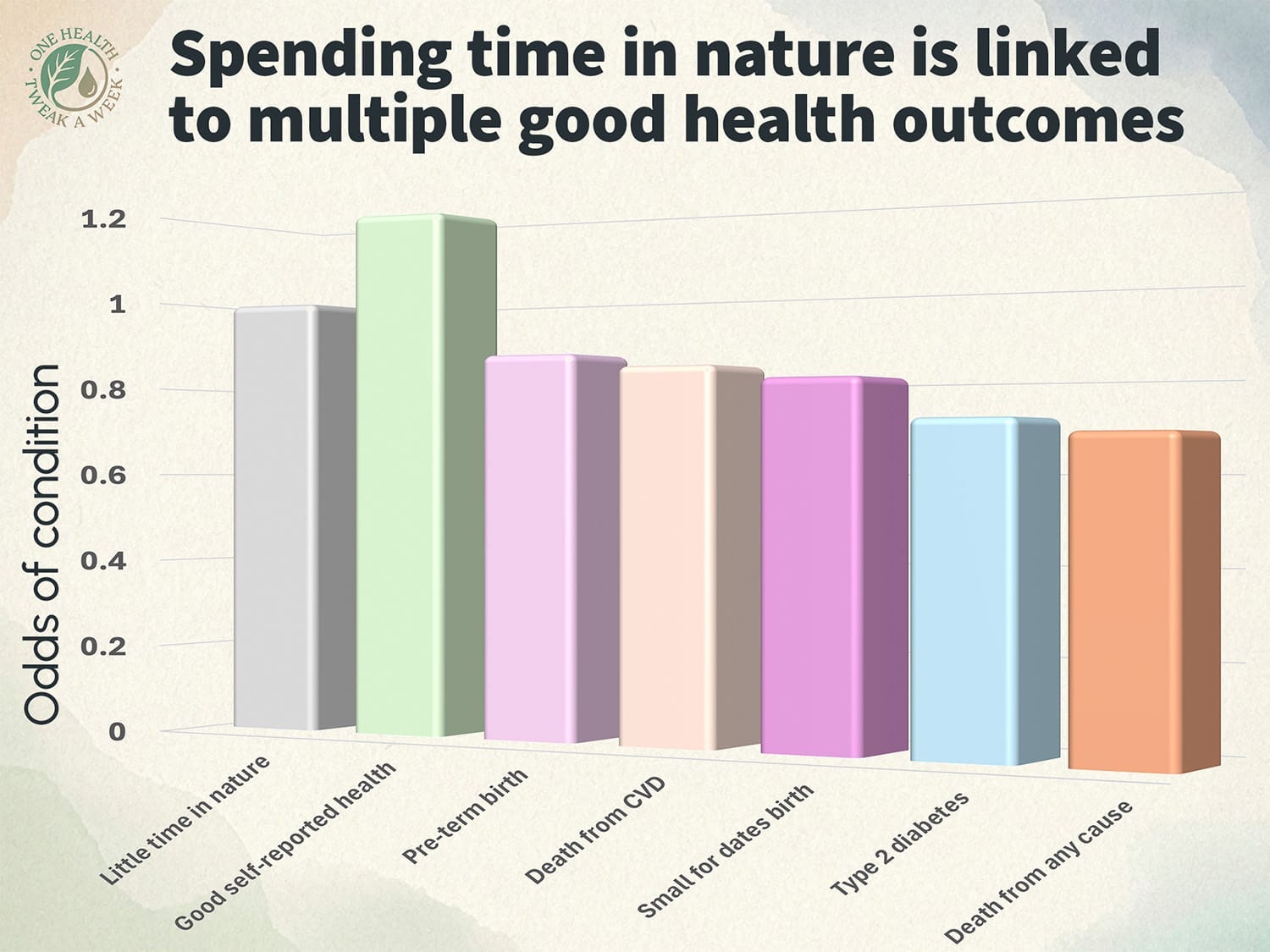
In 2018, researchers published a meta-analysis of 143 studies (a mix of observational and intervention designs) examining the health outcomes associated with exposure to green spaces. The results were striking in their breadth:
31% lower risk of premature death from any cause
16% lower risk of dying from cardiovascular disease
28% lower risk of type 2 diabetes
12% higher likelihood of reporting good overall health
Those are big numbers.
The 31% mortality figure in particular is large enough that I suspect it overestimates the true effect. And greener neighbourhoods are often wealthier neighbourhoods. They may be safer, quieter, less polluted, more walkable, and better resourced.
But even taking that into account, the signal is consistent across outcomes and across studies. Something real is going on.
Stress, mood, and mental health
The long-term disease associations are compelling, but the most intuitive evidence sits closer to that motorway-to-country-road feeling.
Nature seems particularly relevant to stress.
A meta-analysis of studies examining the effects of time spent in natural environments on stress found that nature exposure was linked to lower levels of cortisol (the stress hormone), lower self-reported stress, lower anxiety, and modestly lowered blood pressure. And these results are consistent across multiple populations and study designs.
A separate review of 50 studies looking at exercising in green spaces found moderate-to-large effects on depressive symptoms in randomised trials: roughly equivalent to a two-in-three chance that someone doing green exercise would score better than someone in the control group. The studies varied considerably, so the precise effect size is uncertain, but the direction is clear.
I love the Japanese idea of shinrin-yoku (forest bathing): spending a few days in forested areas, enjoying slow walks and time sitting amongst the trees. Studies have linked it to lower stress hormones and blood pressure, improved cardiac physiology, and even modest improvements in immune function. You don’t need to book a flight to Japan for this, but the principle is sound: slow, unhurried time in natural surroundings appears to let your stress physiology stand down.
Now, this doesn’t mean a walk in the park replaces proper treatment for depression. It means green exercise looks like a useful, low-cost, supportive habit.
A treadmill may be good for your cardiovascular system. A walk under trees may give you the treadmill, plus birds, weather, smells, changing light, and often company.
Sleep and cognition
The evidence also reaches into sleep.
Eleven of 13 studies in a systematic review found that spending time in green spaces improved both sleep quality and total time asleep. It’s a consistent pattern, though the mechanisms are likely tangled: less noise, more physical activity, lower stress, better light exposure during the day.
For cognition, the evidence is more modest but still interesting. In a subset of the Nurses’ Health Study, looking at more than 13,500 women, those living in areas with more green space had slightly higher scores on some cognitive measures: roughly equivalent to being one year younger.
That’s a small effect, and it’s observational, but it’s consistent with what we know about stress, sleep, and exercise, all supporting brain health. If nature promotes all three, it’s no surprise we see benefits for brain health.
If regularly spending time in nature can slow my brain aging by a year, I’ll happily take that.
How much is enough?
We hear “spend time in nature” and imagine a proper hike, a weekend away, a national park, expensive waterproofs, and unfolding a laminated map in the rain.
But the useful dose seems to be much more doable.
An Australian study found that spending just 30 minutes each week in nature was linked to a lower likelihood of depression. The researchers estimated that if everyone spent at least 30 minutes weekly in nature, it could cut rates of depression by 7% and high blood pressure by 9%.
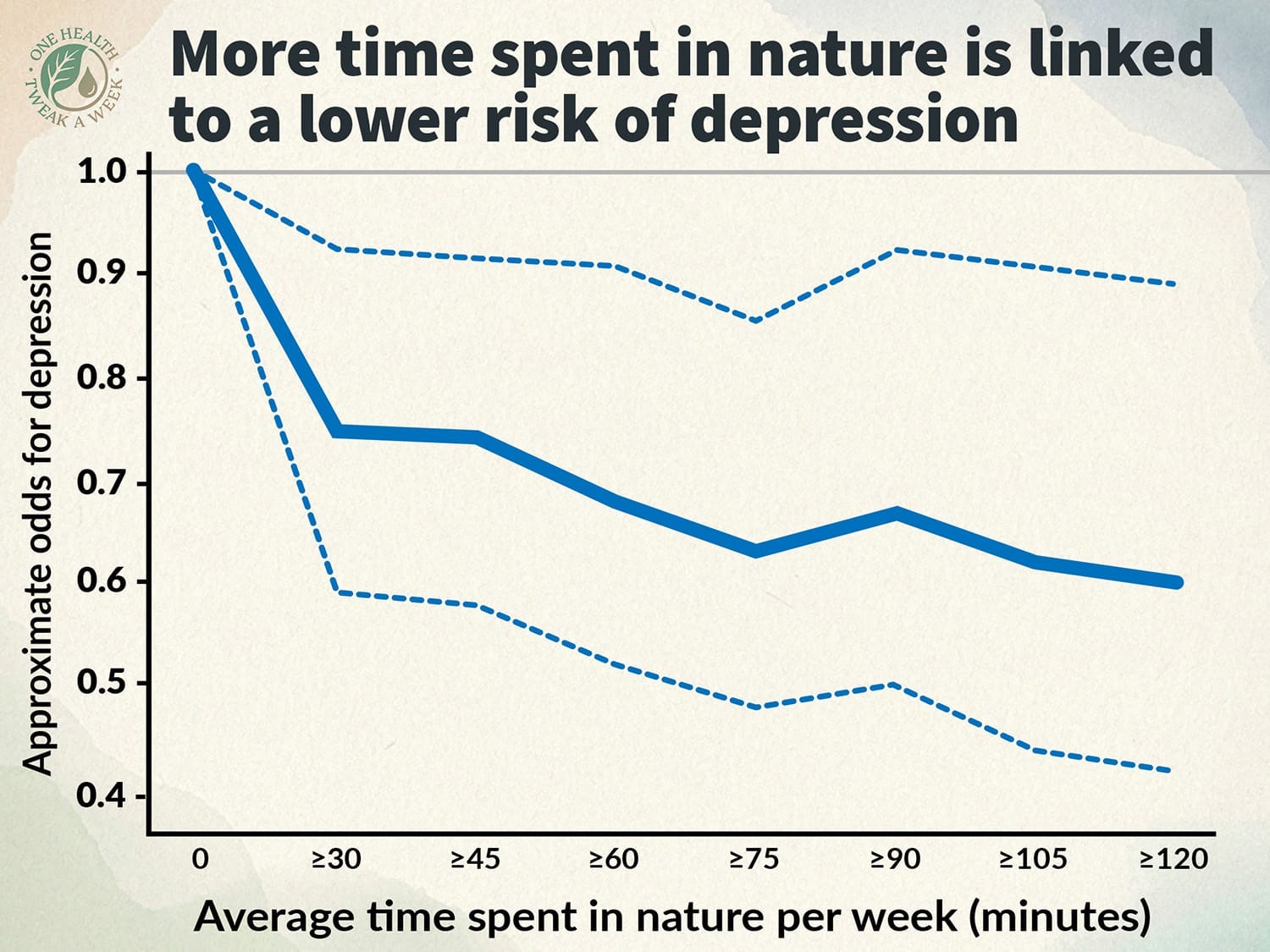
A broader evidence base suggests 120 minutes per week as a useful target for overall health and wellbeing: either as one longer visit or several shorter ones.
But does it matter how you split that time?
Possibly yes. Researchers found that lower risks of depression, greater physical activity, and stronger social cohesion were more strongly linked to the frequency of nature visits than to their duration. In other words, four 30-minute park visits may do more than one two-hour hike.
And the threshold for short-term benefit is remarkably low. In a review of 12 studies involving young people aged 15 to 30, as little as 10 minutes of sitting or walking in nature significantly improved markers of psychological and physical well-being.
We’re talking a 15-minute walk through a park at lunch. A cup of tea in the garden. A route to the shops that takes you down the leafy street. A phone call taken while walking under trees instead of pacing around the kitchen.
I think we can almost all manage that.
Not all green space is equal
A beautiful, safe, walkable park with mature trees isn’t the same as a muddy recreation field beside a bypass. A wooded path isn’t the same as a strip of grass no one uses.
A tree-lined street you walk down every day may matter more to your actual life than a large patch of green you never get to.
Trees seem to matter more than grass. Australian researchers found that lower rates of diabetes, cardiovascular disease, and high blood pressure were observed in areas with more tree cover, while green space in general was linked only to lower diabetes rates. Biodiverse, wooded spaces also appear to offer greater restorative and mood benefits than simple grass fields.
And here’s a lovely detail: birdsong may independently contribute.
Exposure to birdsong has been linked to lower anxiety and depression, with stronger effects when more species are singing. One possible explanation is that birdsong signals safety. Birds tend to sing when there are no predators about, so our brains may be responding to an ancient environmental cue: the world is not currently trying to eat you.
For a sparrow, that’s a surprisingly good public-health intervention.
A large European study found that life satisfaction increased more with a 10% rise in local bird diversity than with a 10% increase in income. That’s a lovely reminder that biodiversity isn’t just an abstract environmental concern. It’s part of the texture of human wellbeing.
What if you can’t get outside?
Of course, not everyone has equal access to safe, beautiful, usable green space.
Some people live in dense urban areas. Some have mobility problems. Some are caring for others. Some work long hours. Some live where the nearest “green space” is technically green but functionally bleak.
Fortunately, evidence suggests that something is better than nothing. In a now-classic 1984 study, a researcher examined patients recovering from gallbladder surgery at a Pennsylvania hospital. Those whose room window overlooked greenery recovered faster and needed fewer painkillers than those facing a brick wall.
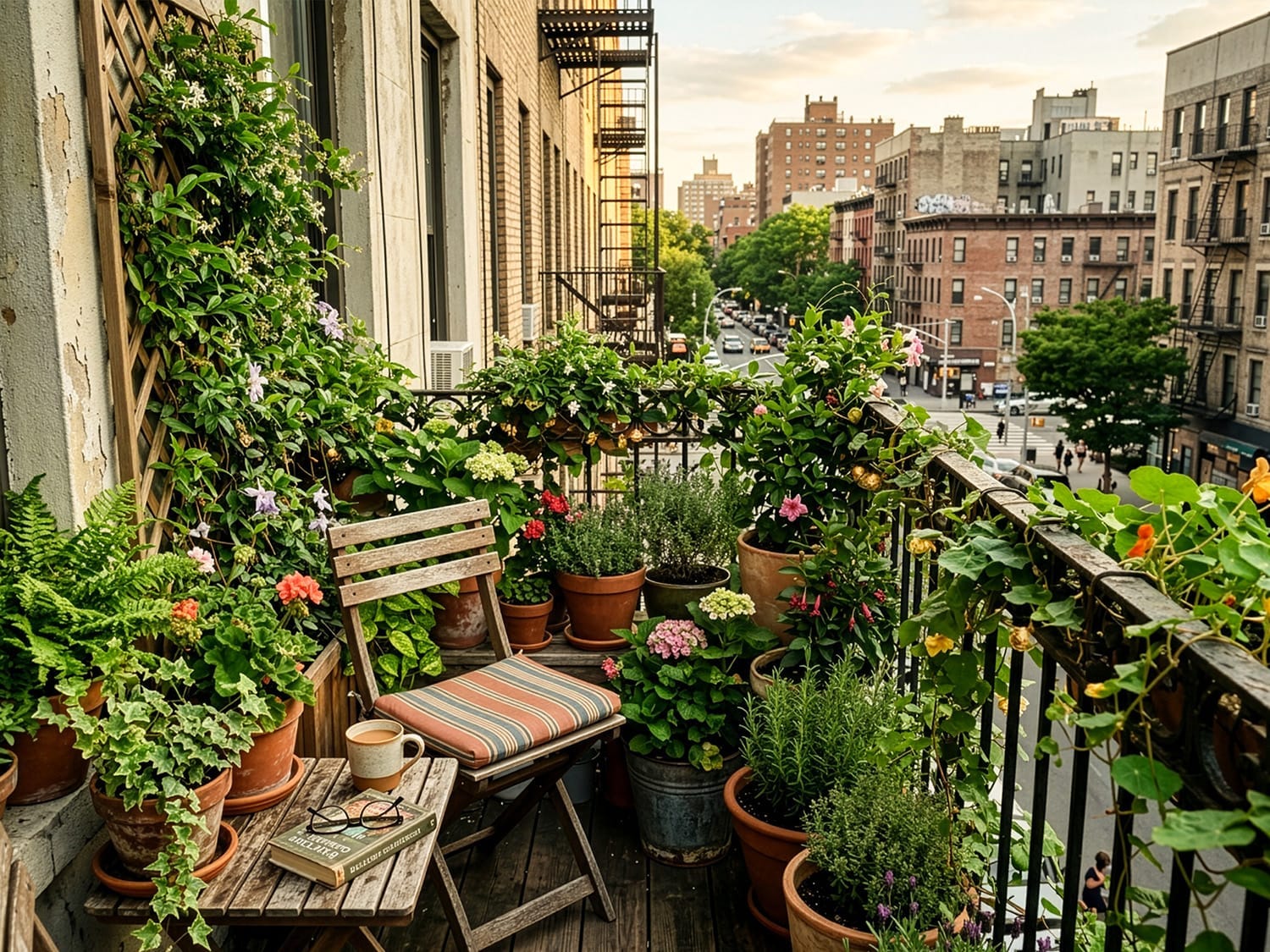
More recently, a Taiwanese study showed 120 adults aged 65 and over a 20-minute nature video through virtual reality headsets. Mood scores improved afterwards. These are fallback options rather than equivalents to the real thing, but they suggest that even perceiving nature counts for something.
A nature documentary, window view, indoor plant, balcony, birdsong recording, or nature video is unlikely to reproduce everything you get from real-world outdoor exposure: light, movement, air, sound, scale, and the mild indignity of being rained on.
But if your week is constrained, they still count as something.
The confounding question
Now, let’s get back to that obvious objection: wealthier people can afford greener, safer, better-maintained neighbourhoods. Is nature the cause, or just a proxy for privilege?
Researchers consistently adjust for socio-economic status, income, education, smoking, physical activity, and related factors. Doing so reduces the effect sizes (as you’d expect), but substantial associations between exposure to nature and better health remain.
Encouragingly, an analysis using UK Biobank data found that benefits were actually greater for those with lower socio-economic scores or living in more deprived areas. Perhaps there’s a threshold effect: wealthier people are more likely to meet it in their day-to-day environment, so additional green space makes more of a difference to those for whom it’s scarce.
And some of the benefit likely comes from what nature enables: more physical activity, more social contact, less noise and heat, better sleep environments. Perhaps it’s more accurate to think of nature as a platform for multiple health behaviours, rather than a single active ingredient.
What this means for your health
The practical implication is simple: treat nature less like a weekend luxury and more like a regular health input.
You don’t need to move to the country. You don’t need hiking boots.
You need visible, usable, preferably tree-rich green space in your week: often enough, and long enough, that your stress responses can feel the benefit.
The first 30 minutes each week may matter more than you think. And frequency seems to beat duration.
As always, your responses are anonymous, but they really help me tailor future content to what’s most helpful to you. Please take a moment to click a button.
HEALTH TWEAK OF THE WEEK
We tend to treat nature as scenery: pleasant, optional, and slightly separate from the serious business of health.
The evidence suggests we should take it more seriously.
Many studies link green space exposure to lower rates of premature death, cardiovascular mortality, and type 2 diabetes risk. The strongest evidence points to stress, mood, and sleep benefits. The first 30 minutes per week appear to deliver a disproportionate share of the mental-health benefit, and frequency matters more than duration.
The best version is frequent, visible, ordinary, and enjoyable: trees when you can get them, water when it’s available, birdsong as a bonus, and a safe place you’ll actually use.
1. Put 10 to 30 minutes of nature into at least 3 ordinary days this week.
Walk through a park. Sit under trees. Eat lunch outside. Take the leafy route. Spend time by a river, lake, canal, coast, garden, or allotment.
Even 10 minutes of sitting or walking in nature has been linked with improved wellbeing markers, and 30 minutes per week may capture a meaningful share of the mental-health benefit.
It doesn’t need to feel like exercise. Sitting on a bench surrounded by greenery counts - excellent news for those of us who believe benches are one of civilisation’s underrated achievements.
2. Aim towards 120 minutes per week if you’re able.
If you can do 20 minutes on most days, lovely. If this week only allows one 30-minute park walk, that still counts. Frequent visits may matter more than saving everything for one occasional long outing
3. Upgrade the quality when you can.
Choose trees over bare grass, birdsong over traffic, water over concrete, and safe, walkable places over “green” spaces you won’t actually use.
Tree canopy appears more strongly linked with several cardiometabolic outcomes than grass alone, and birdsong may add an extra psychological benefit.
If getting outside is hard, use fallback nature: a window view, indoor plants, a balcony, birdsong, or a nature video. Not perfect, but better than nothing.
If someone came to mind while you were reading this, please forward it to them. These tweaks may be small, but practised consistently they can genuinely change long-term health.
A useful nudge at the right moment can make all the difference.
Nature doesn’t need to be dramatic to matter. It doesn’t have to be a mountain or a forest retreat.
A few trees on the walk to the shops. Ten minutes in a park at lunch. A cup of tea by an open window with birdsong in the background. These are small things, but small things repeated often are how most health changes happen.
So this week, don’t wait for the perfect walk. Find the nearest patch of living world and spend a little time there. Let your eyes rest on something green, your breathing slow a fraction, and your nervous system remember that not every part of the day needs to be clenched.
That’s the tweak: not more effort, but a little more contact with the world your body evolved to recognise.
🎧 Prefer to listen while you’re out for a walk, sitting in the garden, or taking the leafy route home?
🎙️ This week’s One Health Tweak a Week podcast explores why time in nature may be more than a pleasant extra, and how small, regular doses of green space can support stress, mood, sleep, and long-term health.
You’ll hear:
Why green space is linked with lower rates of premature death, cardiovascular disease, type 2 diabetes, and better self-rated health
Why the strongest, most believable benefits may be for stress, mood, and sleep
Why 10–30 minutes in nature may be enough to make a difference, especially if you do it often
Why trees, birdsong, water, and safe, walkable places may matter more than “green space” on a map
👉 Ideal listening for your next park walk, commute, garden potter, or cup of tea by an open window while pretending you’re not checking your email.

(Episodes are free for now. Paid subscribers keep the lights on - and unlock bonus content, private chat, and the tools I’m building to help you actually do these tweaks, not just nod along to them.)
🧭 Before you go
💬 What’s one small nature dose you could repeat this week: 10 minutes under trees, lunch outside, a greener route to the shops, or a phone call taken while walking instead of pacing round the kitchen?
📤 Know someone who could use a little more green in their week?
Forward this to the friend who’s stressed, stuck indoors too much, or convinced that nature “only counts” if it involves hiking boots, a national park, and a frighteningly expensive waterproof jacket.
💡 Seen wild claims about forest bathing, grounding, or nature “resetting” your body?
If you’re unsure what to believe about green space, blue space, birdsong, forest bathing, or nature-as-medicine claims, hit reply. I’m happy to dissect the most suspicious ones in a future issue.
👥 Paid corner - Our private chat is open. It’s where we compare notes on what actually sticks: small routines, better prompts to get outside, practical ways to make healthy habits easier, and early access to the tools and experiments I’m building for 2026.

Until next Saturday – be kind to Future You, and give them a week with more trees, less concrete, and fewer days spent entirely under artificial light.
Don’t forget, you can find previous issues of the One Health Tweak a Week newsletter on the homepage.

Love this post on so many levels Ben! I started doing an hour + hike in the hills near my office Monday through Friday during my lunch break. I had to extend my lunch break time and lose 5 hours of work/pay a week but the level of stress reduction I feel daily is well worth it.
Also, I can tout the science to my med school patients trying to get through the rigors of medical school.
Nature has always been pure pleasure for me.
Even if your time in Nature is limited to short sessions you may get more enjoyment, relaxation, and multiple health benefits from it by connecting to it in the way that best fits your situation. For example, many people feel overwhelm/stress from visual over-stimulation (like hours in front of a computer screen daily) so you might want sit, or lay down, outdoors and close your eyes and focus on:
* what you hear (birds, the rustling of leaves, the wind, the sound of a creek or ocean, etc),
* the fresh forest scents that reach your nose, and/or
* what you feel - the warmth of the sun, or coolness of a breeze, on your skin or simple calmness you feel inside.
Or you may feel like walking or running through the forest if you sit a lot during your work day and feel the fresh clean air in your lungs.
Or maybe walking barefoot and feeling moss or leaves or sand under your feet makes you feel calm and appreciative.
We experience the world in different ways so personalizing your time in Nature to the ways that are in tune with how you prefer to experience things can make your outdoor time even more enjoyable and rewarding for you.