

Nuts have a bit of a reputation.
Healthy, yes - but also high in fat and calories. So maybe you dabble. A few almonds here, the odd cashew there. But let’s be honest: if you’re still avoiding nuts because of the calories or fat, you’re missing one of the easiest longevity wins on the shelf.
What gets lost when we worry about calories or fat?
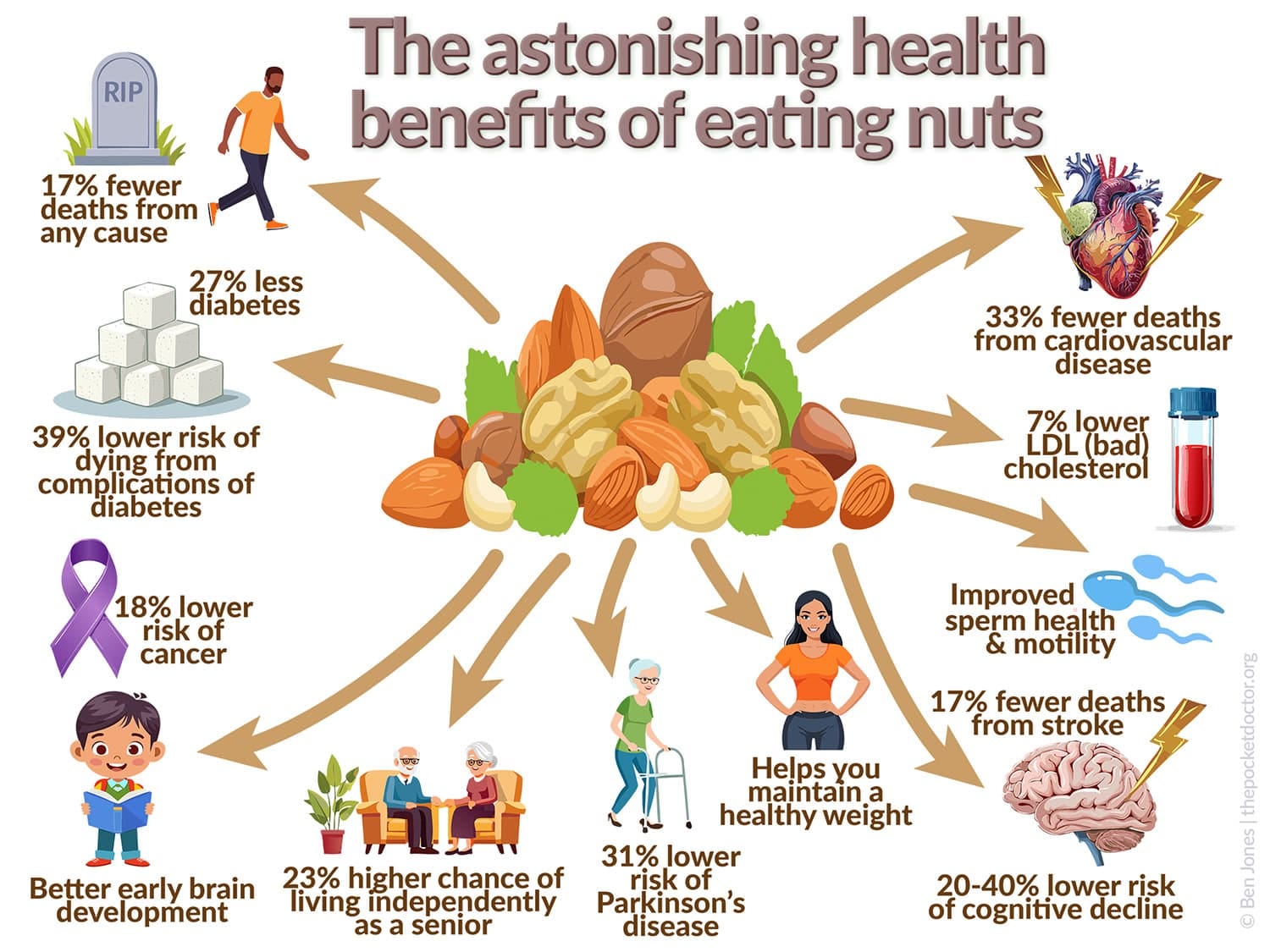
Just 15g (half an ounce) of nuts a day - a small handful - can slash your risk of premature death by 17%.
That’s not a typo. That’s a tiny tweak with massive impact.
And that’s just the beginning:
🧠 Better brain health
🫀 Lower heart disease risk
🍬 25% less chance of developing diabetes
🧬 18% lower cancer risk
⚖️ Improved fertility
A lot of you picked up on this when I covered it recently in One Health Tweak a Week. That issue, Are You Ignoring the Snack That Could Cut Your Risk of Dying Prematurely by 17%?, was one of the most popular yet.
Eating nuts seems like a no-brainer, right?
But as with most things in nutrition, the devil’s in the detail.
Some are protein powerhouses. Others brim with calcium or omega-3. Some are sneakily high in omega-6, while others give you all your daily selenium in a single bite. Choosing the right nut can be the difference between a good habit and a great one.
So let’s crack this wide open:
Which nut should you be eating - and why?
Counting Calories? Don’t Count Nuts Out
I’ll admit it - before I looked closely at the data, I treated nuts with caution.
They’re high in fat, and therefore high in calories. So I saw them as a snack to go easy on.
But how do they actually compare, calorie-wise?
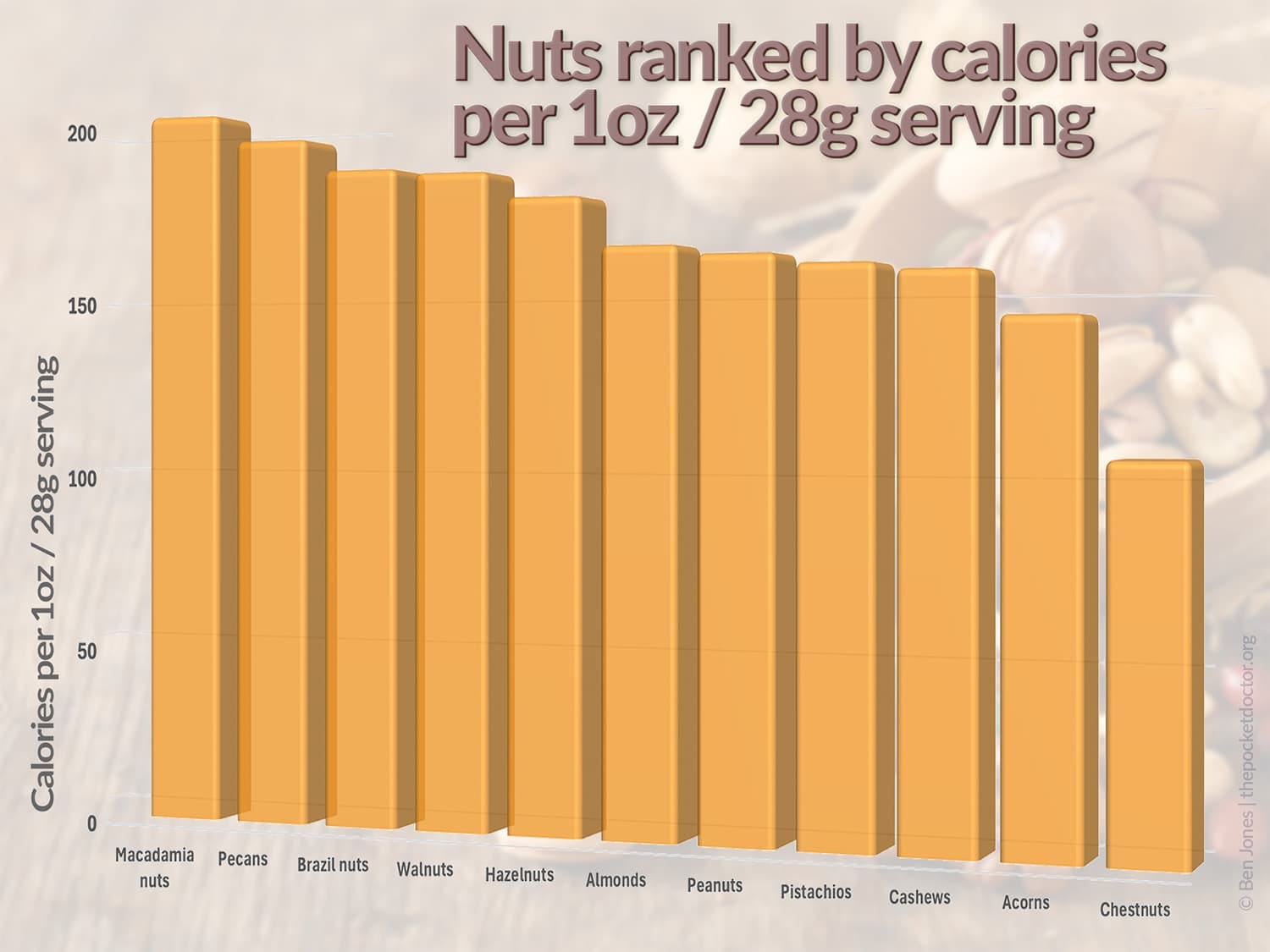
As the graph shows, there’s not much to choose between most nuts, calorie-wise - apart from chestnuts, which I’m guessing aren’t on your weekly shop.
Most nuts contain 150–200 kcal per 28g (1 oz) serving.
But remember: the health benefits plateau at just 15g - so you’re getting all the benefits for half the calories.
Even better: 5 to 25% of those calories aren’t absorbed due to incomplete digestion.
Chopped or ground nuts are digested more easily - so if you eat nut butter, you may absorb more calories than from whole nuts.
Take-home message: That small handful of nuts delivering major health benefits? It costs you just 75–100 kcal - and likely less in practice. Calorie concerns shouldn’t stop you from making this one of your daily habits.
Low-Carb? Nuts Still Make the Cut
Carb-conscious? You’re not alone.
Whether it’s for blood sugar, weight loss, or a full-blown keto regime, more of us are watching our carbs. So where do nuts fit in?
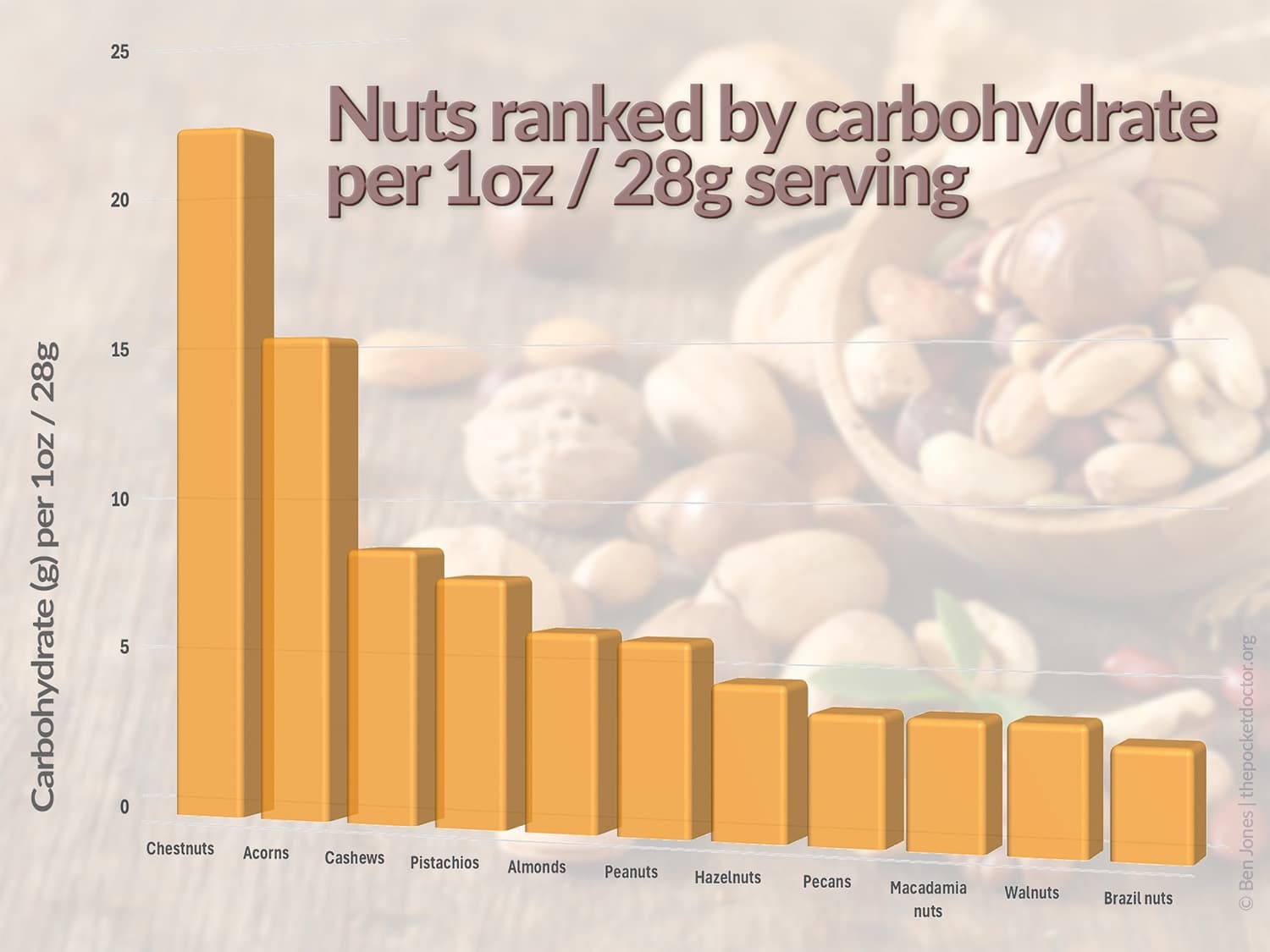
At the top end, acorns and chestnuts are clearly carb-heavy - but let’s be honest, neither is showing up in your snack drawer.
The common nuts - almonds, walnuts, cashews, pistachios, peanuts - are all naturally low in carbs.
Even better: the carbs they do contain are complex, not the fast-absorbing, blood sugar-spiking kind you’ll find in processed snacks.
Take-home message: If you’re watching your carbs, you’re safe with pretty much any nut you’d actually buy. Most contain <5g net carbs per 28g.
Which Nuts Pack the Most Protein (and Which Are Faking It)?
We’re living through a protein moment.
For those past retirement, that’s great news - most people in later life don’t get enough protein to maintain the muscle they need for strength, balance, and independence.
On the other hand, younger folks may be overdoing it - something we’ll return to in a future issue.
But if you’re looking to boost your protein intake through nuts, which ones are worth your time?
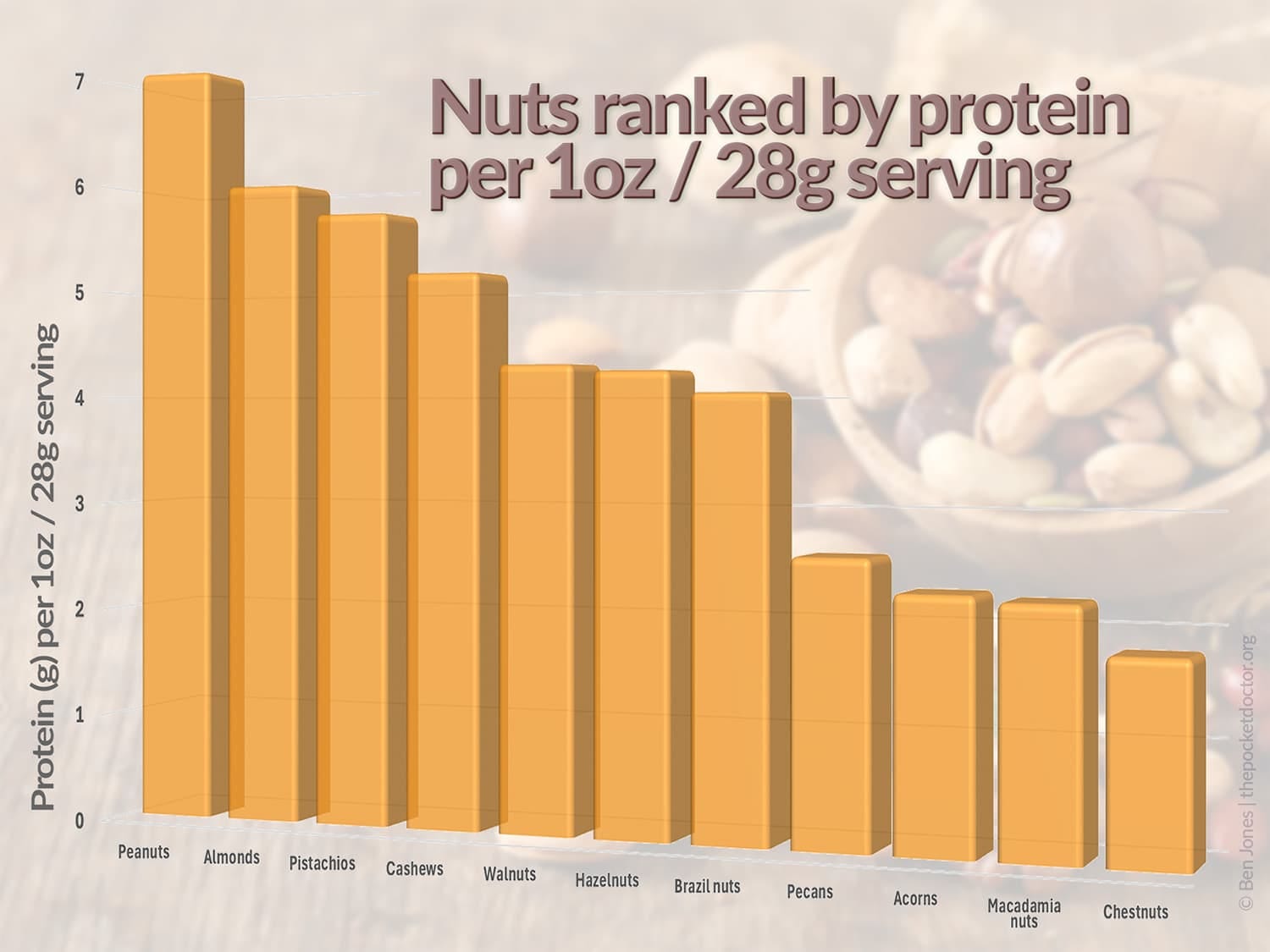
Peanuts are the protein champs, delivering 7g per 28g (1oz) serving.
The mid-range players - almonds, pistachios, cashews, walnuts, hazelnuts, Brazil nuts - come in at 4–6g.
At the lower end, you’ve got pecans, acorns, macadamias, and chestnuts, offering 2–3g per serving.
Before you remind me: yes, peanuts are legumes, not nuts.
But they’re nutritionally similar, widely eaten, and - let’s face it - no one’s calling them “ground beans” anytime soon.
Fun fact: Most of what we call “nuts” aren’t actually nuts.
Almonds, cashews, walnuts? They’re technically seeds of drupes - the same botanical family as peaches and plums. Brazil nuts? Seeds, too, but from a different kind of fruit.
The only true nuts in your snack bowl? Hazelnuts and chestnuts.
Still, if our language can cope with pineapple, sweetbreads, and peanut butter, I think we can let this one slide.
Take-home message: For protein, reach for peanuts, almonds, pistachios, or cashews. The rest may be tasty, but they’re not winning the protein awards.
Fat in Nuts: The Good, the Bad, the Balanced
Let’s round out our macronutrient tour with the one that made many of us hesitate: fat.
For me, it was omega-6 that kept my nut intake on the low side for years. I knew too much of it could be harmful, and many nuts are rich in it. So, I erred on the side of caution - missing out on the bigger picture (and the bigger benefits) in the process.
Once again, nuts vary widely, especially in the types of fat they contain.
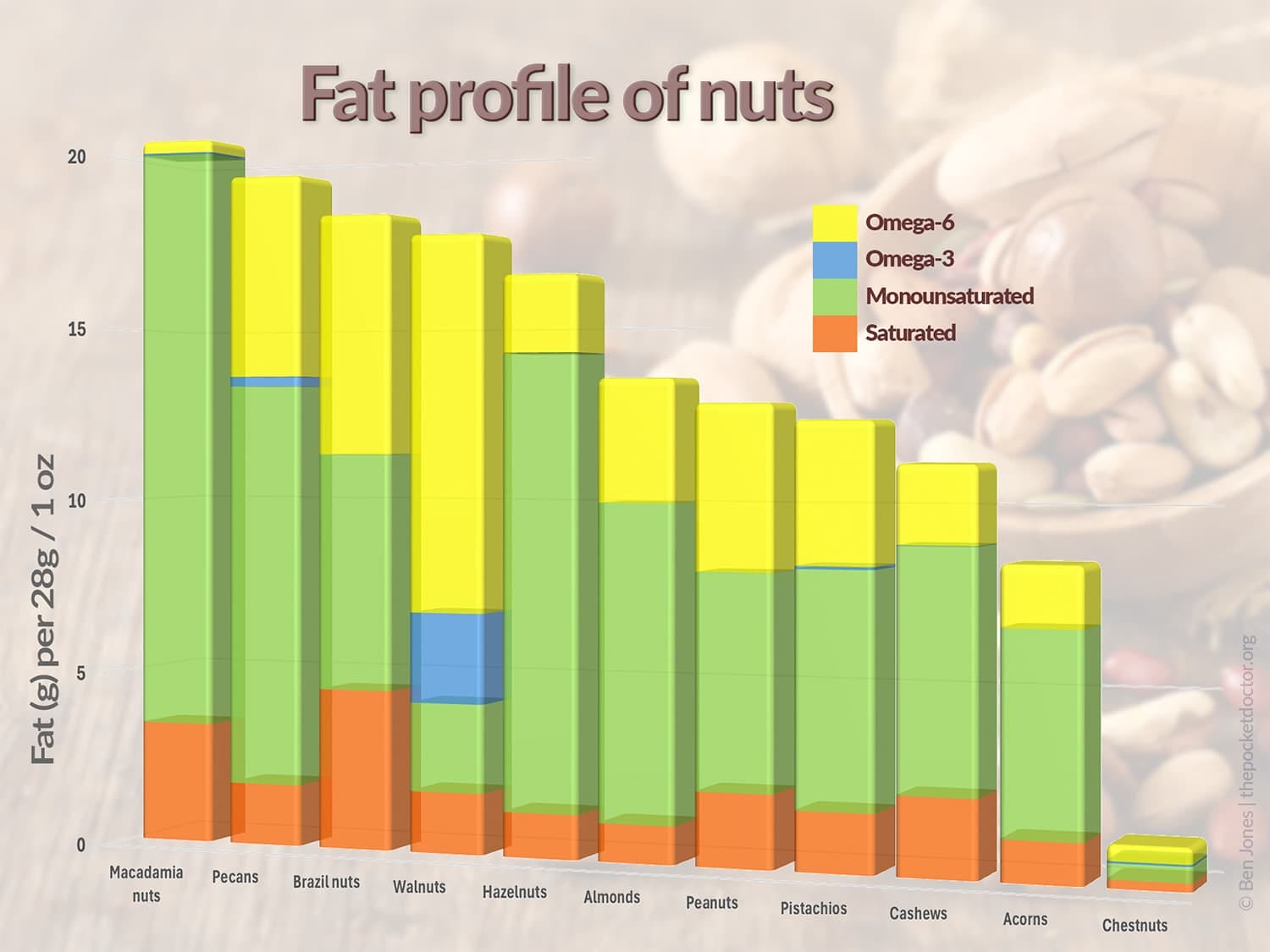
There’s a lot in this graph, so let’s break it down.
We’re generally advised to limit saturated and omega-6 fats (orange and yellow), and prioritise monounsaturated and omega-3 fats (green and blue).
But as ever, nutrition resists simple rules.
The good news? At the 15g daily dose that delivers peak health benefits, the total fat load is small enough that you don’t need to obsess over the breakdown.
Still, for those who like to optimise (or overthink!), here’s the deeper dive:
Saturated fats from animals are generally linked to poorer health outcomes. Plant-based saturated fats (like those in nuts) are less concerning. I wouldn’t base my diet around palm oil or coconut fat - but I’m not worried about the trace amounts in a few almonds or cashews.
Monounsaturated fats are the underrated heroes. Ideally, they should make up over half your fat intake—they’re strongly associated with lower mortality.
Most people in Western countries fall short. Nuts are a great source - especially macadamias, hazelnuts, pecans, almonds, cashews, pistachios, and peanuts.
Omega-3 fats are best known from fish, but the plant-based versions matter too. Only walnuts offer a significant omega-3 dose - but they also come with a large serving of omega-6.
Omega-6 is where it gets controversial.
We evolved on a diet with roughly equal omega-6 to omega-3. Today, that ratio is more like 15:1 in favour of omega-6 - thanks mostly to ultra-processed foods and seed oils. That imbalance is linked to inflammation and a higher risk of chronic diseases.
But (and this is important) nuts still reduce disease risk overall, despite their omega-6 content. Context is everything.
Take-home message: Nuts are rich in heart-healthy fats - especially monounsaturates, which most of us don’t get enough of.
If you’re eating a typical Western diet and want to rebalance your fats, macadamias, hazelnuts, and cashew are excellent choices.
Nuts Won’t Meet Your Calcium Needs - But They Can Help
Calcium doesn’t get much airtime these days, but it matters, especially as we age.
Only about a third of Americans meet the recommended intake (800-1000mg), largely because dairy consumption has dropped. The shortfall is especially pronounced in men, ethnic minorities, and lower-income groups.
The result? A quiet epidemic of weak bones.
By age 50, two in five white women will suffer an osteoporotic fracture.
Nuts won’t meet your calcium needs on their own, but they can still help, particularly if dairy isn’t your thing.
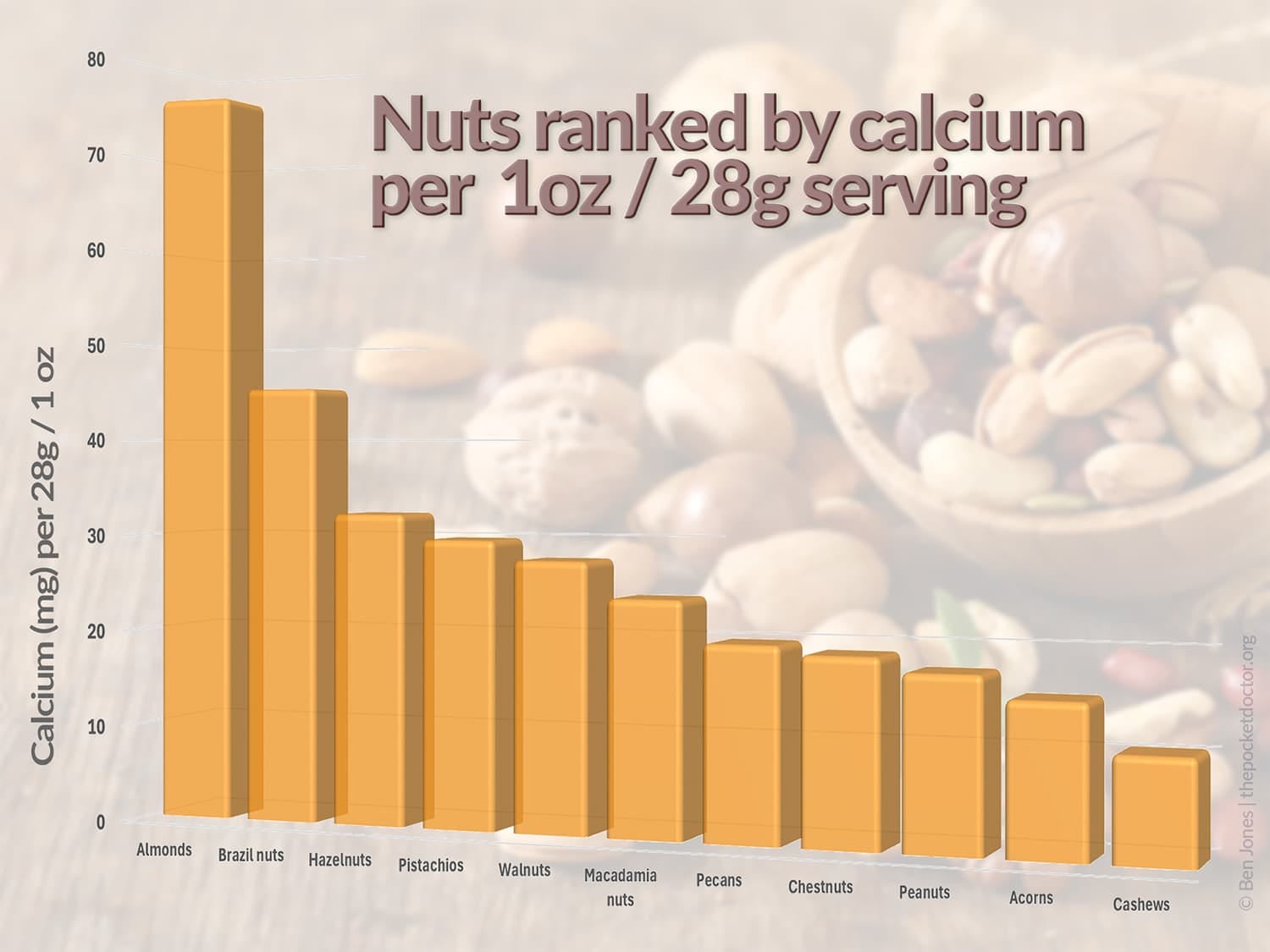
Almonds top the nut leaderboard, with around 75mg of calcium per 28g (1 oz).
A small handful (15g) gives you ~40mg - not a game-changer, but a meaningful boost.
Other nuts contribute smaller amounts, which can still add up as part of a varied, whole-food diet.
Don’t forget calcium’s partner in health: vitamin D. Most of us need more of it, especially during the darker months. A supplement is often a smart move.
Take-home message: Almonds won’t replace your calcium supplement - but they’re a smart choice if you’re looking to top up your intake, especially if you’re dairy-free.
Micronutrient Highlights: Small Doses, Big Wins
We’ve covered the big-ticket nutrients - protein, fat, carbs, and calcium - but nuts also deliver a range of micronutrients that are easy to miss but crucial to long-term health. Here are a few of the standout players:
🩸 Iron
Cashews lead the way here, with hazelnuts coming in second. While plant-based iron isn’t absorbed as easily as the kind found in meat, nuts can still help fill the gap, especially in vegetarian diets.
🛡️ Zinc
Again, cashews come out on top. Zinc plays a key role in immune function and wound healing, and is often low in plant-based diets. If you’re mostly meat-free, this is one to watch.
🧬 Selenium
Over a billion people worldwide don’t get enough selenium - a mineral essential for thyroid health, immune function, and sperm production.
Brazil nuts are nature’s most potent selenium source:
Just one nut can give you your entire daily dose - and then some.
But here’s the thing: too much selenium isn’t just unhelpful - it can be harmful.
Regularly eating more than 1–2 Brazil nuts a day can lead to selenium toxicity, which comes with symptoms like hair loss, brittle nails, fatigue, and nerve damage.
Bottom line: Enjoy one a day, not a handful. They’re a potent tool, not a daily snack.
⚡ Magnesium
More than half of Americans lack magnesium, a key mineral for blood pressure, glucose control, nerve function, and energy production.
Brazil nuts rank highest, but because of their selenium content, moderation is key. For more regular magnesium support, go for cashews and almonds.
🫀 Phytosterols: Nature’s Cholesterol Blockers
Phytosterols are plant compounds that compete with cholesterol for absorption, reducing the amount that makes it into your bloodstream.
One study found that eating 28g of nuts daily lowered LDL (“bad”) cholesterol by around 5%, a meaningful shift.
Pistachios contain the highest phytosterol levels among nuts. It’s not yet clear whether that makes them especially potent cholesterol-fighters, but it certainly doesn’t hurt.
🍇 Polyphenols: Not Just for Red Wine Drinkers
These antioxidant compounds may account for many of the health benefits of nuts. They’re also found in red grapes, tea, and dark chocolate, but nuts are a solid source too, especially when lightly roasted or raw, with the skin still on.
For maximum polyphenol impact: Skip the sugar-dusted options and go for nuts that usually come with their skins (like walnuts, pecans, and pistachios) or unpeeled varieties (e.g., almonds, peanuts, and hazelnuts).
The Best Nuts for Your Budget
We’ve talked about picking the right nut for your health goals - but what about your grocery budget?
Macadamias flown in from Hawaii might be a treat, but they’re not exactly everyday snacks. And with food prices climbing, cost matters more than ever.
This graph shows the average price per ounce (28g) of various nuts, based on data from major supermarkets in the US and UK:
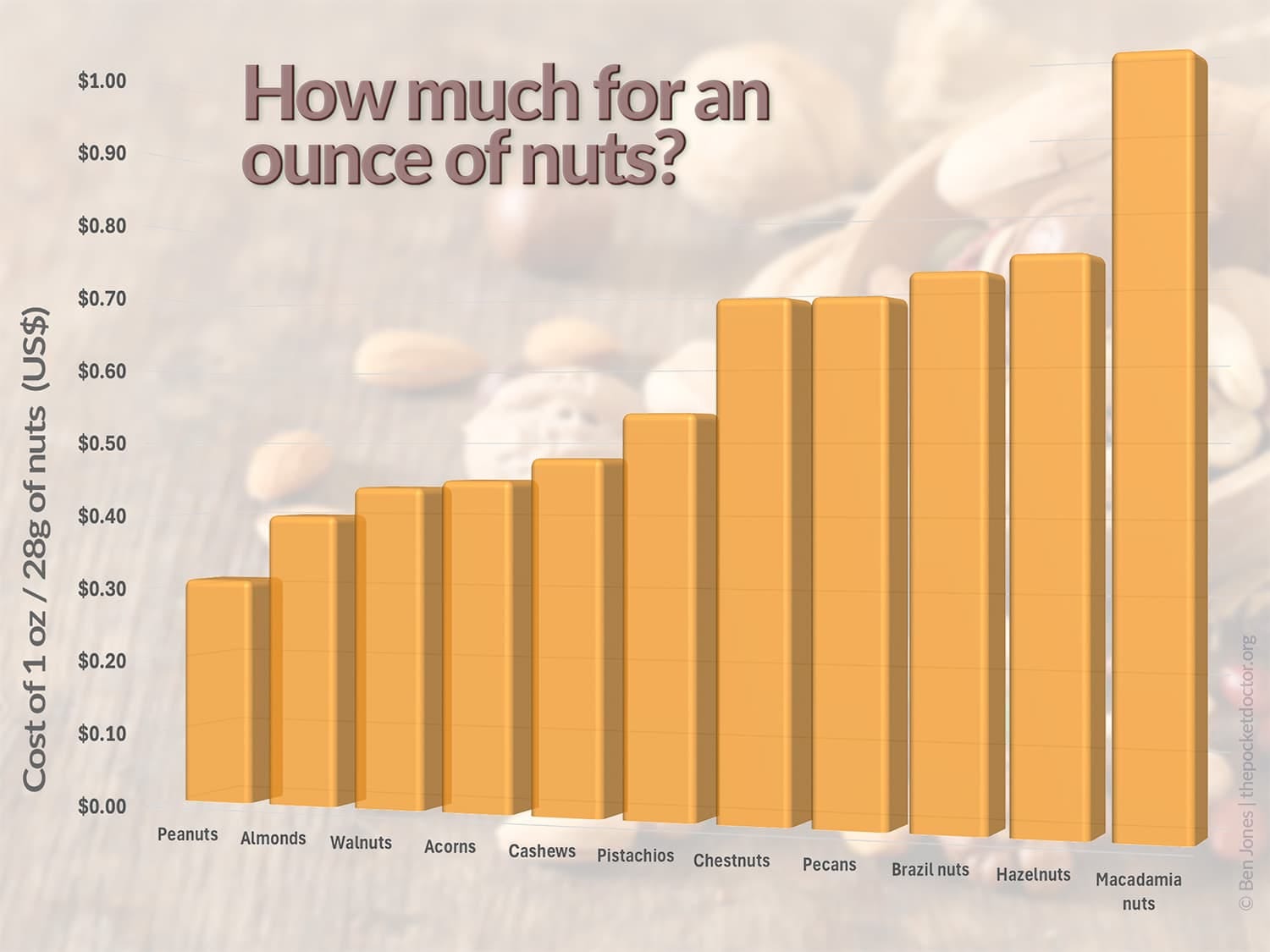
Peanuts are by far the most affordable - about 15 cents for a 15g (half-ounce) portion.
Almonds, walnuts, pistachios, and cashews sit comfortably in the middle, offering good value with solid nutritional profiles.
Macadamias top the price chart - not surprising, but worth keeping in mind if you’re aiming for daily use.
The good news? You don’t need to stick to one type of nut to get the benefits.
A varied mix spreads both the nutritional strengths and the costs.
Buy what’s on offer, rotate types, and aim for variety - your body (and budget) will thank you.
Up next: Let’s put it all together so you can snack smarter, live longer, and shop with purpose.
🥜 HEALTH TWEAK OF THE WEEK 🌰
Just 15g (half an ounce) of nuts daily—roughly a small handful—can cut your risk of early death by 17% and reduce your chances of:
🧠 Dementia
❤️ Cardiovascular disease
🩺 Diabetes
🧬 Cancer
⚖️ Fertility problems
Not bad for a snack you can fit in your palm.
Want maximum impact? Mix things up.
Just like fruits and vegetables, different nuts offer different strengths. Rotating your choices:
Covers more nutrient ground
Supports a healthier, more diverse gut microbiome
Helps you adapt to what’s on sale or in the cupboard
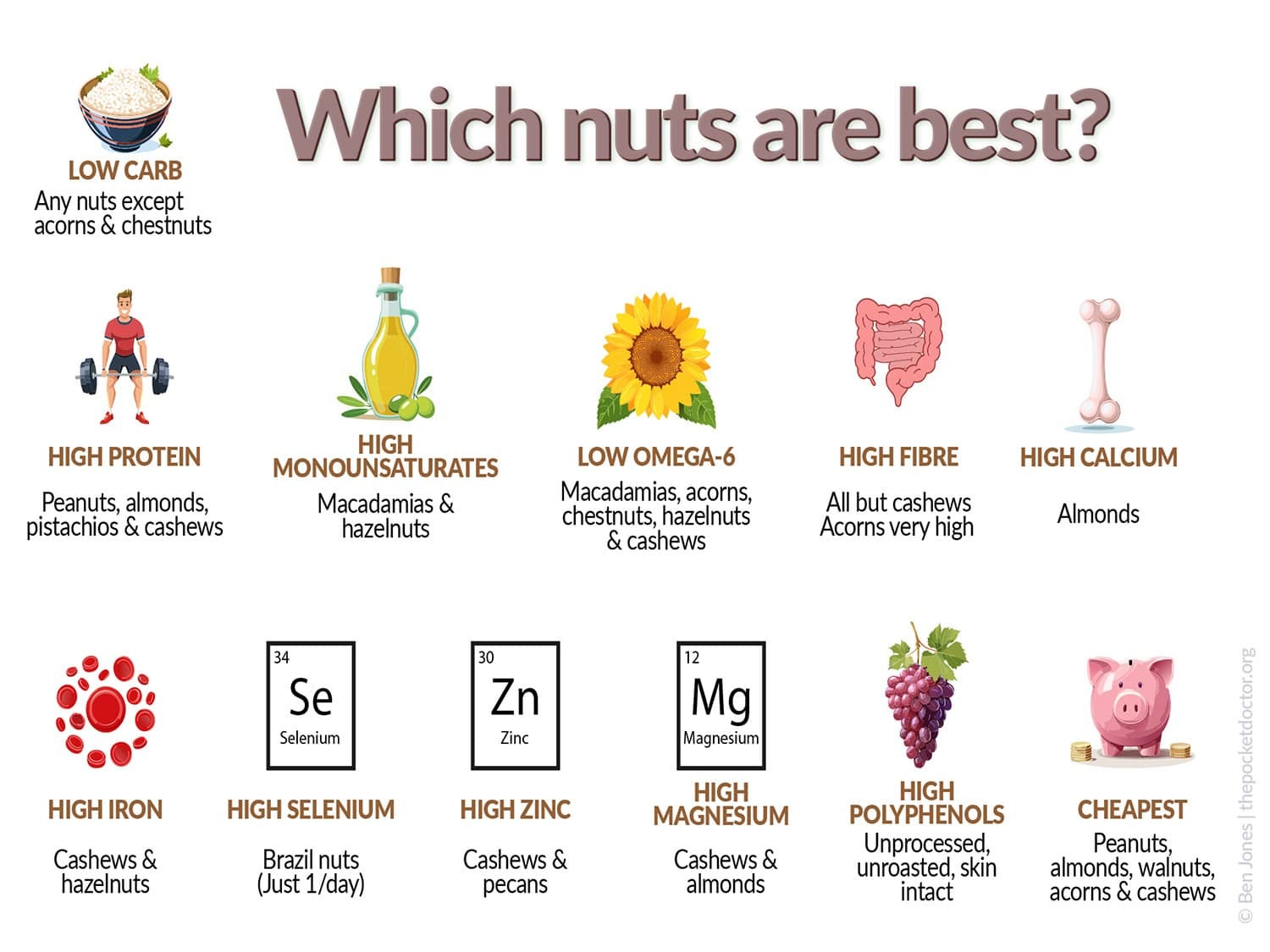
Here’s a closer look:
For protein: Opt for peanuts, almonds, pistachios, or cashews.
For carbs: If you’re going low-carb, steer clear of chestnuts and acorns.
For healthy fats: Macadamias and hazelnuts for monounsaturates; macadamias, hazelnuts and cashews to limit omega; and walnuts for omega-3 (but keep an eye on their omega-6).
For fibre: Most nuts deliver 7–10% of your daily fibre needs per ounce. Acorns pack the most (though we rarely eat them), but cashews are on the lower end.
For calcium: Almonds lead the pack.
For iron: Cashews and hazelnuts are the standouts.
For selenium: Brazil nuts are unmatched - just one a day is enough.
For zinc: Cashews and pecans top the chart.
For magnesium: Cashews and almonds are the best sources.
👉 For extra benefits, choose raw or lightly roasted nuts with skins on. That’s where most of the polyphenols live - natural compounds linked to improved brain, heart, and immune health.
💬 Over to You
I hope the earlier issue on the power of a daily handful of nuts nudged you into starting.
Now that you've seen how different nuts serve different goals, will you switch things up, double down, or fine-tune your nut habit?
Are you loyal to one favourite, or do you mix and match?
Hit reply and let me know - or forward this to someone whose snack drawer still looks like a vending machine.
🎧 Prefer to listen?
🎙️ This week’s episode of the One Health Tweak a Week podcast digs into:
Which nuts support your goals: protein, fertility, brain health, and beyond
How to avoid selenium toxicity (and why one Brazil nut is plenty)
What nut skins and polyphenols have to do with longevity
Why “healthy fats” aren’t one-size-fits-all
How to make nut choices that support both your body and the planet
Whether you're a long-time snacker or nut-curious, this episode will help you tweak your nut habit for maximum benefit.

👉 Tune in now - it’s free!
(Psst - these insights are free for now, but soon they’ll be available only to paid subscribers. If you’ve been finding value here, consider upgrading to stay ahead of the curve.)
👉 What’s next?
💬 What’s your go-to nut, and why? Go on, hit reply - I read every message and love hearing how you're tackling your health goals.
📢 Know someone who avoids nuts because they think they’re “fattening”? Forward this to them. Let’s stop the snack slander.
❓ Got a health habit or food myth you’re curious about? Ask away. You might see your question featured in an upcoming issue.
🔒 Want to help keep this newsletter flowing? Upgrade to a paid subscription for community chats, office hours, bonus content, and that warm fuzzy feeling of supporting good, evidence-based health advice.
Until next Saturday - stay curious, stay crunchy, and stay well.
– Ben
Thank you. That is important information about Brazil nuts. It is easy to eat more than one a day. I blender cashews with coffee.
Thanks for this outstanding guide!