

We joke about misplacing our keys or walking into a room and forgetting why we’re there. I do it too. And while I laugh, a small part of me always wonders - is this just being human, or a glimpse of something darker down the line?
Dementia is the diagnosis most of us fear. And with good reason: it’s already the leading cause of death in the UK, and climbing the ranks in most Western countries.
The common belief? That dementia is down to fate - bad luck, ageing, or your genes.
The reality? Almost half your dementia risk is within your control.
For such a frightening disease, that’s a hopeful twist. It means the choices you make today - how you live, eat, move, and connect - can dramatically shift your odds.
Every few years, The Lancet convenes a global panel of dementia experts to review the evidence and advise governments. Their most recent Commission maps out the biggest risk factors. And while it’s written for public health, the insights are a goldmine for those of us who want to protect our own brains.
15 Risk Factors for Dementia You Can Change
It’s easy to think dementia is something that just happens to us. The reassuring truth is that many of the biggest risk factors are things we can influence.
The graph uses data from the Lancet Commission’s latest report. It shows the 15 modifiable risk factors for dementia, ranked by how much they increase risk.
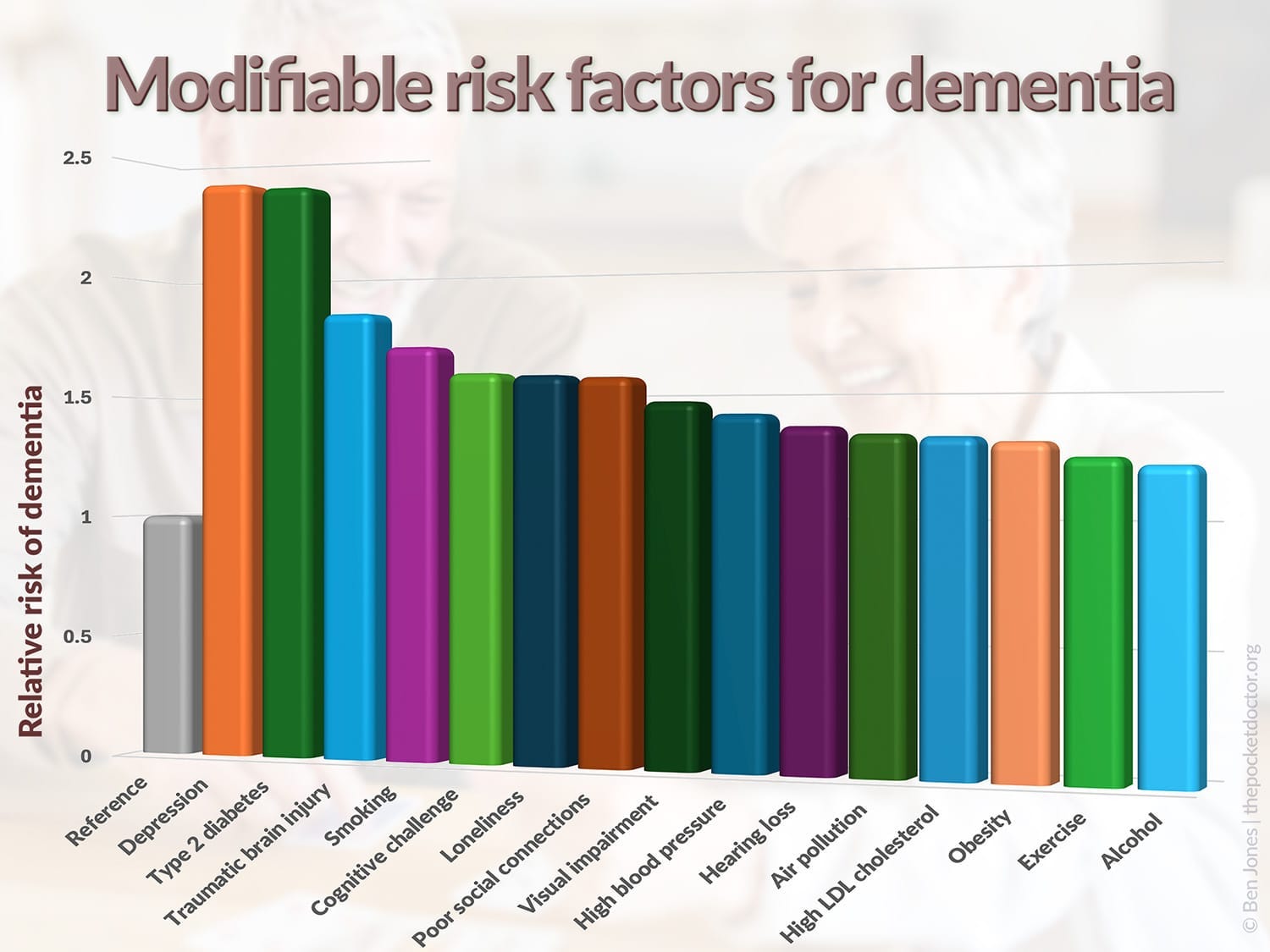
At the top of the list sit depression and diabetes - both of which more than double the risk. Others, like untreated hearing loss, social isolation, or high blood pressure, also weigh heavily. Lifestyle choices such as alcohol, smoking, and exercise also make a measurable difference.
To make sense of them, I like to group the 15 into four broad themes:
🧠 Mind matters (depression, brain workouts, social connection)
🫀 Body health (diabetes, blood pressure, cholesterol, weight)
👂 Senses & safety (hearing, eyesight, head injury)
🌍 Lifestyle & environment (smoking, alcohol, exercise, air pollution)
Let’s start with Mind Matters - because protecting your mood, relationships, and giving your brain a proper workout turns out to be just as powerful for brain health as controlling blood sugar or blood pressure.
🧠 Mind Matters: Mood, Challenge & Connection
Depression, loneliness, and lack of mental challenge all sit near the top of the dementia risk chart. Together, they shape the health of our brains just as much as blood pressure or blood sugar do.
Depression. In a meta-analysis for the Lancet Commission, people with depression were nearly 2.5× more likely to develop dementia over the next decade. The good news: treatment makes a difference. A UK Biobank study found those treated for depression were 31% less likely to go on to develop dementia than those left untreated.
Challenge your brain. Our muscles waste away without use, and our brains do too. Higher education and demanding jobs are linked with up to a 37% lower risk of dementia. But this isn’t about piling on Sudokus. Just as you can’t build your biceps lifting a coffee cup, you can’t build “cognitive reserve” without effort. It takes something that makes you sweat mentally - learning a language, tackling an instrument, enrolling in a class, - writing a Substack!
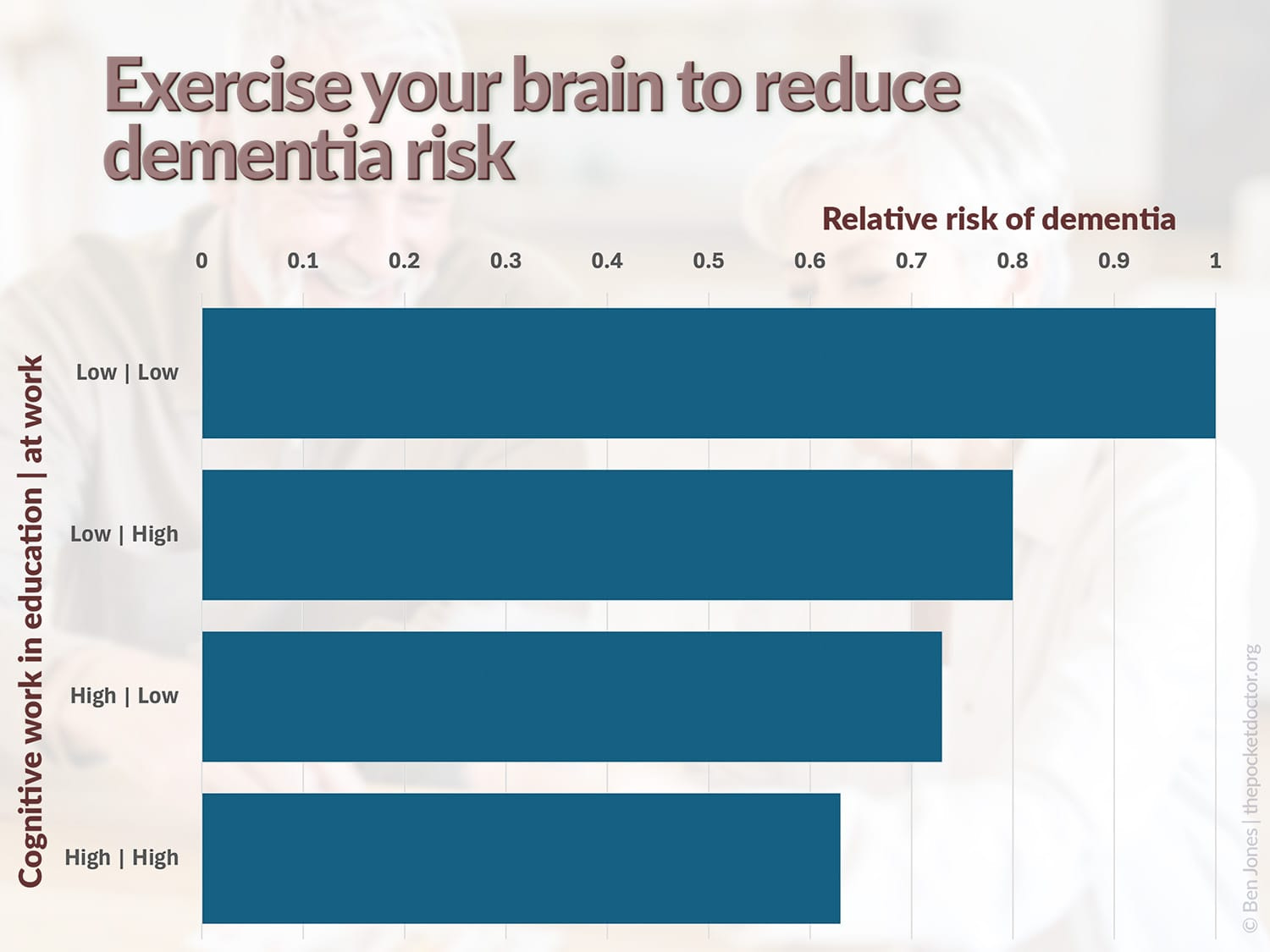
You can see clearly from this graph that moving from high school to college education, and from less to more demanding jobs, tracks with steadily lower dementia risk.
Stay connected. Loneliness and social isolation increase dementia risk by about 60%. Being single also tracks with a higher rate. Interaction itself seems to act like exercise for the brain, while also encouraging healthier behaviours and reducing stress. The catch? Once loneliness sets in, it’s harder to reverse. Better to nurture connections early: phone that friend you’ve drifted from, join a club, enrol in an evening class, or invite someone in your orbit who may be alone.
Loneliness increases dementia risk by 60%, more than high blood pressure and heavy drinking. Who do you know that would appreciate a phone call?
✅ Action steps:
Protecting your mood, stretching your mind, and nurturing your relationships all build “brain reserve.” This week, choose one step:
Mood: If low mood, loss of interest, or poor sleep/appetite have lasted more than a couple of weeks, book a proper review with your doctor. Treatment matters.
Mind: Pick a skill that makes you sweat mentally - a language, instrument, coding, painting - and commit to regular, sustained practice. Crosswords aren’t enough.
Connection: Reconnect with someone you’ve drifted from, or invite someone you know may be lonely.
🫀 Body Health: Metabolism, Heart & Brain
What’s good for your heart and metabolism is good for your brain. Diabetes, high blood pressure, high cholesterol and obesity are four of the biggest risk factors for dementia - and they tend to travel together.
Diabetes. Type 2 diabetes can double dementia risk, especially when diagnosed earlier in life. The average age of diagnosis is 50, which means decades of higher exposure. The best protection is not to develop diabetes at all: a diet centred on whole foods and maintaining a healthy weight makes a huge difference. For those already diagnosed, tight blood sugar control matters. Some of the newer drugs - GLP-1s like Ozempic, SGLT-2s like Jardiance, and DPP-4s like Januvia - appear protective, while older drugs such as sulfonylureas are linked with higher dementia risk.
Blood pressure. Hypertension is the “silent killer” for the heart and the brain. Midlife high blood pressure is linked with up to a 42% higher dementia risk, but treatment dramatically lowers it. The catch? You won’t know it’s high unless you check.
Cholesterol. High LDL (bad) cholesterol not only fuels heart attacks and stroke but also increases dementia risk by 5–33%. The good news: people treated with statins in midlife no longer carry that excess risk. In some studies, they even see lower rates of dementia.
Weight. Obesity in midlife carries a 31% higher risk of dementia, while being chronically underweight also raises risk. Even modest weight loss - just a couple of kilos - improves cognitive performance within months, perhaps a marker of long-term benefit.
✅ Action steps:
Looking after your metabolic and cardiovascular health is brain care. This week, choose one step:
If it’s been more than a year, get your blood pressure, blood sugar, and cholesterol checked.
If you’re living with diabetes or high cholesterol, review your treatment with your doctor - brain health should be part of the plan.
If weight is a concern, pick one small, sustainable shift (fewer ultra-processed foods, an extra daily walk, or a higher-protein breakfast).
👂 Senses & Safety: Guard the Gateways to Your Brain
Our brains rely on constant stimulation to stay sharp. When hearing or vision fades, or when the brain is injured outright, the risk of dementia climbs steeply.
Hearing. One in five adults has hearing loss by 50. Left untreated, it raises dementia risk by 37%, likely through a double hit of reduced brain stimulation and social withdrawal. Encouragingly, people with hearing loss who wear hearing aids have a 17% lower risk of dementia than those who don’t.
Eyesight. The data is still being teased apart, but poor vision is consistently linked with a 38–47% higher risk. Correcting vision - with glasses or cataract surgery - reduces that risk. Less strain for your eyes means more stimulation for your brain.
Head injury. Trauma to the brain increases dementia risk by 66–84%. Most injuries come from falls and accidents, though some sports carry a higher toll. We can’t wrap life in bubble wrap, but helmets, seatbelts, steady ladders, and sober judgement go a long way to protecting your future self.
✅ Action steps:
Protecting your senses and avoiding preventable head injuries keeps your brain engaged and resilient. This week, choose one:
Book an overdue eye or hearing test - and actually wear the glasses or aids you’re prescribed.
Protect what you’ve got - avoid prolonged loud noise, and skip that next risky climb up the wobbly chair.
Don the gear every time - cycle helmets and seatbelts aren’t for wimps; they’re long-term brain insurance.
🌍 Lifestyle & Environment: The Daily Choices That Shape Brain Health
We tend to think about dementia prevention in terms of doctors’ appointments and test results. But the way we live - how much we move, whether we smoke or drink, even what we breathe - makes a powerful difference too.
Smoking. If you’re still lighting up, here’s yet another reason to stop: smoking increases dementia risk by around 70%, on top of all the other well-known harms (11 years off life expectancy, higher rates of cancer and heart disease). If you’ve quit, you’ve already made one of the biggest dementia-protective choices possible.
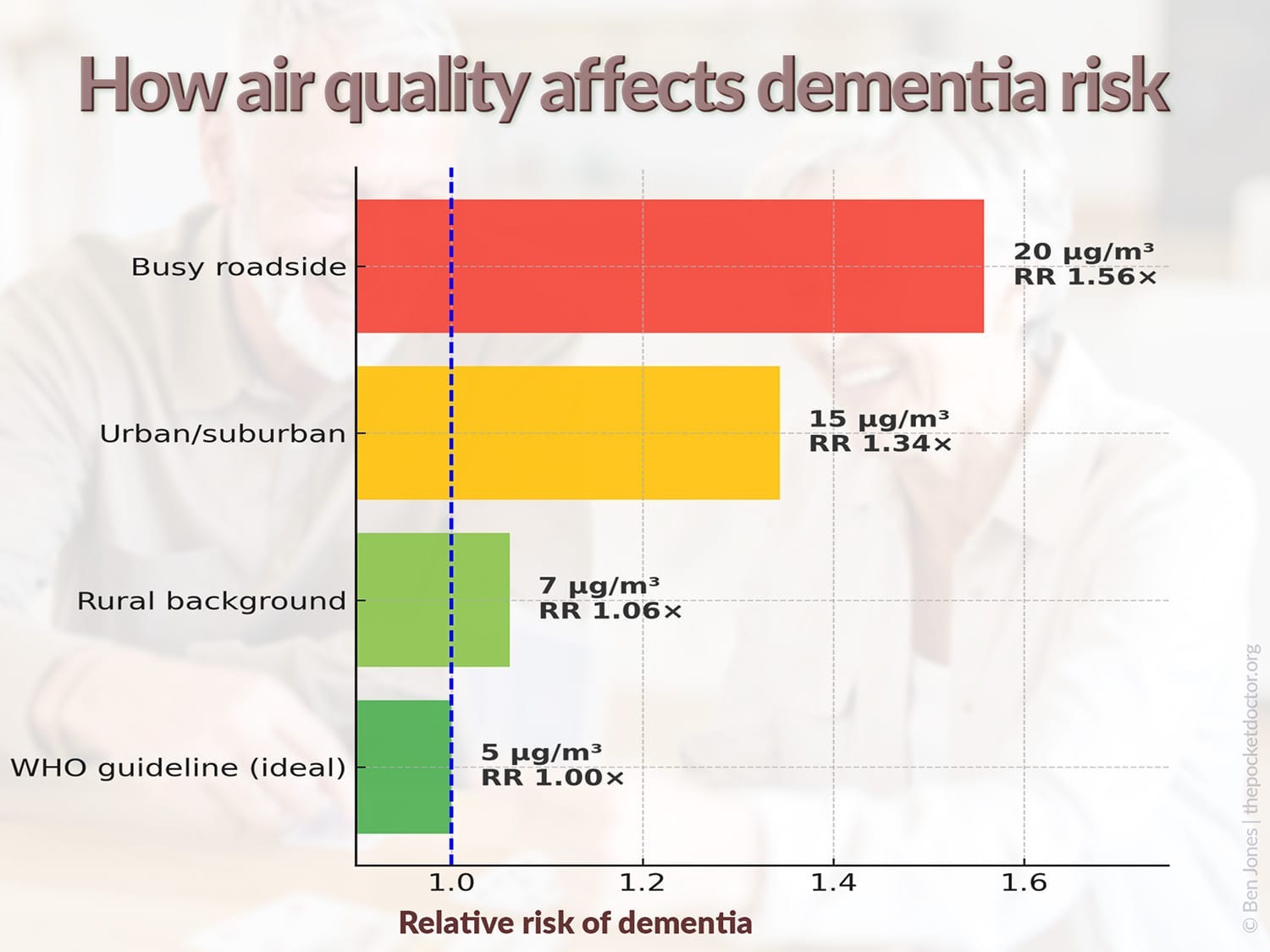
Air pollution. This one’s less visible but no less important. Fine particles from traffic, coal or wood-burning stoves, even that cosy fire at home, raise dementia risk. City living is linked with a 34% higher risk, and indoor solid-fuel stoves may increase it several-fold. Sobering for anyone (myself included) who loves the glow of a wood fire. The good news: avoiding main roads when walking or cycling, keeping chimneys clear, and ventilating indoors can help.
Exercise. Moving your body is one of the most reliable protectors: regular activity reduces dementia risk by about 20%. And the biggest win comes from shifting from none to some - not from fancy high-intensity routines. A brisk walk, a swim, a cycle - done often enough - is what matters.
Alcohol. Heavy drinking (more than 21 units a week - about half a bottle of spirits or six pints of beer or glasses of wine) raises dementia risk by 18–22%. And while dementia risk climbs sharply with heavier intake, studies show even moderate drinking increases the risk of dying earlier overall. Best to treat alcohol as an occasional indulgence, not a daily habit.
✅ Action steps:
Daily choices accumulate. This week, choose one way to tip the odds:
If you smoke: ask your doctor or pharmacist about a structured quit plan - it’s the single biggest lifestyle win.
If you’re inactive: add a brisk 20-minute walk on most days; consistency beats intensity.
If you drink: cut back, and consider a few alcohol-free days each week.
For the environment: avoid heavy-traffic routes when you can, and ventilate well if you burn wood or coal indoors.
We’ve covered a lot of ground. But knowledge only matters if it turns into action. That’s where the Health Tweak of the Week comes in - a one-page brain health audit you can use right now.
HEALTH TWEAK OF THE WEEK
Your One-Page Brain Health Audit (pick one move, do it this week)
Dementia is terrifying - and more common than we’d like. The hopeful twist: a large chunk of risk is modifiable.
Use this as a personal audit, not a guilt list. Review what’s solid, highlight what needs attention, and choose one thing to do in the next seven days.
🧠 Mind Matters
▢ Mood: Low mood, loss of interest, poor sleep/appetite >2 weeks? Book a review with your doctor - treatment reduces dementia risk.
▢ Challenge: Doing something that makes your brain sweat (learning a language, instrument, coding, a serious course) most weeks? If not, commit to one programme.
▢ Connection: Spoke meaningfully to 3+ people this week and have one recurring group? If not, schedule two touchpoints (call + in-person).
🫀 Body Health
▢ Blood sugar: Know your HbA1c/fasting glucose in the last 12 months? If not, book a blood test; if diabetic, tighten control with your clinician.
▢ Blood pressure: Checked at home/pharmacy this month? If readings are high, start a plan (lifestyle + meds if needed).
▢ Cholesterol: Had a lipid panel in the last 4 years (or sooner if advised)? If LDL is high, discuss statins with your doctor.
▢ Weight: Is your weight in a healthy range? If not, choose one lever (higher-protein breakfast, 7–8k steps, evening snack curfew).
👂 Senses & Safety
▢ Hearing: Struggle in noisy rooms or ask people to repeat? Book a hearing test; use aids if advised.
▢ Eyesight: Overdue for an eye test or ignoring a prescription? Get a check - and new glasses if you need them.
▢ Head injury: Helmets, seatbelts, steady ladders, sober decisions every time? If not, tighten the basics - it’s brain insurance.
🌍 Lifestyle & Environment
▢ Smoking: Still smoking? Start a quit plan (NRT/meds + support).
▢ Alcohol: Drinking most days? Shift to occasion-only (aim ≤7 units/week or a 30-day reset).
▢ Exercise: Moving most days? If not, add a brisk 20-minute walk (consistency beats intensity).
▢ Air quality: Regularly on high-traffic routes or using indoor wood/coal fires? Switch your route & ventilate the room.
Seven Days to a Sharper Future
Too many good intentions get lost somewhere between reading and doing. Let’s not let this be one of them. Here’s a seven-day intensive kick-start for anyone who wants to get serious about lowering their dementia risk.
Day 1: Book one test (blood pressure at pharmacy, an eye or hearing test, bloods if due).
Day 2: Call or text two people; schedule one meet-up.
Day 3: Choose your brain-sweat project and set a recurring slot.
Day 4: Swap one ultra-processed meal for a whole-food option.
Day 5: 20-minute brisk walk; add two strength sets (squats/push/pull).
Day 6: Skip the alcohol today - or, if you don’t drink, make it a sleep-priority night.
Day 7: Do a safety sweep - helmets, seatbelts, ladders - your future brain will thank you.
You’re not “hoping to avoid dementia.” You’re the kind of person who future-proofs their brain.
One action a week, compounding over years - that’s how odds are changed.
Paid subscriber? Come join me in the chat - I’ll be there to cheer you on and keep you accountable as you put this week’s plan into action.

So next time you misplace your keys, don’t panic. Smile, and remember: you’re already stacking the odds in your brain’s favour.
Hit reply and tell me your one move for this week. I read every message.
🎧 Prefer listening to reading?
🎙️ This week’s episode of the One Health Tweak a Week podcast is all about dementia risk:
Why dementia isn’t just “fate” - and how half the risk is in your hands
The surprising everyday habits that raise (or cut) risk
What the latest Lancet Commission report really means for you

👉 Listen now while you’re out for a walk - your brain will thank you.
(Psst: these episodes are free for now, but won’t be forever. Paid subscribers help keep this newsletter going - and get bonus content, private member chat and insider Q&As.)
👉 What’s next?
💬 Which of the 15 risk factors are you going to tackle first? Drop it in the comments - I’d love to hear your plan.
📢 Know someone worried about dementia? Forward this newsletter to them - it could give them a roadmap.
❓ Spotted a “miracle brain health hack” in the wild? Hit reply - I’m collecting the best (and busting the worst).
🔒 Want smarter tweaks every Saturday?
Upgrade to a paid subscription for bonus content, private member chat, Q&As, and the satisfaction of supporting responsible, evidence-based wellness writing.
Until next time - stay curious, stay grounded, and keep your brain sharp.
– Ben
Great article, Ben. I've given it a prominent link in an update to my post:
https://drmick.substack.com/p/a-brain-healthy-lifestyle
Ben, this is an absolutely magnificent and vital piece of work. You've taken the entire, complex landscape of dementia risk and distilled it into a clear, empowering, and actionable blueprint. This is public service journalism of the highest order.
As a biochemist, what's so striking is how every single one of these 15 factors is, at its core, a lever for controlling systemic inflammation and metabolic health. Whether it's the insulin dysregulation from diabetes, the inflammatory signaling from social isolation, or the oxidative stress from air pollution, they all point back to the same fundamental biochemical pathways.
Your "Mind Matters" section is particularly brilliant. It's a powerful reminder that our psychological state has a direct, measurable, and profound physiological consequence.
The link between depression, untreated hearing loss, and cognitive decline is a perfect example of how the brain is not an isolated organ, but an integrated system that relies on rich, high-quality inputs to maintain its structural integrity.
A truly masterful and important article. Thank you for creating such a clear roadmap for proactive brain care.