

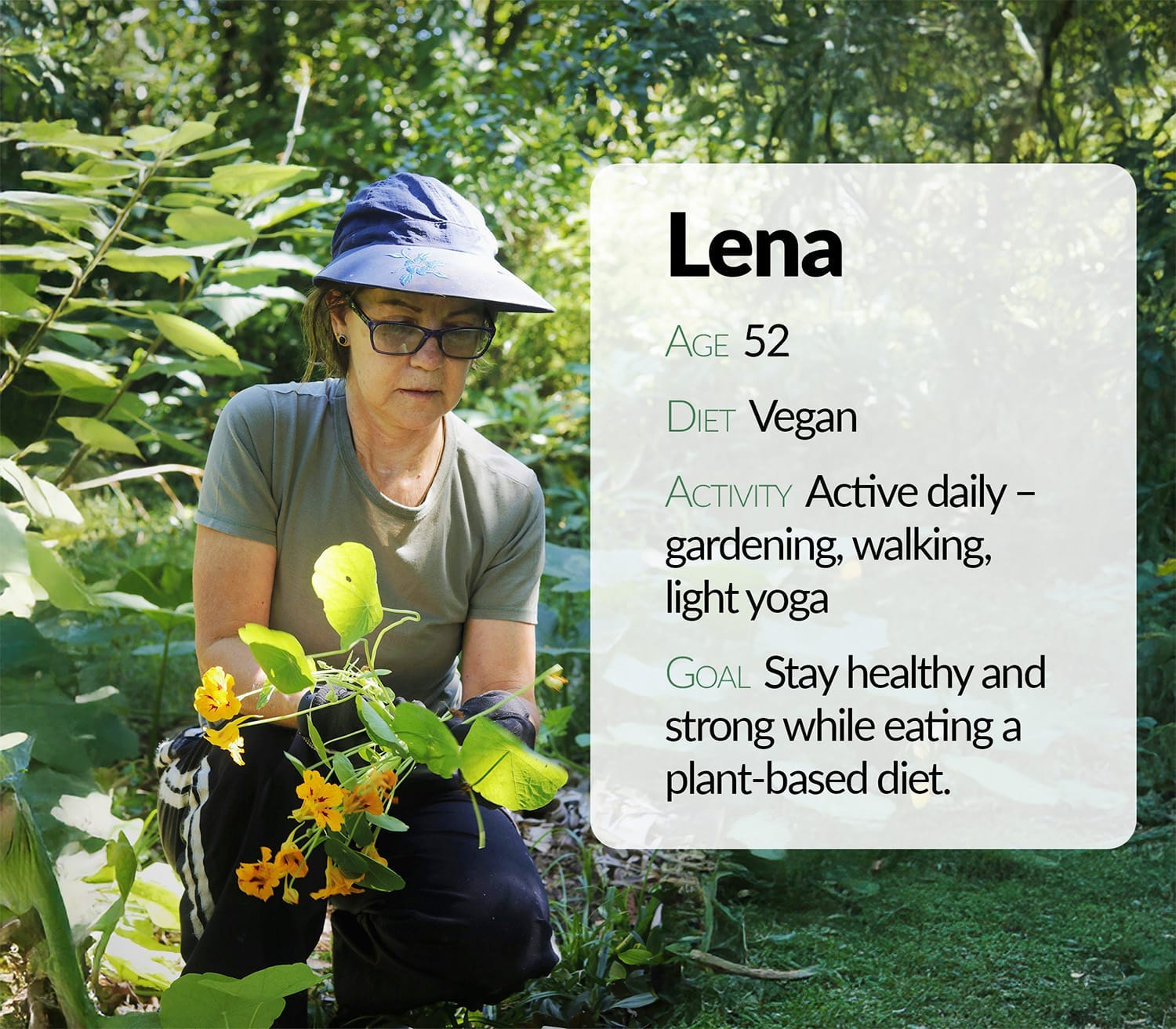
Lena’s friends call her the Green Goddess. Most of her spare time is spent digging, hauling, planting and generally transforming her garden into something spectacular. She’s been vegan for decades, eats well, and gets plenty of strength work without stepping inside a gym.
But she’s beginning to worry about her muscles.
Her mum became frail in her seventies: struggling with stairs, unsteady on her feet, eventually needing help with things she’d done effortlessly for decades. Lena is determined not to follow the same path. At 52, she’s still fit and strong. Yet she’s never had a big appetite, and hitting her daily protein target has always been a stretch.
The question she keeps asking herself is whether a plant-based diet gives her the strength she needs to age well.
It’s an interesting dilemma. We have substantial evidence supporting the long-term health benefits of plant-forward diets. But the foods that are so good for our cardiovascular and metabolic health aren’t necessarily the easiest way to obtain enough protein for our muscles.
And as we get older, those muscles become increasingly demanding.
So, should Lena be eating more protein? Does it matter whether it comes from plants or animals? And could a protein supplement help her preserve her strength without abandoning the diet she values and enjoys?
Why worry about muscle loss when you’re still fit and active?
Sarcopenia, the progressive loss of muscle mass and strength, affects up to a third of community-living older adults. It’s associated with frailty, falls, depression, hospitalisation, loss of independence and premature death. And studies consistently link lower protein consumption with lower muscle mass and strength.
That might sound like a problem for people in their seventies and eighties, not a fit 52-year-old with soil under her fingernails. But muscle loss accumulates slowly over decades, and the reserves you build and maintain in your forties and fifties determine the starting point when age, illness or a spell of immobility begin to erode what’s there. Think of it as a savings account: the more you’ve accumulated by middle age, the more you can afford to draw down later without running into trouble.
That’s why Lena’s thinking about this now, rather than waiting another twenty years.
Importantly, the goal isn’t to replace healthy plant foods with animal protein. Plant-forward diets bring genuine nutritional advantages: fibre, polyphenols, unsaturated fats. Many animal foods provide fewer of these while contributing more saturated fat. The objective is to make sure that an otherwise excellent diet is also meeting your muscles’ requirements.
Can plant protein fully maintain muscle?
There’s a widespread belief that animal proteins are inherently better for building and maintaining muscle.
Animal proteins do have some advantages, but the longer-term studies tell a rather different story.
In 2025, researchers published a meta-analysis of 30 randomised controlled trials comparing plant and animal protein supplements. They found that soy protein was just as effective as dairy protein, predominantly whey, at maintaining or increasing muscle mass.
Other plant proteins performed slightly less well, although the differences were generally small.
Animal protein did show a modest advantage for leg strength, particularly in some younger adults and resistance-training studies. But there was no clear advantage for upper-body strength or overall physical performance.
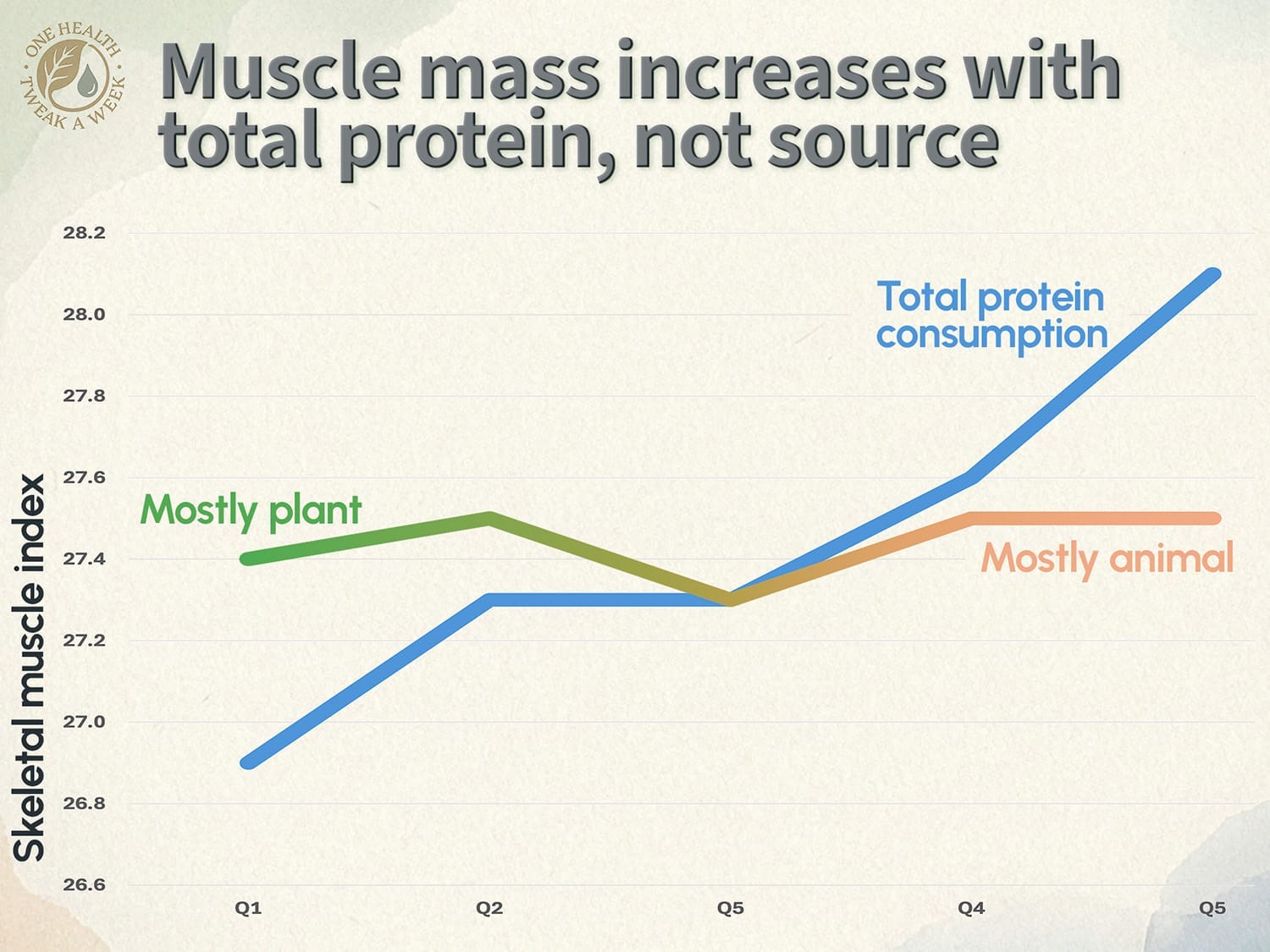
Another useful piece of evidence comes from a study of more than 3,200 adults aged 40–80. Researchers examined their protein intake, skeletal muscle mass and the proportion of protein coming from animal versus plant foods.
Higher total protein consumption was associated with greater relative muscle mass. You can see this in the blue line of the graph below.
However, the proportion coming from animal versus plant sources wasn’t linked to differences in muscle mass. (That’s the green to orange line).
Average protein consumption was approximately 1.3g/kg body weight daily, with the lowest-intake group consuming no more than 0.96g/kg and the highest consuming at least 1.7g/kg.
Animal protein does have some advantages. Gram for gram, it tends to stimulate muscle protein synthesis more strongly, and some studies find a small advantage for leg strength. But the longer-term evidence suggests that plant protein can maintain muscle effectively when you consume enough of it.
For Lena, the more important question is whether she can comfortably eat that much.
If plant protein works, why can getting enough be difficult?
Simply eating more tofu, beans or lentils might seem the obvious answer. But several things make that harder than it sounds.
Protein density. Most whole plant foods contain less protein per serving than meat, eggs or dairy. Their fibre content also makes you feel full, which is normally a good thing, except that you may feel full long before you’ve consumed enough protein.
Digestibility. We don’t absorb all the protein listed on the label. Studies suggest we digest and absorb roughly 85–95% of protein from lean meat, eggs and dairy, compared with 50–75% from legumes, although these values vary considerably with the specific food and how it’s prepared.
Amino acid profile. Your muscles require nine essential amino acids that you can’t manufacture yourself. Most animal proteins provide all nine in favourable proportions. Individual plant proteins often contain relatively little of one or more. For example, cereals are often relatively low in lysine, while legumes help supply it.
That’s why combining different plant foods makes sense: beans and rice, bread and hummus, or pasta and beans. You don’t need to construct a perfectly balanced amino acid profile at every meal, but variety becomes increasingly important when you’re relying entirely on plants.
Then there’s leucine. This essential amino acid plays a particularly important role in stimulating muscle protein synthesis, the process through which our muscles build and replace their proteins. Many plant proteins contain less leucine per gram than animal proteins.
As we age, our muscles also become less responsive to a given protein dose, a phenomenon called anabolic resistance. Consequently, an older adult may need more protein, including more leucine, to stimulate muscle protein synthesis effectively.
That’s why animal proteins often produce a stronger immediate muscle-building response gram for gram, even though longer-term studies suggest that adequate plant protein can produce comparable muscle outcomes.
That’s not to say you need to eat more animal food, but it does mean you need to be sure your plant-based diet supplies enough total protein and essential amino acids.
What “enough protein” looks like on a plate
For younger and middle-aged adults, the usual minimum recommendation is approximately 0.8g of protein per kg body weight daily.
If you eat a predominantly plant-based diet, I’d suggest aiming a little higher, around 0.9g/kg, as a practical allowance for differences in protein availability.
Try to obtain roughly 20–25g protein and 2–2.5g leucine per meal. If you’re doing demanding resistance training, your requirements may be higher.
From around 60–65 onwards, I’d increase the daily target to approximately 1.2g/kg, or around 1.3g/kg for predominantly plant-based eaters.
During illness, recovery or particularly demanding training, requirements may rise towards 1.5g/kg.
I’d also aim for approximately 30–35g protein and 3–3.5g leucine per meal.
These are practical targets. Protein needs increase progressively with age, rather than suddenly changing on your 65th birthday, but there’s a surprising lack of data as to how and when those changes occur. The additional 10% for plant-based diets is also a reasonable allowance, not an established requirement for everyone.
But let’s translate those numbers.
For someone weighing 70kg:
Younger or middle-aged, plant-based: approximately 63g protein daily.
Older, plant-based: approximately 91g daily.
That’s nearly 30g more protein every day.
And the higher per-meal targets can be particularly challenging. The table below shows clearly the difference in volume between plant-based and animal-derived food to hit these targets.
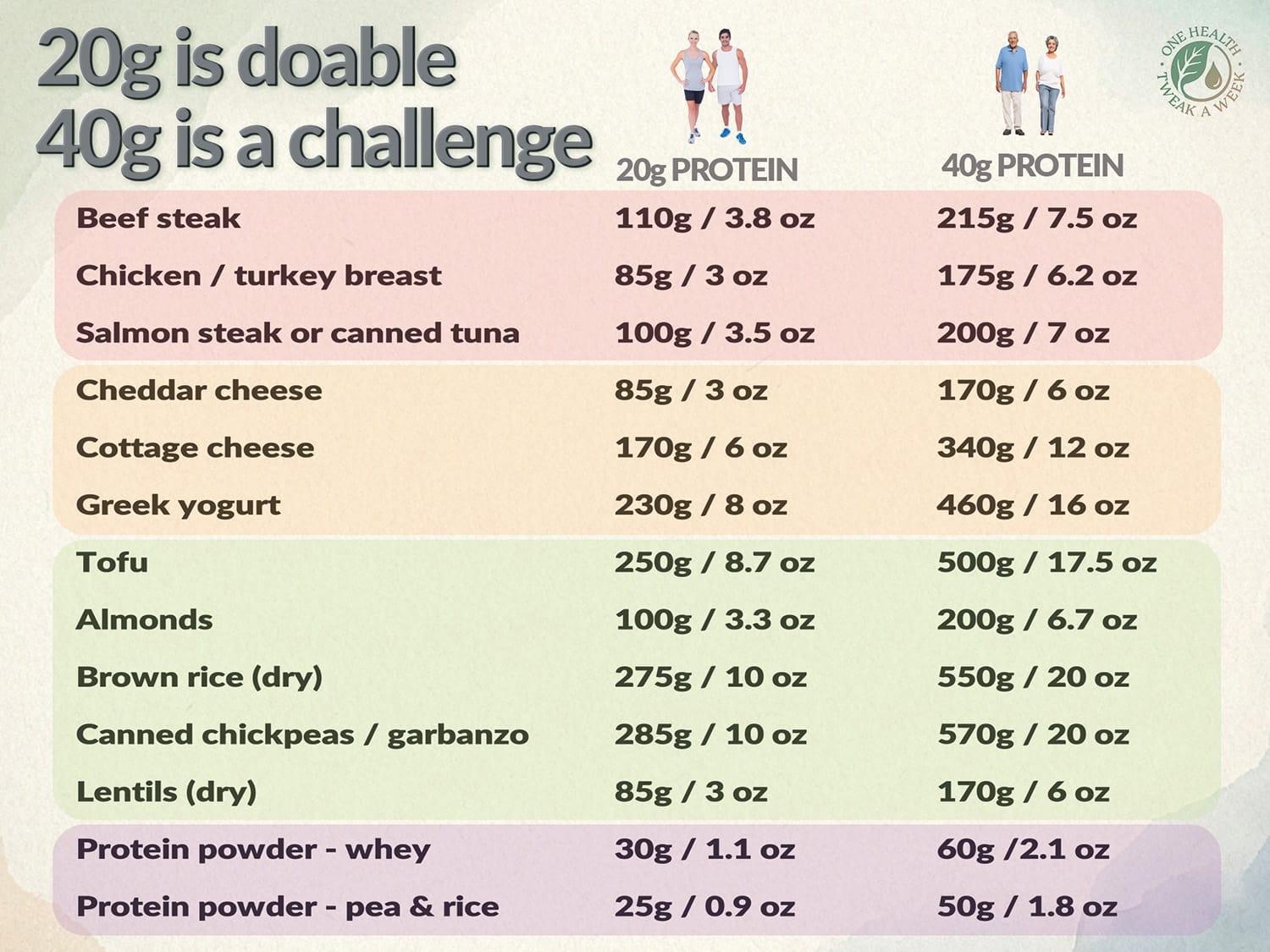
No disrespect to tofu or chickpeas, but half a kilo is a fairly ambitious lunch.
In a major review, almost half of older adults consumed less than 1g of protein per kilogram of body weight daily, with around 60% of their protein coming from animal foods. Given that many plant foods contain less protein per serving, those relying mostly or entirely on plants find it even harder to meet their needs.
I see this in my own diet. My breakfast of muesli, milk and fruit has plenty going for it, but protein isn’t one of its great talents. It provides only about 16g of protein: far short of the 20–25g I need now and well below the 30–35g I’ll be aiming for in my sixties. My other meals meet current targets, but I already top up breakfast with a protein shake - a 50:50 mix of whey concentrate and pea protein powder. I can see myself using the same tactic for other meals when my requirements increase.
For Lena, and for anyone relying mainly on plant foods, this presents a genuine dilemma. We know plant protein can maintain strong muscles, but we still have to eat enough of it. And as our requirements increase with age, that becomes harder.
Consistently falling short isn’t just a matter of missing a nutritional target. Over time, inadequate protein intake can contribute to the loss of muscle and strength that leaves us increasingly vulnerable to frailty, falls and loss of independence.
The obvious solution is to eat more protein-rich plant foods. And if you can comfortably manage that, excellent.
But as we’ve seen, getting enough protein from plants alone can require rather more food than some of us want to eat.
Fortunately, there’s another option: using a protein supplement to close the gap without turning every meal into an endurance sport.
Supplements, leucine and the exercise question
The advantage of protein powder is that you can add protein to an existing meal without substantially increasing its size. You still get the fibre, polyphenols, unsaturated fats and other nutrients from your whole plant foods, but you can bring the protein content up to where it needs to be.
For example, if your breakfast provides 16g of protein and you’re aiming for 25g, you need another 9g, not a 25g protein shake. Or, for an older adult, if lunch provides 20g, adding 10–15g of protein from a supplement brings it into the target range without requiring another plateful of food.
For these modest top-ups, the type of protein powder probably isn’t terribly important. But if you’re regularly relying on larger amounts, protein quality and amino acid composition deserve more attention:
Soy has the strongest comparative evidence against dairy protein: a sensible first choice for vegans.
Pea–rice blends offer complementary amino acid profiles and are another good plant-based option.
Whey is highly effective and digestible for anyone not avoiding dairy, and may offer a modest edge if you’re already losing muscle.
Sodium: check the label, particularly with soy-based powders, where content can vary considerably between brands.
Since leucine helps trigger muscle protein synthesis, and plant proteins tend to be less leucine-rich, you might wonder whether adding a little extra would solve the problem. The evidence says no.
Dutch researchers found that adding 2g of leucine to a 20g dose of either plant or whey protein didn’t improve the muscle protein synthesis response when the protein dose itself was insufficient. In a separate trial, giving 30 older men (average age 71) 2.5g of leucine with their meals three times daily for three months produced no measurable improvement in muscle mass or strength.
Leucine helps trigger muscle building, but construction still requires the full set of essential amino acids. Extra leucine can’t rescue insufficient protein.
I’d prioritise adequate, good-quality protein over buying separate leucine or branched-chain amino acid supplements.
There’s something even more important than your protein powder
Muscle is metabolically expensive tissue. Without sufficient demand, our bodies have little reason to maintain more of it than they need.
Resistance exercise provides that demand.
In the meta-analysis comparing plant and animal proteins, every trial combining protein interventions with resistance exercise reported improvements in muscle mass and/or strength.
Among trials without resistance exercise, only 21% reported improvements.
You don’t need to join a gym or start lifting heavy weights. Resistance exercise simply means making your muscles work against a load, whether that’s weights, resistance bands or your own body weight.
The important thing is to keep challenging them. As an exercise becomes easier, gradually increase the weight, resistance or number of repetitions. That gives your muscles a reason to maintain their strength and, ideally, become stronger.
Lena’s gardening certainly provides useful muscular work, particularly all that digging and hauling. But adding some regular exercises that challenge all her major muscle groups would help ensure she’s doing enough to preserve her strength as she gets older.
Getting enough protein is important, but there’s little point agonising over whether soy or whey is the better supplement if you’re not regularly giving your muscles a reason to use it.
If someone came to mind while you were reading this, please forward it to them. These tweaks may be small, but practised consistently they can genuinely change long-term health. A useful nudge at the right moment can make all the difference.
What this means for your health
I wouldn’t encourage anyone to abandon a healthy plant-forward diet simply because animal proteins can be more efficient at stimulating muscle protein synthesis.
Plant foods bring fibre, polyphenols and unsaturated fats, alongside their broader nutritional benefits. Many animal foods supply much less of these and may also contribute substantial saturated fat.
One research group has suggested that an ideal dietary pattern might emphasise plant proteins earlier in adulthood, introducing more animal protein in later life as muscle requirements increase.
That’s a reasonable option for people happy to eat both. But it’s not essential.
With sufficient protein and regular strength exercise, Lena can carry on cultivating her garden and enjoying the foods she loves. There’s no need for her to abandon the vegan diet that’s served her so well.
For some people, ordinary food will be sufficient. For others, especially those with smaller appetites or higher requirements, concentrated protein supplements can make life considerably easier.
You don’t need animal protein to maintain strong muscles. But you do need enough protein, and a reason for your muscles to use it.
As always, your responses are anonymous, but they really help me tailor future content to what’s most helpful to you. Please take a moment to click a button.
HEALTH TWEAK OF THE WEEK
A plant-forward diet can support long-term muscle health, but whole plant foods sometimes make adequate protein intake difficult, particularly as requirements increase with age.
Supplements are useful when they close a consistent gap between what your meals provide and what your muscles need. That dietary strategy works best when paired with regular resistance exercise.
Here’s how I’d approach it.
1. Find out how much protein you’re actually eating
Use a free app such as Cronometer or MyFitnessPal to record your normal diet for 3–4 days. It’s very hard to guess just by eyeballing your plate.
Calculate your average daily protein intake relative to body weight.
As practical targets for predominantly plant-based eating:
Younger and middle-aged adults: Around 0.9g/kg daily, with 20–25g per meal.
Adults approximately 60–65+: Around 1.3g/kg daily, with 30–35g per meal.
Higher intakes may be appropriate during illness, recovery or demanding training.
Look at individual meals, particularly breakfast. You may discover that your overall diet is adequate, but one meal consistently provides little protein.
If you’re already meeting your requirements, you probably don’t need a supplement.
2. Close the gap, not the manufacturer’s suggested serving size
For small shortfalls, try adding ordinary protein-rich foods: tofu, soy yogurt, beans, lentils, nuts or seeds.
If you’re substantially short, a protein supplement may be more practical.
I’d favour soy or a balanced plant blend, such as pea and rice, for vegans. Whey is another effective option if you consume dairy.
Calculate the actual protein you need, rather than automatically taking a full scoop. A 15g protein shortfall doesn’t require 30g of powder.
Check the protein and sodium content on the label. Don’t rely on separate leucine or BCAA supplements to compensate for inadequate protein.
3. Keep challenging your muscles
Maintain regular, progressively demanding resistance exercise, ideally 2–3 times weekly, involving the major muscle groups.
Weights, resistance bands and bodyweight exercises can all help.
As the exercises become easier, gradually increase the weight, resistance or number of repetitions.
A little attention to your protein intake, alongside regular exercise, can help you enjoy the benefits of a plant-forward diet while keeping your muscles strong. And the stronger you remain as you get older, the better your chances of staying active, independent and able to enjoy the life you’ve worked hard to build.
🎧 Prefer to listen while wondering whether your healthy plant-based diet is giving your muscles everything they need?
🎙️ This week’s One Health Tweak a Week podcast explores a dilemma for anyone eating mostly plants: how to enjoy the long-term health benefits of a plant-forward diet while ensuring you’re getting enough protein to keep your muscles strong as you age.
You’ll hear:
Why plant protein can be just as effective as animal protein for maintaining muscle, and what the research actually shows
Why getting enough protein from plants becomes increasingly challenging as we get older, even when we’re eating a healthy diet
How much protein to aim for each day and at individual meals, and why the amount of food required might surprise you
When soy, pea–rice or whey supplements can help, and why topping up your existing meals makes more sense than replacing nutritious whole foods
Why resistance exercise is at least as important as protein intake for keeping your muscles strong
👉 Good company for your next walk, commute, or while contemplating whether half a kilogram of tofu really is a reasonable lunch.

(Episodes are free for now. Paid subscribers support the deeper research - and unlock practical tools to help you improve your health without turning it into a second job.)
🧭 Before you go
💬 Do you eat a predominantly plant-based diet? Have you ever checked whether you’re getting enough protein, particularly at breakfast or lunch? I’d be interested to hear how you manage it, and whether you use protein supplements.
📤 Know someone who’s embraced plant-based eating but might be overlooking their protein needs? This could help them protect their muscles without giving up the foods they enjoy.
👥 Paid corner - If you’re eating mostly plants and struggling to meet your protein targets, drop me a message in our private chat. We can look at your usual meals, identify where you might be falling short, and work out whether a little extra food or a carefully chosen supplement would help.

Until next Saturday - keep enjoying your plants, give your muscles something to work on, and remember that protein powder belongs alongside your healthy food, not in place of it.
– Ben
Thanks for continuing to recommend strength training. Gardening is a good workout, too. This summer I pulled as hard as I could on a stubborn weed, and I sprained my hand. It was not a serious injury, and I dug up the weed with a shovel.
I’m a retired physician and agree with you it’s hard getting enough protein. In the am I have string cheese 7 gm and mixed nuts and seeds 1-1.5 oz they add about 6-8 gm. I was using it when I took Vit D tab in am. I have mild osteopenia. I thought it might help in the absorption of the fat sol vit. Later I’ll take a more traditional am of Greek yogurt berries and cereal. I probably get more protein from my morning than from other meals.