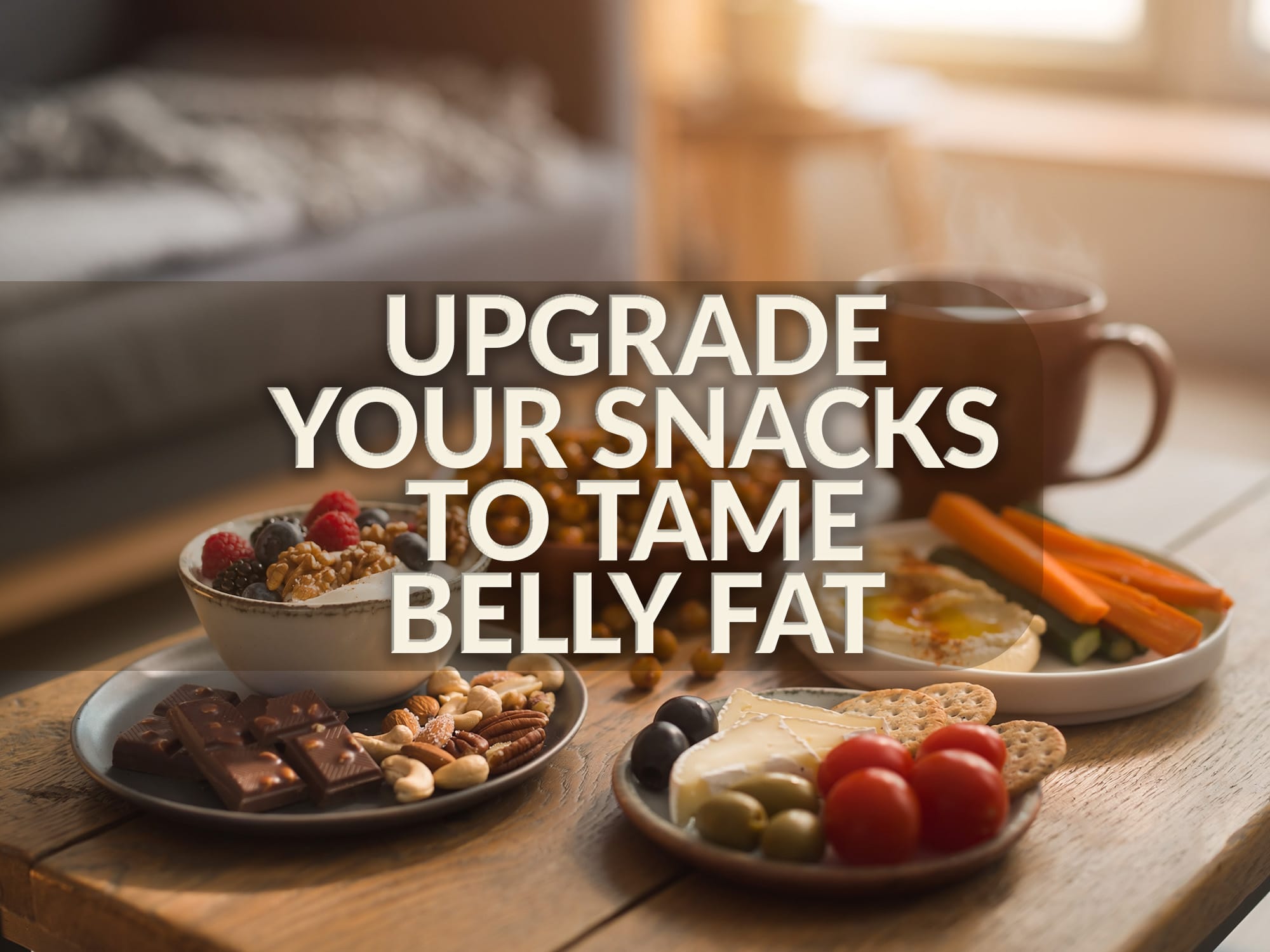
Eating Decently but Belly Fat Won’t Shift? Check Your Snacks
Snacks now make up a hefty chunk of daily calories - and they’re where ultra-processed foods, added sugar and saturated fat tend to hide.
“I eat decent meals. I’m not drinking sugary drinks. So why isn’t my waist shifting?”
This is a common frustration - and one I’ve heard repeatedly since the last belly-fat issue, which focused on the link between ultra-processed food and visceral fat. In that piece, I invited you to pick just one ultra-processed eating occasion to swap for a whole-food alternative. And more than half of you - 55% - said it would be your snacks.
That figure surprised me. I’m not much of a snacker myself. But once I started digging, it made perfect sense.
Most of us treat snacks as afterthoughts. They’re not “real food.” They just happen - during the afternoon lull, after dinner, on the sofa, at the desk. Meals are planned. Snacks are improvised. And improvisation is where ultra-processed foods thrive.
The numbers tell the story: the average American adult gets around 570 kcal a day from snacks - about 16% of their total energy intake, and a whopping 24% of what would be considered a healthy calorie intake. In the UK, a smaller absolute amount, but still a significant share - 203 kcal per day, or 24% of intake - comes from snacks.
In other words, many people are effectively eating a fourth meal each day - but they call it “just snacks”.
And those snacks aren’t just more calories. They’re also denser in added sugars, refined carbs, and saturated fat than meals. One study found that snacks contributed up to 42% of total added sugars and another found teenagers getting 63% of recommended daily saturated fat from snacks. They’re also often eaten on autopilot.
So if your goal is to shift stubborn waistline fat - and especially the harmful visceral fat that hides deeper inside - it might be time to look not at your meals, but at the gaps between them.
Why snacks matter more than you think
Snacks tend to feel inconsequential. But they punch above their weight because of how often they happen, what they’re made of, and when we eat them.

As we’ve just seen, most adults snack, and those snacks account for roughly a quarter of daily calories in both the US and the UK. The problem isn’t only the extra energy. Popular snacks - biscuits, baked goods, sweets, salty snacks, “health” bars, sugar-sweetened drinks - are also where a large share of added sugar and saturated fat hide. They often represent half or more of your ultra-processed food intake, which we know is strongly linked to visceral fat.
And don’t be fooled by the health halo. Lots of ultra-processed snacks come with health claims that are nothing more than a disguise. We’re talking about granola or protein bars, high-protein desserts, and cereal as a late-night snack.
From your body’s point of view, an unplanned snack still spikes sugar, still triggers insulin, still adds to your liver’s workload, and still nudges you towards a calorie surplus and more belly fat.
The timing adds to the problem. Snacks usually arrive when you’re tired, stressed, bored, or distracted. That combination - extra eating occasions, energy-dense ultra-processed foods, and low awareness - is exactly what visceral fat loves.
Snacking better isn’t about virtue points. You’re reducing the metabolic nudges that push fat towards your waist and your liver over time.
How snacks train your cravings
There is another layer to this story that I find both fascinating and slightly unsettling: the way snacks train your brain.
In a study, 49 adults were randomly assigned to eat a high-fat/high-sugar snack or a low-fat/low-sugar snack every day for 8 weeks. Everything else in their diet stayed the same.
The results? Those on the high-fat/high-sugar snack didn’t just report a preference for richer foods. Over the two months, the way their brains responded changed.
Activity in reward circuitry increased when they anticipated sweet, fatty foods, and their brains lit up before they even took a mouthful. In other words, the snack wasn’t just feeding them - it was training their brain to want more snacks like it.
Not only that, but their enjoyment of healthier, lower-fat snacks went down.
This ratchet effect - more craving for rich foods, less satisfaction from simple ones - suggests that your 3 pm biscuit or evening chocolate might be quietly nudging your preferences over time.
It’s also a warning that when you first switch from an unhealthy snack to something more wholesome, it might seem less satisfying at first. But stick with it - your brain will adjust.
The two snack danger zones
The first is the late-morning or mid-afternoon slump.
You’ve had breakfast, but lunch is still a way off. Or it’s 3 pm, and you’ve been in back-to-back meetings all afternoon. You’re tired, distracted, and something sweet or crunchy suddenly feels essential.
This is when office biscuits, vending-machine chocolate, sweetened coffees and “healthy” bars tend to appear. The need is usually a mix of real hunger and low energy - and the defaults are high in sugar and starch, which give you a brief lift followed by another crash.
The second danger zone is after dinner.
For many people, this is a ritual: sofa, TV, “a little something.” That might be chocolate, ice cream, biscuits, or a “protein dessert” that feels virtuous. Here, it’s rarely about hunger - more about reward, comfort, or closure.
What both zones have in common is timing: they’re extra eating occasions outside structured meals. But the drivers differ - so the strategies need to as well.
Start here: your 2-minute snack audit
Before changing anything, it helps to see where the snacks are. Take two minutes to do this today, looking back at yesterday or a typical weekday.
Grab a piece of paper or your notes app.
1. List every snack or calorie-containing drink you had outside your main meals.
2. Star anything that was:
ultra-processed
easy to overeat
a frequent habit
3. For each, jot down why you had it: hunger, tiredness, reward, habit?
4. Circle the one snack occasion you’ll focus on this week.
Don’t try to fix everything. One snack occasion is enough for this week.
As always, responses are completely anonymous, and they help me target future articles at what would be most helpful to you. Please take a moment to click an option.
Different snacks for different occasions
Snacks aren’t a food group. They’re a response to a situation - usually one of three:
Hunger: your last meal was too small or too far away, and you genuinely need energy.
Low energy or low sleep: you’re tired, stressed or foggy, and your brain is looking for stimulation.
Reward or ritual: you want comfort, closure, or something to mark the end of the day.
The same snack won’t work equally well in all three scenarios. This is why generic “approved snack” lists are so frustrating. The aim isn’t to prescribe one virtuous choice for everyone, but to help you design something that fits the situation you’re in and the cravings you actually have, while still being kinder to your waist and your blood tests.
Design rules for a waist-friendly snack
Once you know when and why you’re snacking, the next step is to swap it for something that’s actually satisfying - and doesn’t quietly nudge your metabolism in the wrong direction.
Here are four simple rules.
1. Minimise ultra-processing
Choose snacks with short ingredient lists and no emulsifiers, flavourings, or syrups. Many bars and “healthy” snacks fail here.
2. Choose snacks that won’t leave you hungry
Aim for protein, fibre, and some chew. Soft, melt-in-mouth textures don’t fill you up.
3. Make it low-autopilot
Pre-portion it or use naturally self-limiting foods (like fruit, or small snack plates). Avoid bags and tubs, so you’re not putting your hand in a bottomless bag while your attention is elsewhere.
4. Match the craving
If you want something sweet, don’t offer yourself celery. If you want creamy, don’t reach for nuts.
There’s no point picking a healthy-sounding snack that you won’t eat. Your job is to prepare healthier snacks you actually look forward to and make them the easiest thing to grab when the urge hits.
Healthy snacks to match the craving
Rather than snacking mindlessly with whatever’s closest to hand, stop for a moment and think about what it is you’re actually craving, then pick an alternative that fits that urge.
Crunchy and salty
If crisps, crackers or pretzels are your go-tos:
a small handful of tree nuts – as we’ve seen before, that habit alone was linked with about an 18% lower risk of premature death
roasted chickpeas (“chickpea popcorn”) with smoked paprika or chilli-lime
air-popped popcorn with a drizzle of olive oil and spices
cucumber and carrot “chips” with a thick dip like hummus or Greek yoghurt with herbs
a small portion of decent-quality lentil or chickpea crisps if the ingredient list is short and you put them in a bowl rather than eating from the bag
Sweet (& not just fruit)
If you want chocolate or biscuits:
Greek yoghurt with cinnamon, frozen berries and a few crushed walnuts
a high-cocoa dark chocolate square or two paired with a small handful of salted nuts
chia pudding made in jars in advance, using milk, chia seeds and a little fruit
one or two dates with nut butter, eaten slowly and deliberately
a baked apple or pear with cinnamon (microwaved works if you’re short on time)
for a more indulgent project, Chef Martin Oswald’s strawberry “snowballs” – date, coconut and strawberry balls that look like truffles rather than health food, will surely hit the spot!
Savoury and satisfying
If you’re genuinely hungry - or just want something that feels like “real food”:
a mug of miso soup as a mid-afternoon reset
hummus with carrots or peppers, choosing a brand with olive oil and a simple ingredient list
a savoury yoghurt bowl: thick yoghurt or labneh with olive oil, herbs and chopped tomatoes
a small “snack plate” that is really a mini meal: hard cheese, olives, cherry tomatoes, a few wholegrain crackers
“I’m not hungry, I’m tired”
If you’re chasing stimulation rather than food:
a tea or coffee ritual where you consciously decide whether you’re hungry before you add food
sparkling water with lemon or cucumber
brushing your teeth early in the evening as a way of drawing a line under eating
You don’t need to adopt ten new ideas. Pick one or two options that genuinely appeal and fit your chosen snack situation.
What this means for your health
Snacks might feel small. But they hold two kinds of power: the calories you weren’t counting, and the cravings they quietly train.
You don’t have to become someone who never snacks, or make every snack perfect. But if a quarter of your daily energy quietly arrives through ultra-processed, high-sugar, high-fat snacks that actively train your brain to want more of the same, then upgrading even one of those occasions is a high-leverage move.
You’re not just shaving off calories. You’re reducing repeated glucose and insulin spikes, dialling down some of the metabolic “noise” that pushes fat towards your waist and liver, and teaching your reward system that healthier foods can be satisfying.
The beauty of this approach is that it doesn’t require you to overhaul your main meals or count anything. It asks you to change one decision that you make almost every day, in a context you now understand much better.
HEALTH TWEAK OF THE WEEK: The 7-day snack upgrade experiment
Snacks are where a lot of hidden damage happens: they contribute around a quarter of daily calories for many adults, a disproportionate share of added sugar and saturated fat, and they’re often ultra-processed foods eaten when you’re tired or on autopilot. Over time, that pattern quietly pushes fat towards your waist and liver and trains your brain to crave richer, sweeter foods.
The goal this week isn’t to give up snacking altogether. It’s to upgrade one regular snack occasion so it feeds you properly without stoking cravings or visceral fat.
1. Choose your snack and name your current choice
From your snack audit, pick one recurring snack occasion:
late-morning office biscuits
3 pm chocolate bar at the desk
after-dinner dessert or chocolates on the sofa
evening TV savoury snacks
Write down exactly what that looks like now: “two chocolate digestives with tea”, “a handful of chocolate almonds straight from the bag”, “protein bar from the petrol station”.
2. Pick a new snack that matches your craving
Choose one alternative that:
matches the craving (sweet, salty, crunchy, satisfying, or warm)
fits your situation (desk, car, sofa)
feels like something you might actually want
For example: “After dinner, I’ll have Greek yoghurt with berries and nuts instead of chocolate.”
3. Set a clear 7-day rule and prepare your environment
Turn it into a simple rule for the next week:
“When I [situation], I have [new snack] instead of [old snack].”
“I have this snack once, at this time, and I don’t graze before or after.”
Do a 60-second prep:
buy or prepare the new snack
portion it into single, grab-and-go servings
put it where the old snack lives, and move the old one out of sight (or don’t buy it this week)
4. Make it easy to stick with, and notice what changes
Build in small supports:
a “busy day” fallback (for example, a stash of nuts or a yoghurt you can grab when tired)
a cue (such as “when the kettle goes on, I get my new snack”)
a restart rule: if you miss for a day, no stress, do it tomorrow
At the end of each day, take 30 seconds to ask:
Did I keep my snack rule today? (yes/no)
How were my hunger and cravings compared with usual? (worse, same, better)
After a week, you may not see a visible change in your waist, but you should have a sense of whether this one small upgrade makes your days feel steadier and your cravings less bossy. If it does, you can keep it - and, when you’re ready, upgrade the next snack occasion.
If you missed the last belly fat issue, you’ll find it here:
Healthy food hero: Chef Martin Oswald
If you enjoy cooking (or want a weekend kitchen project), I highly recommend Chef Martin Oswald’s recipe newsletter. His food is that rare mix of genuinely healthy and “I want to eat that right now”.
This week I’ve linked to his strawberry snowballs for an indulgent sweet snack, and for more adventurous palates he also has a probiotic yellow lentil dip that you can use like hummus with veg or wholegrain crackers. If you like the idea of upgrading snacks by making something properly delicious once and enjoying it a few times, he’s a great person to follow.
🎧 Want company while you rethink your “just a little snack”?
🎙️ This week’s One Health Tweak a Week podcast is all about the snacks that feel harmless - the biscuits, bars and “bits and pieces” - and how they quietly support the kind of belly fat that bothers blood tests as much as waistbands.
In this episode, we dig into:
How snacks can end up as a quarter of your day’s calories without you noticing.
Why high-sugar, high-fat nibbles can train your brain to want more of the same.
How to build new default snacks that hit the same cravings but are kinder to your waist, liver and long-term health.
We’ll also walk through a 7-day snack upgrade experiment so you’re not just nodding along - you’re actually trying one change in real life.
👉 Ideal listening for your next walk, commute, or while you put together a snack that didn’t come from the office biscuit tin.
(Episodes are free. Paid subscribers fund the time and tools I’m building to help you turn these tweaks into habits, not just good intentions.)
🧭 Before you go
💬 If you’re going to try the 7-day snack upgrade, tell me which snack you’re targeting and what you’re planning to have instead. Think of the comments as our shared planning space.
📤 If someone in your life lives on “just a biscuit” or “just a bar” but worries about their middle, send this their way.
👥 Paid corner - If you’re stuck between options (“nuts or yoghurt?”, “sweet or savoury?”), drop me a note in our private chat and we’ll pick one realistic upgrade that fits your actual day.
Until next Saturday - one better snack, one notch less pressure on your waist.
– Ben


As usual Dr. Jones, we're really well aligned :)
You can be an angel in your meal choices, but if you're undoing it with what you take in between meals, you're not going to get anywhere. Processed food is engineered to make us buy more of it. One of my favorite books is "Salt, Sugar, Fat" which exposes this.
Most people don't realize that they can retrain their taste buds and still snack and satisfy their cravings with better choices that contribute to their health and not their waistline rather than impede it.
BTW love the graphic "because you liked."
Thanks for pointing out that not all snacks are equal. I enjoy a little wheat things or triscuits. Whole grains and only a little added sugar in wheat thins. Low unsaturated fat and good fiber source too. The key is to eat them plain. Yeah, occasional herrings or sardines not too bad. So many snacks and bars are mislabeled "healthy."
There are also exercises too. Still working on the below belly button. https://www.health.com/exercises-burn-belly-fat-strengthen-core-11881827