
“Eat the rainbow.”
“Thirty plants a week.”
These mantras are everywhere, from wellness blogs to Instagram reels. The idea sounds simple: the more variety on your plate, the healthier you’ll be. But does the science actually back that up?
In this week’s episode of One Health Tweak a Week, we dig into the research on dietary diversity - and what we find isn’t as neat and colourful as the slogans suggest. Yes, restrictive diets are risky: living mostly on meat and potatoes, or tea and toast, is a fast track to nutrient gaps and poor health outcomes. But beyond that, the evidence gets messy.
Some studies show broad benefits from variety, others find no effect, and a few even throw up contradictions - like reduced stroke risk in men but increased risk in women. How do we make sense of this? And, more importantly, what should end up on your plate?
We’ll look at why diversity scores can be misleading, when variety matters most, and why the smartest approach is to build your variety from the foods most strongly linked to healthy ageing - not to chase novelty for its own sake.
By the end, you’ll know how to spot the limits of the “rainbow” message, and how to put dietary diversity to work in a way that actually supports longevity.
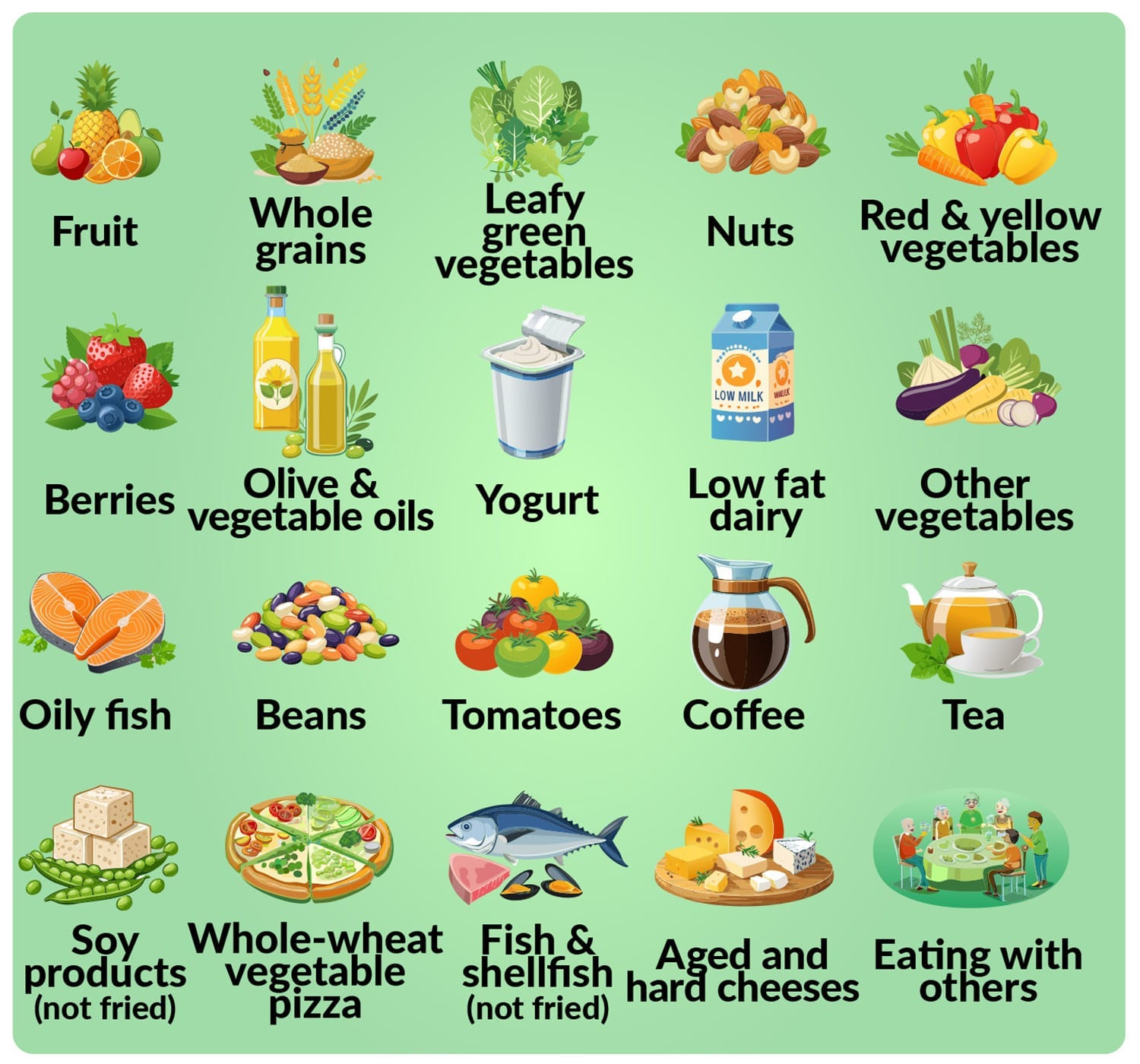
Here’s the green list of foods most strongly linked to healthy ageing discussed in the podcast: